

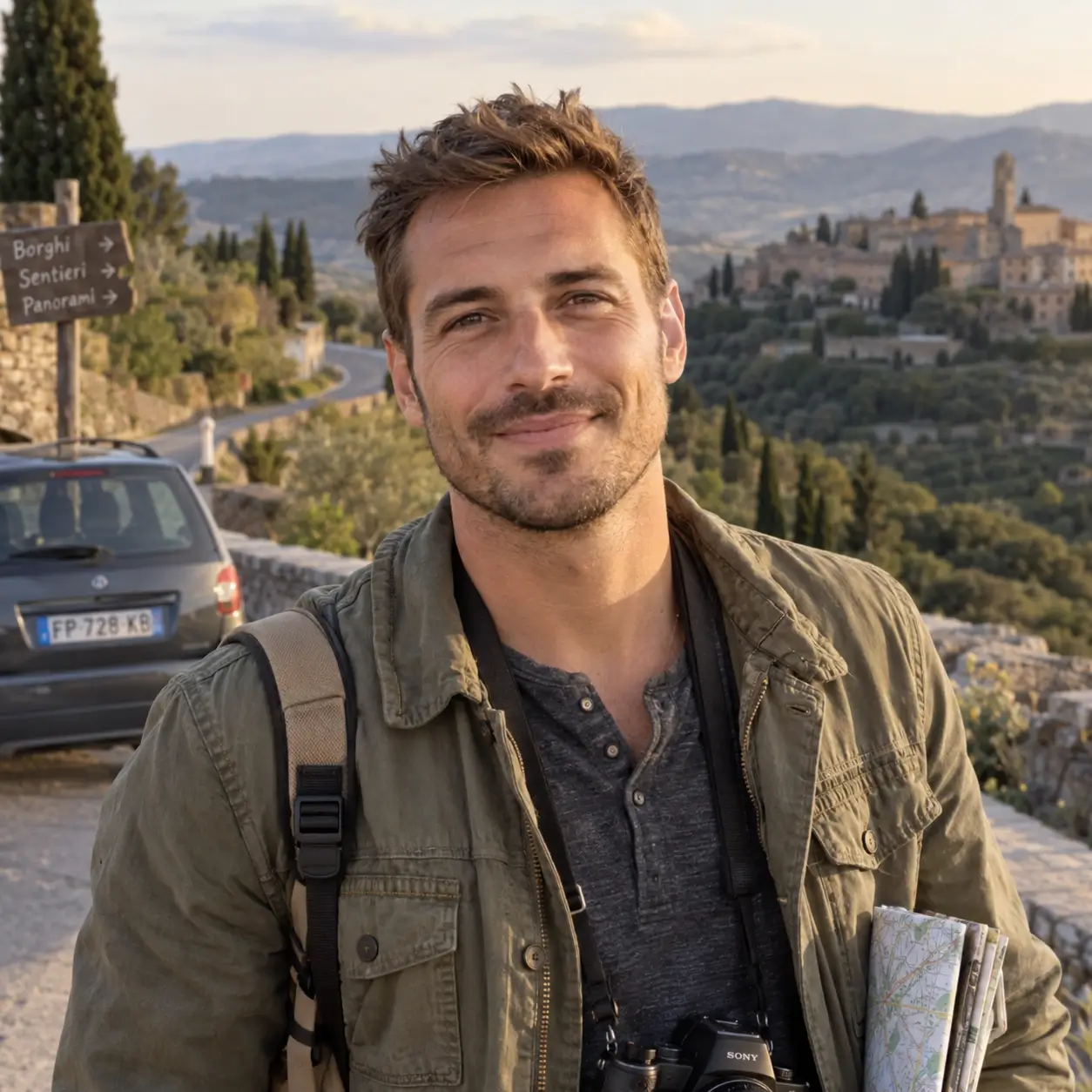
I ski black runs confidently, enjoy big ungroomed bumps, and am comfortable with controlled exposure, but I am not a ski-mountaineer. I carry full avalanche gear off-piste and have hired local guides whenever venturing into complex terrain. This article is based only on terrain I have personally skied in Austria over multiple recent seasons, focusing on what felt most rewarding for advanced skiers and freeriders, and making a strict distinction between marked pistes, signed ski routes and truly uncontrolled off-piste terrain.
How I Skied Austria: Ability, Guides and What Counts as “Advanced”
My own level sits in what many European ski schools describe as “advanced all-mountain”. I ski black pistes confidently, including steep and moguled fall-line runs, and I can handle variable snow off-piste provided the exposure is moderate and I can see a safe line. I am not an extreme skier. I avoid serious no-fall terrain and I treat glaciers, big couloirs and complex avalanche slopes with a lot of respect.
On marked terrain, I skied a mix of red and black pistes at every resort mentioned, plus official ski routes where they existed. In Austrian grading, red pistes are designated intermediate and black pistes advanced. Ski routes sit somewhere in between pistes and true backcountry. They are usually marked on the map with dashed lines, are not groomed, and can be bumped or cruddy, but they are avalanche controlled and usually counted as part of the lift-served area. Insurance and rescue cover normally extends to these routes, in contrast to unmarked off-piste where you are fully on your own.
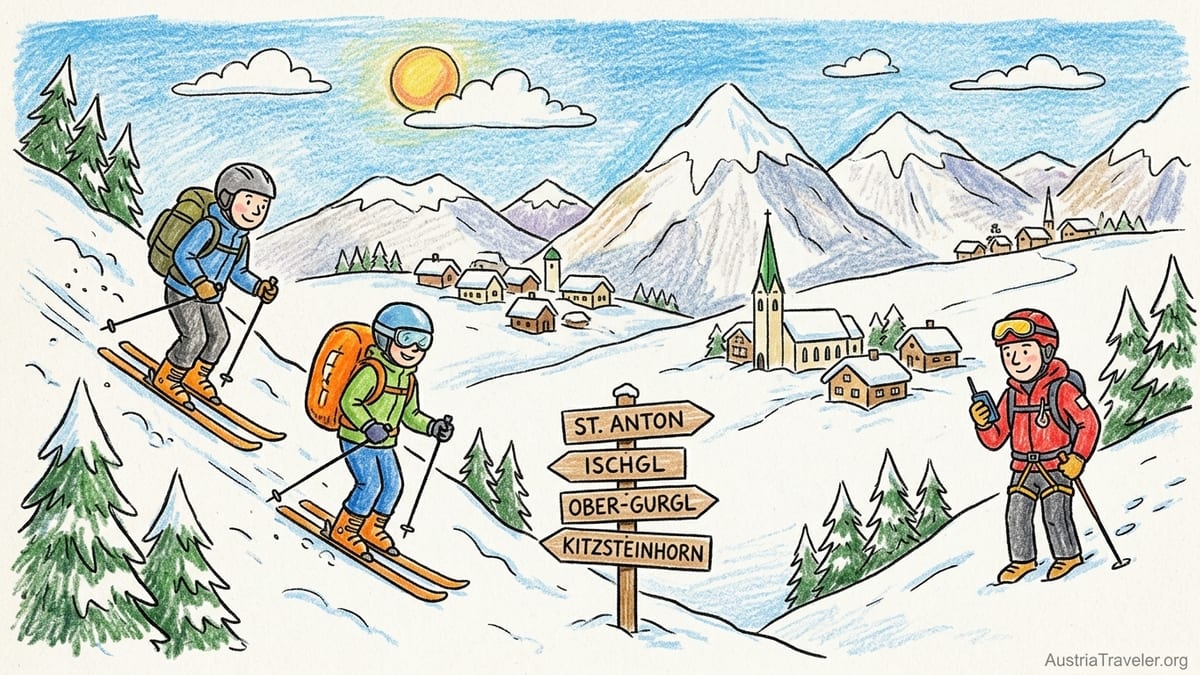
For freeride terrain that left the controlled area, I only skied with a certified local guide and always with a transceiver, shovel, probe and a backpack that could carry skis for short hikes. On the Kitzsteinhorn I also used an airbag pack on days when we aimed for bigger lines near the freeride routes. Avalanche gear was non-negotiable: guides checked that every transceiver transmitted and received before leaving the lift stations, and we discussed the regional avalanche bulletin every morning.
Because of this, when I talk about “off-piste” in this article, I mean terrain that is not a piste and not a marked ski route. Some of it may be just a few turns off the side of a red piste. Some of it, particularly at Ski Arlberg and Kitzsteinhorn, involved long descents through bowls and couloirs that ended well away from the nearest lift. The fact that a line starts from a lift does not make it safe. Snowpack, weather, visibility and traffic all changed how hard and how hazardous a given slope felt on the day.
Ski Arlberg: The Benchmark for Serious Advanced Terrain
Ski Arlberg, which includes St Anton, Stuben, Zürs, Lech and Warth-Schröcken, has around 300 kilometers of prepared pistes and a further 200 kilometers of designated freeride terrain according to regional facts and figures. I have spent three full weeks here across recent seasons, each time on the full Arlberg pass. On piste, I skied a solid mix of red and black runs out of St Anton, especially on Kapall and Schindlergrat, and over toward Stuben. On snow route days, I also used several of the official ski routes such as Schindlerkar and Mattun when they were open.
The on-piste advanced skiing here lives up to the resort’s reputation. The black runs under Kapall and down to the base in St Anton feel properly steep for several sustained pitches. Late in the day, they develop Volkswagen-sized moguls that can throw even confident skiers if their legs are tired. Vertical drop is serious, with top-to-bottom descents often exceeding 1,000 meters. The snow quality varies. Early in the morning after fresh grooming and a cold night, the red and black pistes offer grippy, confidence-inspiring carving. By mid-afternoon in busy weeks, lower slopes toward St Anton can become scraped, choppy and crowded, and skiing them fast stops being enjoyable even for strong skiers.
The official ski routes, particularly Schindlerkar and Mattun, were among the most rewarding lines I skied without leaving controlled terrain. They are avalanche controlled but left ungroomed. On a mid-winter powder day with moderate avalanche danger, Schindlerkar felt like a backcountry bowl, with room to make big, sweeping turns between islands of rocks. By lunchtime, however, cut-up powder quickly turned to deep, heavy chop and exposed bumps. Skiing them well when tracked demanded solid technique and fitness. When visibility dropped, these routes felt committing even though we were still technically inbounds.
For true off-piste around St Anton and Stuben, I always hired a guide, both to respect the complex avalanche terrain and because some of the most famous lines, like Valluga to Zürs, are restricted to guided parties from the top cable car. On one bluebird February day with a moderately stable snowpack, we rode Valluga II with a guide and descended a long north-facing route that linked bowls and short couloirs before releasing us above Zürs. The vertical felt close to 1,000 meters, with cold, chalky snow preserved by the aspect. None of this terrain would have been sensible without local knowledge: we skirted several convincing terrain traps and crossed old avalanche debris. Despite the premium pass price and guiding costs, the combination of lift efficiency, variety of steep lines and the sheer scale of controlled and uncontrolled terrain made Ski Arlberg the single most rewarding Austrian destination for my level.
Ischgl and Samnaun: Big-Mountain Feel With Surprisingly Accessible Blacks
The Silvretta Arena linking Ischgl in Austria with Samnaun in Switzerland offers around 239 kilometers of pistes served by 45 lifts. I spent a March week based in Ischgl, skiing from first lifts until late afternoon almost every day. On paper, the resort has a reputation as a party-focused intermediate paradise with lots of gentle cruising. In reality, the advanced terrain is more interesting than that, especially once you start seeking out specific black runs and ski routes.
On the Austrian side, I skied multiple laps on the steep black run beneath the Lange Wand chair in the Höllboden sector, a slope that is officially listed at around a 70 percent gradient at its steepest point. It is not the longest black in Austria, but that central pitch is steep enough to demand clean, committed turns, especially when it is bumped out. Early in the day on a cold morning, the corduroy edge felt secure and predictable. By midday, even in March, the combination of sun and traffic produced firmer ridges, shallow troughs and pockets of scraped ice. In those conditions, I saw several strong skiers pick their way down cautiously. It was still enjoyable for advanced skiers, but it would be deeply uncomfortable for anyone just graduating from red runs.
The cross-border ski routes forming the Smuggler’s circuits added a sense of adventure rather than outright difficulty. I followed the Gold itinerary on a clear, calm day, leaving from Ischgl, traversing through wide, high-altitude bowls, and dropping into the long run down to Samnaun. The signed sections that were classed as ski routes were usually ungroomed but avalanche controlled, with variable chopped-up powder and small moguls. The vertical was significant and the scenery excellent. The bottleneck, however, came on the way back up: the double-deck lift out of Samnaun carried large crowds in the afternoon, and the return to Austria felt slow compared with the mostly high-speed chairs and gondolas elsewhere.
Off-piste in Ischgl, I confined myself to short safe stashes close to the pistes, especially just off the sides of high, north-facing reds where windblown snow collected. None of these were serious lines, and I did not hire a guide here. The snowpack was relatively stable, and the exposure low, but I still wore a transceiver and rode with a partner. The interesting conclusion was that Ischgl’s advanced skiing was more accessible than its image suggests. For skiers comfortable on red runs who want to ease into blacks and gentle ungroomed terrain, this is a more forgiving step up than St Anton. It did not match Ski Arlberg for raw challenge, but for a big, modern lift system, it provided good value and plenty of variety once you looked beyond the main arteries back to town.
Obergurgl-Hochgurgl: High, Quiet and Strong Advanced Skiing Without the Hype
Gurgl, the combined Obergurgl-Hochgurgl ski area at the upper end of the Ötztal, is smaller than the giant domains, with around 110 to 112 kilometers of pistes and roughly 25 lifts according to resort information. It is also higher, with top lifts reaching about 3,000 meters. I spent five days here in early December and another long weekend in April. In both periods, the area felt like a high-alpine refuge compared with the busier household names.
Advanced skiing here is all about well-shaped red and black pistes rather than extreme exposure. In Obergurgl, I skied the Festkogl sector repeatedly, using red pistes such as 6 and 12 and the nearby black variants to string together satisfying 700 to 900 meter vertical laps. These runs are steep enough to reward strong carving and to form bumps later in the day, but they are wide, consistent and rarely crowded. On fresh corduroy in December cold, the grippy man-made and natural snow mix allowed me to open up my turns without worrying about traffic. Even on the busiest day of the Christmas period, the queues were modest and the slopes spread people out efficiently.
Over in Hochgurgl, the Schermerspitze descent, labeled as slope 30, provided the most engaging advanced piste skiing I found in the area. Its upper section rolls over into a firm, sustained pitch suitable for rhythmic medium-radius turns, before easing back toward the mid-station. Late in the season, this face softened into forgiving spring snow by midday, while the higher, shadier runs retained a firmer surface. The vertical drop here was again in the 700 to 900 meter range, enough to make the legs burn if skied aggressively from top to bottom.
There is some designated ski route terrain in Gurgl, but compared to Ski Arlberg or Kitzsteinhorn, off-piste here is relatively modest. I dipped into low-angle powder between pistes near the high ridgelines and along the edges of the ski routes on calm days, always staying within sight of groomed runs. I did not hire a guide here because I deliberately stayed away from steeper avalanche terrain. The avalanche risk around my visits was either low or moderate, and the snowpack fairly well consolidated. I still skied with a transceiver and a partner. What stood out most in Gurgl was not extreme difficulty but the overall quality of advanced piste skiing without the premium buzz pricing of St Anton or the party markup of Ischgl. Lift passes and accommodation still felt expensive by general standards, but for strong on-piste skiers who value empty reds and blacks, Gurgl delivered very strong value relative to Austria’s headline resorts.
Kitzsteinhorn above Kaprun: Glacier Pistes and Structured Freeride
The Kitzsteinhorn glacier above Kaprun is one of Austria’s best known freeride hubs. It offers high-altitude pistes that usually run from autumn into early summer, plus several marked freeride routes that drop from the upper lifts down toward Langwied and beyond. I have skied the glacier several times in mid-winter and spring, combining piste days with one guided freeride day that linked some of the longer routes.
On the piste side, the advanced skiing is more about reliable snow and altitude than extreme steepness. Several red runs from the top stations down to Langwied provide around 800 vertical meters of consistent, medium-steep terrain. Early in the day, especially in January and February, these reds feel firm and grippy, ideal for big carved turns. Later in spring, the south-facing pitches soften quickly and develop heavy snow and small moguls by early afternoon. There are a few black sections, but they are relatively short compared with the long blacks at Ski Arlberg or the steepest pitches in Ischgl.
The real draw for advanced riders here is the network of designated freeride routes that are avalanche controlled but not groomed. Routes such as Westside Story, which is listed as roughly 2.8 kilometers long, offered me a taste of big-mountain freeriding while still benefiting from some level of hazard management. Every route entry had a large information board that showed the line, typical hazards, recommended equipment and the current avalanche warning level. On my guided day, we carried transceivers, shovels, probes and an airbag pack, all of which the guide inspected before we left the top station.
Conditions on that day were almost ideal from a freeride perspective: early March, cold, clear weather after a recent storm, and a moderate avalanche risk that had been trending downward for several days. Starting from the top lifts, we dropped into a mix of open powder fields, slightly steeper rollovers and some short gullies. The snow remained cold and dry throughout, and while several tracks already marked the main fall lines, there were still untracked pockets on the sides. The vertical felt substantial, on the order of 800 to 1,000 meters per descent when we linked the highest lift-access points to the lower return lifts. None of the lines we skied were mandatory-air terrain, but route finding was important, and there were obvious cliff bands and terrain traps visible from the chair.
It was very clear during that day that these freeride routes, though controlled, did not remove avalanche risk. The guide pointed out recent slide crowns on adjacent slopes and explained why we were choosing particular aspects and elevations at particular times. Without that local knowledge, I would have stayed on piste or on the more mellow, closer-to-piste powder stashes. For advanced skiers who want to transition from piste and ski routes to structured freeride, Kitzsteinhorn, approached with a guide and full kit, is one of the most educational and rewarding places I have skied in Austria.
Comparing Challenge: Which Reputations Hold Up and Where Value Is Strongest
Having skied all of these areas on both busy peak weeks and quieter shoulder periods, a few clear patterns emerged about how their reputations match the reality on advanced terrain. Ski Arlberg’s status as the premier Austrian destination for strong skiers felt deserved. Its black pistes are genuinely steep, its ski routes demanding but still controlled, and its off-piste bowls and couloirs vast and varied when approached with guides. Even when crowds built up on lower slopes in the afternoons, the upper mountain offered ample space and vertical to find rewarding lines. The main downside was price. Lift passes, mountain restaurants and accommodation in the main villages often sat at the top end of Austrian pricing, and guides for off-piste days added a significant extra cost.
Ischgl’s expert terrain, by contrast, was more approachable. The steepest black pitches and some of the ungroomed ski routes offered real challenge, but a strong red-run skier could step up here with less intimidation than at St Anton. The modern, efficient lift network handled crowds well in the core Austrian sectors, although the bottleneck on the Samnaun return reminded me that big domains always have chokepoints. Snow quality was good on the higher, shadier sections even in March, but lower, sunnier pistes chopped up more quickly. For skiers seeking a blend of nightlife, big-mileage cruising and a sprinkling of serious blacks rather than relentless high-end challenge, Ischgl’s real-world experience aligned with that more rounded reputation.
Gurgl stood out as the place where advanced skiing felt strongest relative to cost and crowds. Piste-only skiers who enjoy long red and black runs, solid vertical and high-altitude snow found almost everything they needed here, with much shorter lift lines and quieter slopes than the big-name areas. The lack of truly major ski routes or complex off-piste meant it did not rival Ski Arlberg or Kitzsteinhorn for freeriders, but it did mean that the advanced pistes remained enjoyable deep into the afternoon, even on busier days, because they never saw the same weight of traffic. For skiers happy to focus on marked terrain and occasional low-angle powder between pistes, Gurgl delivered serious mileage and technique-building terrain without the same premium branding.
Kitzsteinhorn occupied a different niche. Its advanced piste offering is solid rather than spectacular, but its structured freeride environment, with clearly signed routes, information boards and access to local guides running regular freeride workshops, made it unusually accessible for skiers keen to develop avalanche awareness and off-piste skills. In terms of pure challenge, some of the freeride lines we skied here were comparable to safer off-piste options at Ski Arlberg, but the glacier setting, extended season and educational infrastructure gave it a distinctive identity. Lift efficiency was good and crowds manageable outside of peak holidays, though lower slopes in spring did grow heavy and congested by the afternoon.
The Takeaway
Looking back at these Austrian resorts from the perspective of an advanced skier who values both steep pistes and responsibly approached freeride, Ski Arlberg emerges as the most complete, challenging and rewarding destination. Its combination of long, steep black runs, demanding ski routes and world-class off-piste, all underpinned by serious vertical and a modern lift system, justified both its reputation and its higher prices. It is the place where my strongest skiing was both tested and improved, especially when skiing with guides from early lifts until my legs gave out.
Ischgl, meanwhile, surprised me by being more accessible than expected, with genuinely steep blacks and entertaining ski routes hidden inside a broader intermediate-friendly network. For confident red-run skiers aiming to push into advanced territory without being overwhelmed, it offered an almost ideal laboratory, provided they chose their slopes with care. Gurgl proved that you do not have to chase the biggest name or the most hyped freeride stats to find deeply satisfying advanced skiing. Its high, quiet, red and black pistes gave me more uninterrupted, technically focused runs than almost anywhere else, and it felt like the strongest on-piste value among the resorts I skied.
The Kitzsteinhorn, finally, was where freeride became more structured and intentional. With avalanche information points, marked but ungroomed routes and readily available guides and workshops, the glacier provided a natural bridge between ski routes and more serious off-piste. It also underlined an important truth that applied everywhere I skied: lift access does not make snow safe. Every rewarding line, whether on a steep black piste, a signed ski route or a pristine off-piste bowl, depended on reading conditions, respecting limits and being ready to turn back. For advanced skiers and freeriders planning an Austrian trip, that mindset will matter more than any single resort choice.
FAQ
Q1. What ability level do I need to enjoy Ski Arlberg as an advanced skier?
To make the most of Ski Arlberg, you should be fully comfortable on steep black pistes with moguls, able to ski ungroomed ski routes in variable snow and confident linking long descents of 1,000 meters or more without frequent stops.
Q2. Do I really need a guide for off-piste skiing in Austria?
For any terrain that is not a marked piste or an official ski route, hiring a local certified guide is strongly recommended, especially in complex areas like Ski Arlberg and Kitzsteinhorn, because avalanche risk, terrain traps and route finding are not obvious to visitors.
Q3. How do Austrian ski routes differ from normal pistes?
Ski routes are marked and avalanche controlled like pistes but are not groomed, so they can be bumped, cruddy or powder-filled; they are generally steeper and more committing than nearby red runs while still remaining inside the controlled area.
Q4. Which resort offers the steepest marked pistes I skied?
Among the areas I skied, the black runs under Kapall in St Anton and the steep black beneath the Lange Wand chair in Ischgl felt like the most sustained and committing steep pistes, especially once moguls developed later in the day.
Q5. Where did I find the best value for strong on-piste skiing without extreme crowds?
Obergurgl-Hochgurgl offered the best balance of high-altitude snow, long red and black pistes and relatively low crowd levels, giving advanced piste skiers excellent value compared with larger and more heavily marketed ski domains.
Q6. Is Ischgl suitable for advanced skiers or mainly intermediates and partygoers?
Despite its reputation as an intermediate and nightlife resort, Ischgl has several serious black runs and ungroomed ski routes that are rewarding for advanced skiers, particularly in the higher Höllboden and Greitspitz areas.
Q7. What avalanche equipment did I use for freeride days?
On freeride days I carried a modern digital transceiver, shovel, probe and a backpack capable of carrying skis, and on Kitzsteinhorn I also used an airbag pack when skiing longer, steeper routes with a guide.
Q8. How crowded did the advanced terrain feel during peak weeks?
In peak weeks, lower return pistes into big villages like St Anton and Ischgl became busy and sometimes icy in the afternoons, while higher advanced terrain such as Schindlerkar, Mattun and the Kitzsteinhorn freeride routes remained more spacious but grew more demanding as snow was tracked.
Q9. Which resort would I choose for a first guided freeride experience in Austria?
For a first guided freeride day, I would choose Kitzsteinhorn because of its clearly marked freeride routes, extensive avalanche information boards and local guides who specifically structure outings around education as well as skiing.
Q10. Can a strong red-run skier step up to these advanced Austrian resorts safely?
A strong red-run skier can step up safely by choosing resorts with accessible advanced terrain, such as Ischgl or Obergurgl-Hochgurgl, starting with easier black pistes, avoiding ski routes in poor visibility and only entering off-piste with a qualified guide and full avalanche gear.