

Austrian lakes are often marketed with glossy words like “crystal clear” and “alpine paradise,” but the reality on the ground can swing from unforgettable to underwhelming depending on the exact place, time of day and even the weather that hour. Over several trips between 2019 and 2025, I swam, paddled, hiked and cruised my way around Wolfgangsee, Mondsee, Fuschlsee, Hallstätter See and Achensee. This guide skips brochure-speak and focuses only on specific experiences I personally completed, what they cost, how they felt in real conditions and, most importantly, whether I would spend my own money and time on them again.
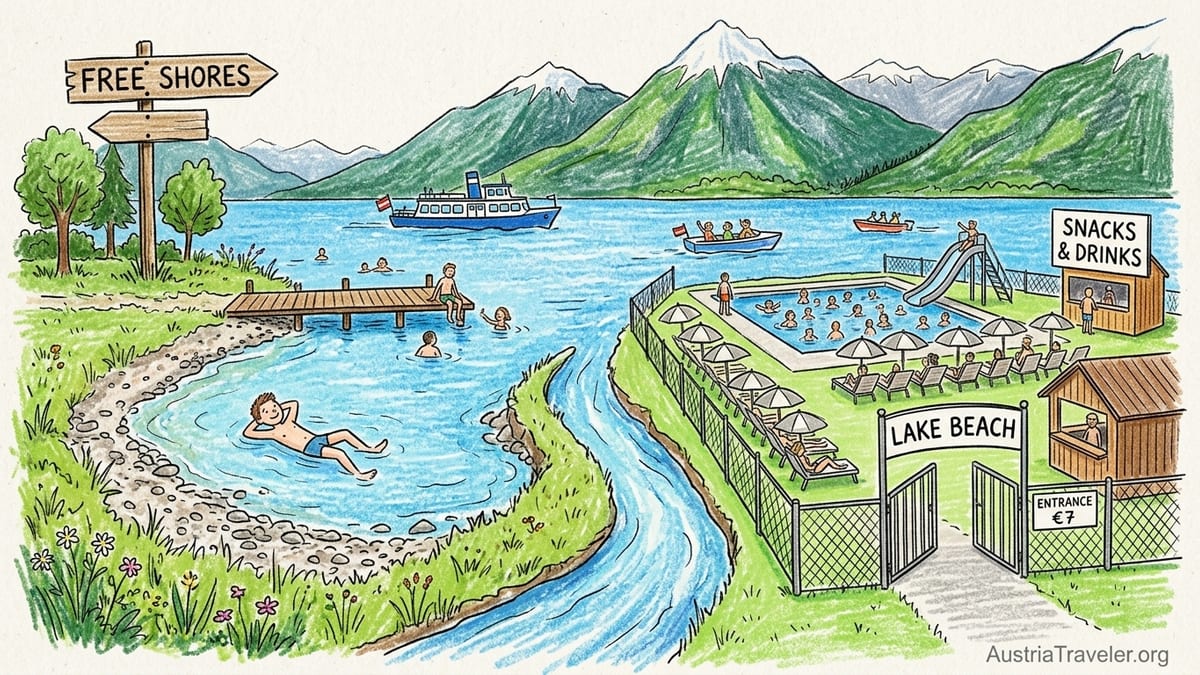
Simply Swimming: Free Shorelines That Beat Paid Beaches
The single best value experience I have had at any Austrian lake was also the cheapest: an evening swim from the public grassy shore on the northern side of Mondsee, a few minutes’ walk from the town center. I visited in late August, arriving around 6:30 p.m. after a hot day, and paid nothing beyond parking on a side street. The water was warm enough to slide straight in with no sharp intake of breath, which matches Mondsee’s reputation as one of the warmer Salzkammergut lakes in high summer. The swim lasted about 45 minutes, with an easy sandy entry and a wooden jetty for lazy dives. Difficulty was very low as long as you are a confident swimmer; there was only mild chop and almost no boat traffic close to shore. Crowds were light, mostly local teenagers and a few families packing up. I would repeat this exact swim without hesitation and plan my schedule specifically to catch the golden hour here again.
At Wolfgangsee, my most memorable swim was not at a ticketed lido either but from a small, free shore area just outside St. Gilgen, reached by strolling ten minutes along the lakeside promenade toward Fürberg. I went on a sunny afternoon in July, with air temperatures around 27 degrees Celsius. Water at Wolfgangsee tends to be cooler than Mondsee but still swimmable in mid-summer, and that matched what I felt: bracing at first, then comfortable for a 30 minute swim parallel to the shore. There was no charge, no loungers, just rough grass and pebbles. The water quality was excellent and very clear, consistent with the lake’s good ecological status and continued importance as a bathing destination. The easy access combined with clarity and views of the surrounding hills gave this a higher satisfaction score for me than later, paid beach visits.
By contrast, a paid lake beach at Wolfgangsee, near Strobl, cost just under 7 euros per adult for day entry in 2022. The ticket included clean changing rooms, showers and a slide, with options to rent loungers for an additional fee. I spent about three hours there under bright sun, swimming several times. Conditions were ideal but the atmosphere more crowded and slightly hectic, with amplified music near the kiosk. Although the facilities were good, I did not feel that the experience justified the combined entry and lounger cost compared with the relaxed swims from free shorelines. I would not personally repeat that particular lido unless traveling with small children who would really use the playground and slides.
Hallstätter See offered a different mood entirely. I swam from the free bathing area near Obertraun on a partly cloudy afternoon in early September, when the lake was noticeably colder. Official regional information confirms that this lake tends to stay cooler than the smaller, shallower waters of the Salzkammergut, and I felt that in the first sharp plunge. I wore a thin shorty wetsuit after testing the water, which made a 25 minute swim realistic. Difficulty was medium because of the cold, and I would not recommend this for casual bathers outside high summer. However, the dramatic cliff backdrop and the relative emptiness of the shore, with only a handful of other swimmers, made it very special. I would repeat this, but with the same wetsuit and a plan to get warm immediately afterwards.
Paddleboarding Sessions: Calm Water, Rental Realities
My first Austrian stand up paddleboarding session was on Fuschlsee, using a rental board from a small operator directly on the shore near Fuschl am See. Regional tourism material highlights this lake as a base for SUP, and several rental huts line the northern bank in summer. I booked on the spot on a sunny September morning, paying roughly 18 euros for one hour including paddle and leash, with a short, friendly safety briefing. The water was almost glassy, with only gentle ripples from occasional rowboats. I paddled in a relaxed loop along the wooded shore for about 55 minutes. Difficulty was low for anyone with basic balance and swimming ability. Crowding on the water felt moderate, but I always had several board lengths of space around me. I would repeat this exact rental, especially in the shoulder season when air temperatures are still pleasant but summer crowds have thinned.
A second SUP outing took place on Wolfgangsee, starting from a beach area near St. Gilgen. I used my own inflatable board, carried down from nearby lodging, so there was no rental fee. The session lasted around 90 minutes in early July, with changeable weather: a mix of sun and fast-moving clouds and a light but steady breeze funneled down the lake. Compared with Fuschlsee, the chop was more noticeable and boat wakes from ferries and private craft required attention. Difficulty was moderate, and I would not recommend this for very first timers on a windy day. Crowd levels were low early in the morning but increased gradually with more rental boards appearing later. Even so, it remained far from congested. I would gladly repeat an early morning paddle from this shore, but would avoid afternoons when wind tends to pick up.
The only paddle session I would not repeat took place on Achensee, near Maurach, in late June. Achensee is well known for its strong, reliable winds that make it a hub for sailing and wind-based watersports. That same reputation worked against a casual SUP session. I rented a board for one hour for about 20 euros from a local water sports school, with the staff making clear that conditions were borderline for beginners. Wind gusts created short, choppy waves, and I spent as much time kneeling as standing. Difficulty felt high compared with my Salzkammergut experiences, and I stayed very close to shore for safety. The views were spectacular, framed by steep slopes and the “fjord of the Alps” profile, but I finished the hour more relieved than exhilarated. Unless I gained much more experience or switched to a more wind-friendly sport like windsurfing, I would not repeat SUP on Achensee in similar conditions.
Across these sessions, an interesting pattern emerged: paying slightly higher rental rates at quieter lakes such as Fuschlsee or for off-peak morning slots offered a much better experience than trying to economize at very popular spots at the busiest times of day. When I rented spontaneously around 9 a.m., I almost always had calmer water and more space than at noon or later, which mattered more than saving a few euros.
Boat Cruises and Electric Boats: When the Splurge Pays Off
My favorite paid experience on any Austrian lake remains the classic ferry circuit on Wolfgangsee between St. Gilgen and St. Wolfgang. I completed this route on a clear day in early September, boarding in St. Gilgen after arriving from Salzburg by regional bus. I purchased a standard adult ticket at the pier for a one-way trip to St. Wolfgang, then later returned on another scheduled boat. In 2025, the price for a flexible Wolfgangsee ticket allowing multiple boardings at several landings sits in the mid twenty euro range, while a simple one-way ride like mine cost a little over 10 euros. I did not book in advance and simply queued for the next departure, boarding within 20 minutes.
The cruise took around 45 minutes each direction, including intermediate stops at small lakeside villages. Conditions were ideal: light breeze, bright sunshine and smooth water, since these ferries travel at modest speeds. Difficulty is negligible, as this is a passive sightseeing experience. Crowd levels were moderate; there were enough people to fill the open decks without feeling packed, even in high season. I considered this money extremely well spent because the boat gives constant shifting angles on the surrounding peaks and villages that are difficult to appreciate from the road alone. I would repeat it in a heartbeat and would even consider the combined ticket that links the lake cruise with the cog railway up the Schafberg for a full-day experience.
A second worthwhile boating splurge was renting a small electric boat on Wolfgangsee near St. Wolfgang later that same week. Several rental outfits dot the shore, with posted rates that started around 30 euros for 30 minutes and scaled up for longer hires in summer 2024. I took a compact four-seat boat for one hour at a cost just over 50 euros, sharing the price with three friends. No prior boat license was required because the vessel was low powered and limited to a modest speed. We received a short briefing and simple map, then set off to cruise the central basin of the lake.
The electric motor was nearly silent, allowing us to hear church bells and cowbells drifting across the water. Wind and chop were minimal on that afternoon, and it was easy to keep the boat well clear of ferries and the marked swimming zones. Difficulty was low, although drivers need to stay alert and respect exclusion areas. Crowds on the water were moderate, with a mix of other small electric craft and stand up paddleboarders, but there was ample room to maneuver. Because we split the cost four ways, the experience felt fairly priced and I would repeat it on another sunny day, especially with visitors seeing Wolfgangsee for the first time.
In contrast, a pedal boat rental on Mondsee during an overcast afternoon in August left me lukewarm. The rental point on the town promenade listed prices of around 15 euros for 30 minutes, and I opted for a one hour hire for approximately 25 euros for two people. Conditions were calm but with a flat gray sky that muted the scenery. Operating the pedal boat felt more tiring than expected, and our effective range remained quite limited. With moderate crowd levels and several other boats crowding the small area close to the shore, the outing felt repetitive before the hour was up. I would not repeat this specific activity at that price unless traveling with children who would enjoy the novelty more.
Hiking Above the Lakes: Combining Summits and Swims
One of the most satisfying days I have spent in the Salzkammergut combined an easy-to-moderate hike above Wolfgangsee with a swim afterwards. Starting from St. Gilgen, I took the Zwölferhorn cable car up to the Zwölferhorn peak, buying a same-day return ticket which in 2024 cost in the mid thirties in euros for adults. I did not book in advance and had only a short wait in the mid-morning queue. From the upper station, I followed a well-marked loop trail along the panoramic ridge, with constant views down to Wolfgangsee, Fuschlsee and the surrounding peaks.
The hike itself took about two and a half hours at a relaxed pace with photo stops. Difficulty was moderate: the paths were well maintained but included some steeper, gravelly sections that might challenge those unused to alpine walking. Weather was close to ideal, with a mix of sun and high clouds and only light wind. Crowds on the summit paths were moderate but not overwhelming even on a summer weekend. After descending by cable car, I walked directly to the lakeshore near St. Gilgen and swam from the free area mentioned earlier, letting my legs recover in the cool water. This combination of mountain panorama and immediate lake access felt like the best of both worlds, and I would absolutely repeat the same pattern of cable car up, ridge walk and swim down.
Another memorable hike-and-lake combination took place around Hallstätter See. Starting from Obertraun, I rode the cable car partway up towards the Dachstein plateau to the intermediate station and viewpoint that overlooks the lake. A return ticket for the lower section is a significant outlay, priced in the mid thirties in euros for adults in 2024, and I had booked online the day before to secure a mid-morning slot. From the station, a short signed path led to a metal viewing platform projecting out over the void, delivering a dramatic vertical view straight down to Hallstatt and the deep blue lake. I spent about an hour walking between viewpoints and short forest trails before descending.
Conditions on the mountain were cool and breezy even on a sunny day, while the lakeshore at Obertraun was warmer and calmer. I walked ten minutes from the base station to the free bathing area and swam, still slightly chilled from the plateau. Water was cool but manageable for a short dip of about 15 minutes. Difficulty overall was low to moderate depending on fitness and comfort with heights at the viewpoint. Crowd levels at the platform were high, with many day trippers, but the lakeshore later in the afternoon was relatively quiet. I would repeat this experience once with a first-time visitor but probably not every trip because of the cost; in that sense the price felt high compared with the Wolfgangsee panorama day.
By contrast, a short woodland hike above Fuschlsee, starting directly from the village and climbing a forest track to a local viewpoint, offered a very satisfying free alternative. I spent around two hours round-trip on this unsigned but clearly trodden path, then swam from the grassy public shore. The combination of cost-free hiking and bathing, with only modest crowds on a calm weekday, delivered value that rivaled the pricier cable car excursions.
Cycling and Lakeside Paths: When Two Wheels Shine
My most enjoyable cycling experience near an Austrian lake was a half-day ride along sections of the road and path network connecting Fuschlsee and Wolfgangsee. Using a rented trekking bike collected from Fuschl am See, I paid approximately 30 euros for a full day rental, helmet included, from a local sports shop. I did not reserve in advance, though in peak August weeks advance booking is recommended as fleets can sell out. The route followed a mix of quiet local roads, signposted cycle paths and short stretches of busier highway where there was still a marked shoulder.
The ride took about four hours including photo and snack stops, with several climbs and descents that made the difficulty moderate for anyone accustomed to cycling but possibly challenging for casual riders unused to hills. Weather was dry with scattered clouds and mid-twenties temperatures, close to ideal. Traffic levels varied from very low on rural lanes to moderate on segments closer to St. Gilgen, but I always felt reasonably comfortable. The highlight was cresting low passes where glimpses of both lakes opened at once, then rolling down to finish with a cool-off swim at Wolfgangsee.
Another shorter but pleasant ride was along the lakeside of Achensee between Pertisau and Maurach on the wide multi-use promenade. For this, I used an e-bike rented from a shop in Pertisau at a cost just under 50 euros for the day in 2023, battery charger and helmet included. I booked the day before in person, as e-bikes are in high demand in busy weeks. The paved path hugs the lake for several kilometers and is largely flat, with only minimal elevation changes. Difficulty was low, especially with electric assist, and crowds were moderate in the late morning but heavier in the afternoon when walkers, strollers and rental bikes all shared the route.
Wind off the lake kept temperatures comfortable even on a sunny day, but strong crosswinds were noticeable in more exposed sections. I stopped several times at small access points to sit at the water and dip my feet, though full swimming from this stretch is limited to marked spots because of the steep drop-off and boat traffic. Overall, I would repeat this ride on an e-bike for the scenery, although I would choose an earlier start to beat the midday crowd.
The least compelling cycling segment I tried was a short loop near Mondsee on a humid, overcast afternoon. Using the same rented trekking bike as the previous day, I set off along a signed rural circuit that promised lake views but mostly traversed inland fields. The ride lasted around two hours with little shade, and the low, gray cloud ceiling made the distant hills flat and indistinct. Vehicle traffic on one section of regional road felt uncomfortably busy. Difficulty was moderate because of rollers and muggy conditions, and crowd levels on the path itself were low, which in this case simply added to a sense of slog rather than solitude. I would not bother repeating this particular loop when a swim from the lakeshore would have been a far better use of the afternoon.
Lakeside Spas, Saunas and Rainy-Day Retreats
Not every lake day in Austria comes with clear skies. One memorably wet afternoon near Wolfgangsee turned into a surprisingly good experience thanks to a lakeside spa with direct water access. Staying in St. Wolfgang, I bought a half-day ticket at a hotel spa that sells limited external guest passes. The price in 2022 was just under 40 euros for use of saunas, relaxation rooms and a lake platform for about four hours. I did not book in advance, but in peak season reservations are often necessary as these facilities prioritize in-house guests.
The weather that day delivered steady light rain, low cloud and occasional breaks of watery sun. Air temperatures hovered around 18 degrees Celsius. I spent cycles of 10 to 15 minutes in a dry sauna or steam room, followed by quick plunges into the lake from the private ladder, then wrapped up in a lounger under cover. Water felt cold but refreshing, and the muted light on the lake, with ferries sliding silently across the grey surface, created a hushed atmosphere. Crowd levels inside the spa were low, though the facility was likely close to capacity based on locker use; guests were simply spread across several quiet rooms. Difficulty was minimal apart from tolerating the cold plunges. I would happily repeat this kind of spa-and-lake session on a bad-weather day, especially in shoulder season when pure sunbathing is less appealing.
A more conventional lakeside wellness experience at a public pool and sauna near Mondsee felt less good value. I paid around 20 euros for an adult day ticket that included indoor pools, limited lake access and several saunas. Conditions outside were warm and sunny, air temperatures around 26 degrees, and the facility was busy with families. I spent approximately three hours alternating short swims in the roped-off lake area with time on crowded loungers and brief sauna visits. Noise levels were high and finding a quiet space to read or simply gaze at the water was surprisingly difficult. While the price was not unreasonable for the range of facilities, it did not compare favorably with my free shoreline swims or the quieter, more atmospheric Wolfgangsee spa afternoon. I would not repeat this venue unless traveling with children who needed slides and pools.
These contrasting spa experiences reinforced a broader lesson. In lakes regions with free, uncrowded access to clean water, paying for general wellness access only makes sense to me if it offers either a markedly calmer atmosphere, a guaranteed quiet indoor refuge on bad-weather days or something unique like direct private lake entry in combination with sauna rituals. Otherwise, a simple lakeside walk and swim can deliver much of the same relaxation for no entry fee.
Paid Thrills vs Free Pleasures: What I Would Actually Do Again
Looking back across several summers and shoulder seasons, a pattern emerges when I compare high-cost and low-cost activities. The most consistently satisfying experiences have been free or low-fee swims from quiet shorelines, self-guided hikes with lake views and reasonably priced ferries or electric boat rentals that open up new perspectives without straining the budget. These typically required little or no advance booking, offered flexibility to adjust to weather on the day and delivered long, unhurried moments in or beside the water.
On the other side of the ledger are the experiences I would hesitate to pay for again. Lakeside lidos that charge per person entry plus extra for loungers, especially when they play loud music and pack guests into small spaces, feel hard to justify when free, more natural shorelines are close by. Basic pedal boat hires on cloudy days and large indoor pool complexes with limited true lake contact also fall into this “once is enough” category. Expensive cable car plus viewpoint packages above the lakes can be worth doing once, especially for first-time visitors, but after that I would personally redirect that budget into more days of simple swims and local ferries.
It is worth emphasizing that these are personal judgements rooted in specific dates, prices and weather patterns between 2019 and 2025. Ticket costs have generally been creeping upward, and some operators now encourage or require advance online bookings in the busiest weeks of July and August. When planning, it helps to check the latest prices and timetables before you travel and to treat any high-cost activity as something to anchor on the most promising weather day in your window, keeping lower-cost options like shoreline swims, walks and relaxed bike rides in reserve for cloudier or windier periods.
Across all the lakes I have visited, if I had to pick a single repeatable “perfect day” formula, it would be this: start with an early-morning swim from a free grassy bank at Mondsee or Wolfgangsee, spend late morning on a moderate hike or ridge walk above the lake, come down for a second, longer swim or paddle session in the mid-afternoon and finish with an unhurried ferry ride or electric boat circuit in the long light of evening. That blend of movement, water and unstructured time captures the best of Austria’s lake districts without requiring an endless stream of tickets and reservations.
FAQ
Q1. Do I need to book lake cruises and cable cars in advance in the Salzkammergut and at Achensee?
For regular lake ferries such as those on Wolfgangsee, I have always been able to buy tickets on the spot outside a few peak holiday weekends, though queues can form in July and August. For popular cable cars above the lakes and for combined boat and mountain tickets, advance booking is increasingly recommended, especially for mid-morning slots in high season.
Q2. How cold is the water in Austrian lakes for swimming in summer?
Based on repeated swims between late June and early September, I have found Mondsee and Fuschlsee pleasantly warm for extended swimming in August, Wolfgangsee comfortable but cooler, and Hallstätter See and Achensee noticeably cold outside the warmest weeks. When in doubt, I test the water first and limit initial swims to 10 or 15 minutes.
Q3. Are free public swimming spots as clean and safe as paid lidos?
In the areas I visited, especially around Wolfgangsee, Mondsee, Fuschlsee and Hallstätter See, free bathing areas were well maintained, signposted and felt safe, with clear water and gradual entries in many places. Safety still depends on personal judgement, weather and your swimming ability, but I have not seen a clear quality advantage that automatically favors paid lidos.
Q4. Is stand up paddleboarding suitable for beginners on Austrian lakes?
On calmer lakes and on still mornings, yes. My experiences on Fuschlsee and early in the day on Wolfgangsee were gentle and beginner friendly. On windier lakes such as Achensee, or in the afternoons when thermal winds pick up, conditions can feel demanding even for intermediate paddlers, so local advice and a realistic assessment of your balance and swimming skills are essential.
Q5. How expensive is it to rent bikes or boats around the lakes?
In recent seasons I have paid roughly 30 euros for a full-day trekking bike, around 50 euros for a day on an e-bike and between 30 and 50 euros per hour for small electric boats, usually shared between several people. Pedal boats and stand up paddleboards typically fell in the 15 to 25 euro range per hour. Exact prices vary by operator, lake and month, so checking current boards or websites is important.
Q6. What difficulty should I expect from hikes with lake views?
The hikes I describe, such as ridge walks from the Zwölferhorn cable car above Wolfgangsee or short trails near the Dachstein cable car above Hallstätter See, are generally in the low to moderate difficulty range for people in normal health. Paths are well marked but can involve steeper, gravelly sections and exposed viewpoints. Good footwear and awareness of weather changes are more important than technical mountain skills.
Q7. Are lakeside spas and saunas worth it compared with just swimming?
For me, lakeside spas make sense mainly on cooler or rainy days, or when they offer something special like direct lake access combined with saunas and quiet relaxation rooms. When the weather is warm and free shorelines are pleasant and uncrowded, I often prefer a simple swim and a towel on the grass over paying for busy, family-oriented indoor complexes.
Q8. How crowded do Austrian lakes get in peak season?
On sunny days in July and August, central promenades, lidos and major viewpoints can feel very busy, especially around Hallstatt, St. Wolfgang and Mondsee town. However, I have often found that walking just ten to fifteen minutes along the shore brings much quieter picnic lawns and swimming jetties. Early mornings and later evenings are significantly calmer almost everywhere.
Q9. Can I rely on public transport to reach and move between lakes?
In my experience, yes, especially around the Salzkammergut where buses and regional trains link Salzburg with Wolfgangsee, Mondsee, Hallstätter See and other lakes. For loop hikes and point-to-point bike rides, coordinating with timetables takes a bit of planning, but I have been able to complete all of the experiences described here using a mix of public transport, walking and occasional bike rentals.
Q10. If I only have one full day, which lake experience would I prioritize?
If I had to choose a single day, I would personally pick Wolfgangsee, combining an early swim from a free shore near St. Gilgen, a cable car or moderate hike for views, an afternoon paddle or second swim and a classic ferry ride between villages in the evening. That mix has given me the highest ratio of memorable moments to money spent of any of my Austrian lake days.