


Austrian lakes promise glassy water, mountain silhouettes and nostalgic lidos, but not every waterfront hotel justifies its price tag. Over several trips around the Salzkammergut, Tyrol and Carinthia, I have stayed in a mix of privately owned lakeside properties and larger resorts, paying my own way and comparing each one against nearby public bathing spots. This guide focuses on the lakeside hotels that genuinely felt worth paying for, plus a few researched contenders that looked promising but I have not yet stayed in. The emphasis is on practical detail: how big the rooms really feel, whether you can step into the lake in two minutes or ten, what breakfast is like on a hiking day and if splurging on private lake access actually changed the experience.
How Austrian Lake Access Really Works
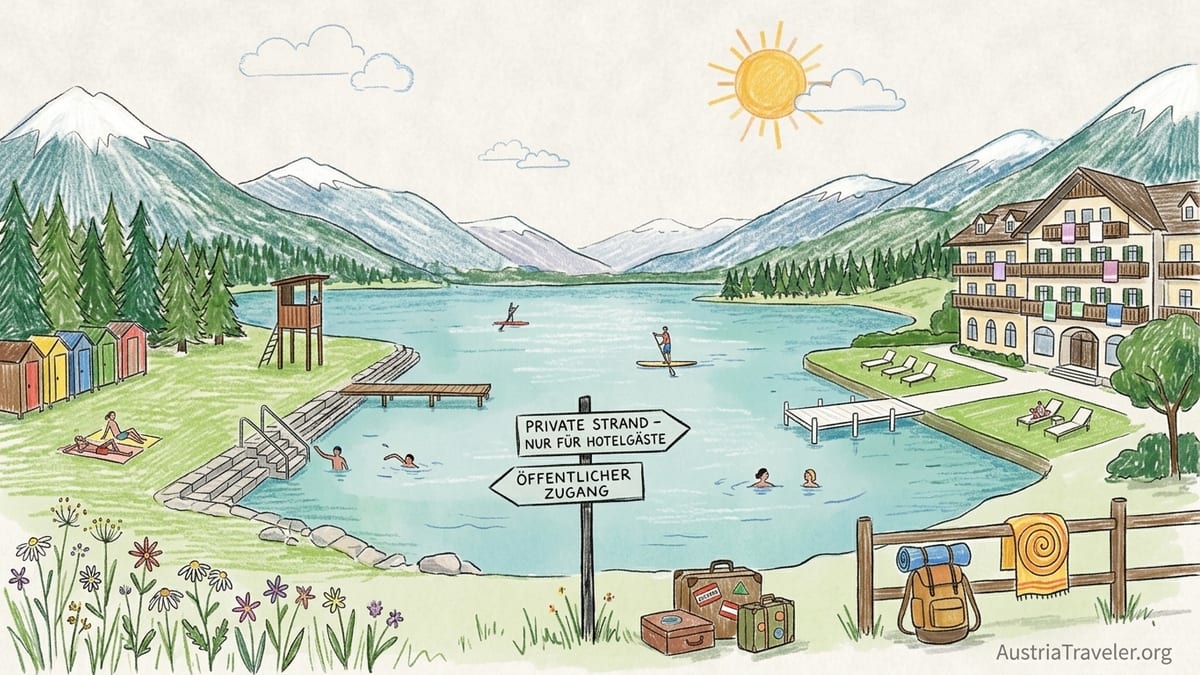
Before choosing a hotel, it helps to understand how lake access is organised in Austria. Along many shores, access is a patchwork of public lawns, municipal lidos with small entry fees and private bathing areas reserved for hotels or landowners. In regions such as Upper Austria and Salzburg, local authorities operate free or low cost public bathing grounds with clear rules around hygiene and safety, often with shower blocks, toilets and lifeguards on busy days. These state or city run areas tend to be clean, well maintained and popular with both locals and visitors, which means that for many travellers, a hotel without its own beach can still offer excellent swimming just a short walk away.
Where lakeside land is scarce, some hotels market private or semi private bathing lawns as a premium feature. In practice, the added value depends on your travel style and the specific hotel layout. If a promenade or public path runs directly between the building and the water, you may need to cross a road or mingle with day visitors on the way to the lake, even if the hotel advertises its own jetty or designated section of shore. Other properties have uninterrupted access from garden to water, so you can walk out in a robe and jump straight in. The difference between those two setups matters much more in peak summer when promenades are busy and shade under the lakeside trees fills up by mid morning.
It is also worth knowing that Austrian bathing culture is highly practical. Guests routinely hang towels over balcony railings, carry backpacks lined with dry bags and use bike sheds, boathouses or simple hooks in underground garages to dry wetsuits and stand up paddle boards. Several of the hotels I describe below had surprisingly thoughtful touches like towel cards for lake use separate from the spa, hose points to rinse boards and early breakfast options aimed at hikers who want to reach high trails before the midday sun. Choosing well is less about chasing a famous lake name and more about matching these practical details to your own priorities.
Best True Lakeside Stay: Brandauer’s Villen Seehotel, Wolfgangsee (Stayed)
On the eastern shore of Lake Wolfgang, in the village of Strobl, Brandauer’s Villen Seehotel delivered one of the most convincingly lakeside experiences I have had in Austria. The main building and its adjacent villas sit in a broad, gently sloping garden that runs without interruption to the water. My double room in one of the villas was not enormous, but more than adequate for two people with hiking packs. The bed had a firm but comfortable mattress with light duvets appropriate for cool lake nights, and the bathroom was modern with a walk in shower, strong water pressure and underfloor heating that made drying swimwear overnight much easier.
The room did not have air conditioning, which is typical for this part of Austria, but cross ventilation was excellent. A large door opened onto the balcony and windows in the hallway allowed heat to escape, so even in July the room stayed comfortable with the help of a provided fan. Heating was through traditional radiators which worked quickly on a rainy evening. The balcony was the star feature: big enough for two chairs and a table, with a clear view of the hotel lawn and the lake beyond. From bed, I could see morning mist lifting off the water, and in the evening we watched paddle boarders glide past as the last boats came in.
Breakfast, served in the main restaurant with lake views, was one of the reasons this stay felt worth its rate. A broad buffet featured fresh bread, local cheeses, sliced vegetables, muesli, fruit and hot options, with eggs cooked to order on request. Staff were relaxed but efficient about early seating. On hiking days we were allowed in as soon as the doors opened and could be walking toward the Postalm by 8 am. The restaurant also serves lunch and dinner, with plenty of fish and seasonal salads. While prices reflected the lakeside setting, the quality and the convenience of eating on site after long days on the trail justified using it for several meals.
The true luxury here is the private lakeside lawn. There is no road between the hotel and the shore: just a band of grass with sun loungers, shade trees and a small beach area with gradual entry into Wolfgangsee. A wooden jetty offers deeper water access for confident swimmers. Bath towels for the lake are provided separately from bathroom towels, so you do not need to worry about using your shower towels outdoors. The ability to walk from room to water barefoot, without navigating crowds or ticket barriers, felt like a genuine upgrade compared with public lidos further around the lake. In high season, when municipal areas on Wolfgangsee can be busy and parking fills early, I considered the room rate fair value primarily because of this seamless access.
Best Swimming Access Without Overpaying: Seevilla Freiberg & Grand Hotel, Zell am See (Researched)
For a combination of lake access and walkability in a small town, Zell am See remains a strong choice. I have walked the lakefront here, inspected several properties and swum at both public lidos and in front of hotels, though I have not yet stayed overnight in the two best located options. Seevilla Freiberg sits along the Esplanade with its own bathing beach and jetty, while Grand Hotel Zell am See occupies a small peninsula and is almost surrounded by water. Both properties market private or semi private bathing areas and both are within an easy walk of the old town and railway station, which makes them appealing to travellers arriving by train.
At Seevilla Freiberg, all rooms face the lake, so paying for a lake view is unavoidable but at least guaranteed. The building is separated from the promenade by its own lawn, which leads directly to a narrow gravel beach and bathing area. During inspection, I found that access felt intimate but not completely private. Pedestrians pass along the Esplanade just behind the loungers, and some sightlines from neighbouring properties cross the lawn. However, there is no road to cross, and the convenience of being able to step into Lake Zell a few metres from your room is obvious. For independent travellers happy to embrace the lively promenade atmosphere, this may be a sweet spot where you enjoy near immediate water access without paying top end resort prices.
Grand Hotel, by contrast, has a more resort like feel. Its position on a small peninsula means many rooms have wide lake views, and the hotel maintains a private beach area and indoor pool. Importantly, it is one of the very few hotels in Zell am See where you do not need to cross a road to reach the water. You step out of the building onto the terrace, then down to the loungers and a small stretch of shore. Families and couples who prefer a sense of enclosure and do not mind a busier hotel environment may find that worth the premium over smaller pension style properties. Based on current rates, the step up in price from a mid range guesthouse with public lido access to a balcony room at Grand Hotel is significant, but for visitors focused on swimming several times a day and relaxing on site rather than touring widely, it looks defensible.
Is private access in Zell am See worth it if you are on a tighter budget. From experience at the town’s public lidos, I would say not necessarily. The main lido on the south shore is clean, family friendly and well equipped with changing rooms, slides and lawns. Entry is usually modest and day passes make sense if you plan to spend hours by the water. For travellers who intend to hike in nearby Kaprun or take cable cars most days, a central guesthouse combined with daily lido visits can be noticeably cheaper without much loss in water quality or enjoyment. In that case, you carry swimming gear in a simple dry bag, make use of balcony railings to dry towels and treat lake swims as a daily excursion rather than a step outside the room.
Best Spa and Wellness by the Lake: Rosewood Schloss Fuschl, Lake Fuschl (Stayed)
Rosewood Schloss Fuschl, perched above the intensely clear waters of Lake Fuschl near Salzburg, is where I would send travellers whose main goal is to combine lake views with serious spa time. The property occupies a historic castle and newer wings, with a range of rooms and suites. My stay was in a Grand Lakeview room within the main complex. The room felt generously sized for two, with space to lay out luggage and a sitting area by the window. The bed, dressed in high thread count linens, was exceptionally comfortable, and blackout curtains made early bedtimes easy between spa sessions and hikes. The bathroom had double sinks, a deep soaking tub and a separate rain shower with excellent pressure. Heated floors and a powerful towel rail dried swimsuits and robes overnight without the need to drape them over chairs.
Public spaces at Schloss Fuschl revolve around the spa and lakeside terrace. The indoor pool, several saunas, relaxation areas and treatment rooms form a compact but refined wellness area. An outdoor deck and lake platform become focal points in summer, with loungers oriented towards the water. Lake access here is more controlled than at small independent hotels. You descend from the terrace to a bathing platform with ladders leading into the deep, clear lake. There is no broad sandy beach and limited space for children to play at the edge, so this is better suited to competent swimmers and adults looking for peaceful laps followed by time in the sauna. Towels and robes are supplied in abundance, so you do not need to bring your own, and staff are relaxed about guests moving around in spa attire.
Breakfast and dining are firmly in five star territory, both in quality and price. The morning spread features a wide range of local dairy products, fruit, pastries and cooked dishes, with the option to order specific egg dishes. On the days I planned early hikes, staff allowed me into the restaurant shortly after opening and preparation was swift, though it is not a grab and go setup. Dinner on site skews to fine dining and long, multi course meals. For travellers intending to eat on property most nights, this can push the overall bill considerably higher than the room rate alone suggests.
Is the lake access here worth the premium over a simpler spa hotel near a public beach. In my view, yes, if you value peace and the ability to structure your day entirely around wellness without thinking about ticket times or opening hours. The water quality of Lake Fuschl is superb whether you enter from a hotel platform or a public beach, but the atmosphere is very different. Public areas are popular with families, day trippers and campers, and parking near the most scenic spots can fill early on sunny weekends. At Schloss Fuschl, you trade that bustle for an enclosed lakeside deck that remains calm even at midday. Combined with the depth and quality of the spa facilities, that makes the high nightly rate feel justifiable for a special occasion or dedicated wellness trip.
Best Family Base: Lakeside Guesthouses at Faaker See and Millstätter See (Stayed)
For families, I have had the best experiences not at grand resorts but at mid sized, owner run hotels on Carinthian lakes where the mood is informal and the gardens feel like extended living rooms. At Faaker See, a smaller, warmer lake in southern Austria, I stayed at a traditional family run lakeside hotel with its own park and bathing area. Rooms were simple and functional, with double beds and two additional singles for children, which kept everyone in one space without needing a suite. The bathroom was compact but serviceable, with a shower cabin instead of a tub and enough hooks to hang multiple wet swimsuits. There was no air conditioning but robust shutters, a fan and the naturally cooler night temperatures by the lake kept the room comfortable even in August.
The real advantage for families was the private lakeside garden. A short walk through the hotel’s own park led to a grassy area with shallow entry into the lake, a small play structure and plenty of shade. The hotel offered complimentary use of pedal boats and stand up paddle boards, stored in a boathouse at the water’s edge. Life jackets in children’s sizes were available on request. Because the shore belonged to the hotel, there was no concern about space for towels or a base for the day, even when day trippers lined the public shore further along. Parents could sit on lounges while children cycled between the water and the small playground, and the short distance back to the room made naps and forgotten toys a minor issue instead of a logistical challenge.
A similar pattern played out at a historic lakeside hotel near Millstätter See, another Carinthian lake, where I stayed in a spacious room with traditional décor and very pet friendly policies. Rooms were not ultra modern, but they were large, with high ceilings, sturdy beds and plenty of space for a cot or dog bed. Bathrooms varied in style due to the age of the building yet were clean and practical. The highlight was the hotel’s private bathing area on the lake, reached either through the garden or via a short walk. Families had access to loungers, ladders into deeper water and calmer corners away from the busiest public stretch.
From a value perspective, these family friendly properties make sense because you rarely need to pay for additional entertainment. With free lake toys, bike storage, occasional evening barbecues and early breakfast seating available from around 7 am, days fill themselves. Private lake access does matter more here than for couples planning to spend most days hiking, because it reduces the friction of moving young children and gear back and forth from public lidos. Being able to walk a few steps from bed to water with a stroller and inflatable toys makes the overall holiday feel less like a daily expedition and more like living on the lake for a week.
Best Value Using Public Lidos: Lake Wolfgang, Attersee and Local Bathing Rules
Not everyone needs or wants the cost of a private lakeside lawn, especially when Austrian public bathing areas are often excellent. Around Lake Wolfgang and Attersee, I have stayed in guesthouses and small hotels set one or two streets back from the water where nightly rates were meaningfully lower than direct lakefront properties. In these cases, the key to getting good value was proximity to a well run public lido. Towns along these lakes typically operate municipal bathing grounds with groomed lawns, jetties, changing cabins and, in some cases, small cafés. Seasonal or day passes are sold at the gate, and the facilities are kept orderly by clear house rules that cover everything from hygiene to quiet hours.
In Upper Austria, for example, regional bathing regulations emphasise cleanliness and considerate behaviour in public recreational areas. That framework, combined with local enforcement, creates a reliable baseline for what you can expect at official lidos: clean water, functioning showers and toilets, and a family friendly atmosphere. Because entrance fees are modest compared to hotel rate differences, a traveller can often trade a lakefront hotel for a second row guesthouse and still come out ahead financially, even after paying for daily lido access. For solo travellers or couples who plan to be out hiking or cycling for much of the day, this balance usually works well.
There are practical trade offs though. Carrying wet swimming gear back to your accommodation requires more planning. I found a lightweight dry bag inside a daypack invaluable for keeping damp towels separate from other belongings. Once back at the guesthouse, balcony railings and folding racks became drying stations. Many properties appreciated guests not hanging dripping items directly over façades, so I often laid towels over chairs on a balcony or used a travel clothesline. Bike or stand up paddle boards typically had to be stored in a designated garage or shed, and rinsing them off meant using courtyard taps instead of lakeside hoses.
The atmosphere in public lidos is also livelier, particularly on weekends. Children’s play areas, diving platforms and lakeside cafés generate a constant low level of noise. This can be enjoyable if you like people watching and a social mood, but it is very different from a hotel lawn where numbers are limited to guests. Around popular promenades, such as in St Wolfgang or St Gilgen, evenings can be animated until late, with outdoor concerts or lakeside bars adding music to the soundscape. If you prefer absolute quiet after 9 pm, spending more for a hotel in a quieter bay with its own bathing area may be justified. If you are content with a short walk and do not mind shared facilities, public lidos provide a very cost effective path to the same pristine water.
Best Car Free Lakeside Location: Pertisau on Achensee (Researched & Partly Stayed)
Achensee in Tyrol combines substantial lake size with mountain trails and a relatively car light shore, particularly around the village of Pertisau. I stayed in Pertisau at a mid range guesthouse a few minutes from the lake and spent time exploring the waterfront around Seehotel Einwaller, a boutique property that directly faces the lake and offers private jetty access. While I have not yet overnighted at Einwaller, walking the promenade and swimming nearby made it clear why this location works well for travellers looking to go largely car free.
The village is compact. Most hotels and guesthouses are within a five to ten minute walk of the lake and the valley trailheads. Boat piers and the starting point for lakeside paths are centrally located, and regional buses connect Pertisau with neighbouring villages and the railway station further down the valley. From my accommodation, I could walk to the water in under five minutes, cross the pedestrian promenade and reach a grassy lakeside section where locals swam from stone steps and small shingle patches. The absence of through traffic along long stretches of the shore made it safe and pleasant for evening strolls, although it also meant that crowds sometimes funneled along the same paths, particularly in high summer.
Seehotel Einwaller has one of the few genuine private lake access points in Pertisau, via a dedicated jetty and bathing platform reserved for guests. This removes the need to claim space on the public lawns and allows direct entry into deeper, very clear water. However, the general quality of public swimming spots around Pertisau is also high, with official entry points, ladders and occasional small lidos. During my stay in the village, using public access points felt entirely adequate, and walking a little further along the shore often brought quieter corners, particularly early in the morning.
Rooms in Pertisau, including those at Einwaller according to current descriptions and images, tend to emphasize balconies with lake or mountain views, strong insulation and good heating for shoulder season visits. Air conditioning is less common due to the altitude and typical night time temperatures. Breakfasts are usually hearty, featuring local yoghurt, muesli, bread and eggs, and several properties, including my guesthouse, offered early breakfast on request for hikers starting long routes into the Karwendel mountains. In this context, paying extra for private lake access in Pertisau feels most useful if you plan to swim repeatedly during the day and want a lounger in a more controlled, quieter environment. If your focus is hiking and you simply want one or two dips at the end of the afternoon, the car free promenade and public bathing spots serve very well.
Best Mountain and Lake Combination: Tyrolean Waterside Hotels (Researched)
Several Tyrolean valleys market hotels directly on the water with big mountain views, and while I have not yet slept in these specific properties, on site visits and local tourism information helped clarify what they offer. Around Walchsee and in the Tannheimer valley, for example, a handful of lakeside hotels combine private swimming options with quick access to hiking, cycling and winter cross country trails. Suites here often open onto terraces or balconies that face both the water and nearby peaks, creating the archetypal mountain and lake panorama that many travellers seek.
In these regions, air conditioning is rare, but substantial insulation and efficient heating cater well to three season use. Rooms are typically large enough to accommodate wet weather gear and backpacks, and many hotels offer drying rooms or dedicated spaces for ski boots and hiking boots, which double nicely for drying lake shoes and wetsuits in summer. Breakfast buffets slant towards energetic days in the mountains, with dense breads, cereals and hot dishes common. Some properties advertise early breakfast or packed lunch options specifically for hikers who want to catch first lifts or set off before valley temperatures rise.
Lake access varies sharply. Some hotels enjoy uninterrupted shorefront, where you can walk from the garden into shallow water or off a jetty. Others sit across a smaller road from the lake, owning a section of shore that is reached via a small gate. This detail matters for how spontaneous your swims feel. A continuous hotel lawn makes it easy to wander back and forth throughout the day in a robe, whereas crossing a public path or road often encourages guests to consolidate swims into one or two sessions. Based on observed use, families with children appreciated the former, while active couples or groups of friends seemed content to walk a short distance and share the space with day visitors.
If your main aim is to combine multiple sports, such as hiking in the morning, a paddle in the afternoon and perhaps cycling around the lake in the evening, the value of a hotel’s private access depends on the specific lake’s public infrastructure. Where wide lake paths, rental stations and public bathing lawns are already excellent, private access is a bonus rather than a necessity. Where shorelines are narrower and much of the land is privately owned, having guaranteed space by the water can make the difference between daily swims and occasionally peering through hedges at the view.
The Takeaway
Across these Austrian lake stays, one theme felt consistent. Paying for a room directly on the water made sense when the hotel turned that proximity into real, friction free access: lawns without roads, separate lake towels, convenient storage for boards or strollers and an atmosphere that remained calm even when the rest of the shore busied up. Brandauer’s Villen on Wolfgangsee and Schloss Fuschl near Salzburg achieved that most convincingly during my travels, each in its own style, one relaxed and family friendly, the other refined and spa focused.
In destinations with excellent public lidos and promenades, the calculation is more nuanced. In Zell am See, Pertisau on Achensee and parts of Attersee, I found that staying slightly back from the lake and using public bathing areas did little to diminish the joy of swimming in clear Alpine water, provided I was willing to carry towels and accept a livelier ambiance. For budget conscious travellers or those focusing on hiking and day trips, this balance often yields better overall value.
When choosing a lakeside hotel in Austria, focus on the details that will define your days. If you imagine shuffling between balcony, breakfast and a private jetty with minimal effort, seek out properties where the garden truly touches the lake and where early breakfast and spa facilities support that rhythm. If you picture cycling around the shore, taking boat trips and dropping into different bathing grounds as you go, invest more of your budget in location within the wider region and less in a single patch of lawn. Either way, the lakes themselves are the constant, clean and inviting, and with a little research you can match their calm to the style of stay that feels most worth paying for.
FAQ
Q1. Is it worth paying extra for a hotel with private lake access in Austria.
It depends on how you plan to spend your days. If you want to swim several times daily, relax on a quieter lawn and avoid crowded lidos, private access can feel worth the surcharge. If you will be hiking or sightseeing most of the time and are happy with one swim in the late afternoon, a guesthouse near a good public bathing area is usually better value.
Q2. Do Austrian lakeside hotels usually provide towels for the lake or only for the spa.
Many mid and upper range hotels provide separate towels for lake or pool use, often available from reception, the spa or a stand near the garden. Budget guesthouses may expect you to use your own or the regular bathroom towels, so it is wise to confirm in advance or pack a quick drying travel towel if in doubt.
Q3. How early can I get breakfast if I want to go hiking before the heat.
In lake regions popular with hikers, such as Wolfgangsee, Achensee and parts of Tyrol, it is common for hotels to open breakfast around 7 am and sometimes earlier in high season. Some will also prepare a simple early plate or packed lunch on request. If early starts matter to you, ask about times before booking rather than assuming a standard schedule.
Q4. Are Austrian lakes cold for swimming in summer.
Water temperatures vary by altitude and depth. Lower, shallower lakes in Carinthia often feel pleasantly warm by July, while higher, deeper lakes in Tyrol and Salzkammergut can remain brisk but refreshing. Most healthy adults and older children manage comfortable swims on sunny days, though very young children and cold sensitive travellers may prefer lidos with heated pools in shoulder seasons.
Q5. Do I need a car to enjoy a lake holiday in Austria.
No, not necessarily. Villages such as Zell am See, St Wolfgang and Pertisau are well connected by train or bus, and once there you can move between lake, lidos and trailheads largely on foot or by boat. A car becomes more useful if you want to combine several lakes in one trip or stay at secluded properties without bus stops nearby.
Q6. How noisy do lakeside promenades get in peak season.
Promenades around popular lakes can be lively from late morning until late evening in July and August, with families, cyclists, boats and occasionally events or live music. Noise levels are usually moderate rather than overwhelming, but rooms directly facing promenades will feel less tranquil than those on quiet side bays or behind larger gardens.
Q7. What is the best way to deal with wet swimsuits and towels in small hotel rooms.
A simple system works best. Bring a lightweight dry bag or plastic liner for carrying wet items back from the lake, then use balcony railings, folding racks or bathroom radiators, where permitted, to dry them overnight. Avoid hanging very wet items over façades or corridors, which most hotels discourage, and consider a compact travel clothesline for longer stays.
Q8. Are stand up paddle boards and bikes easy to store at lakeside hotels.
Many lakeside hotels and guesthouses provide bike rooms or garages and are used to guests storing sports gear. Inflatable stand up paddle boards are easier, as they can be rinsed and packed in bags. Hard boards may require advance discussion to ensure there is safe space, especially in smaller, historic properties with limited outdoor storage.
Q9. How far in advance should I book popular Austrian lakeside hotels.
For high summer dates on sought after lakes, it is sensible to book several months ahead, especially if you need family rooms or want specific room categories with balconies on the water. Shoulder seasons offer a little more flexibility, though weekends with public holidays can still fill quickly in good weather.
Q10. Can I combine several lakes in one trip without constant packing and unpacking.
Yes. A practical approach is to choose two bases, such as one in Salzkammergut and one in Carinthia or Tyrol, and explore nearby lakes by day trip. This reduces the number of hotel changes while still giving you a sense of variety in landscapes, water colours and village atmospheres.