


I planned my last long trip to the Austrian Alps around where I would sleep. Over 12 nights I used three different bases: four nights in Innsbruck, four nights in a smaller Tyrolean village on a plateau, and four nights by a lake near Zell am See. I deliberately mixed a compact mountain city with easy rail links, a quiet village within walking distance of lifts and trailheads, and a lake town with boats and buses instead of constant driving. Changing bases twice felt like the right balance: enough stability to unpack and settle in, but still flexible enough to follow the best weather. The differences between those bases shaped everything from how early I reached the lifts to whether I needed a car to get dinner.
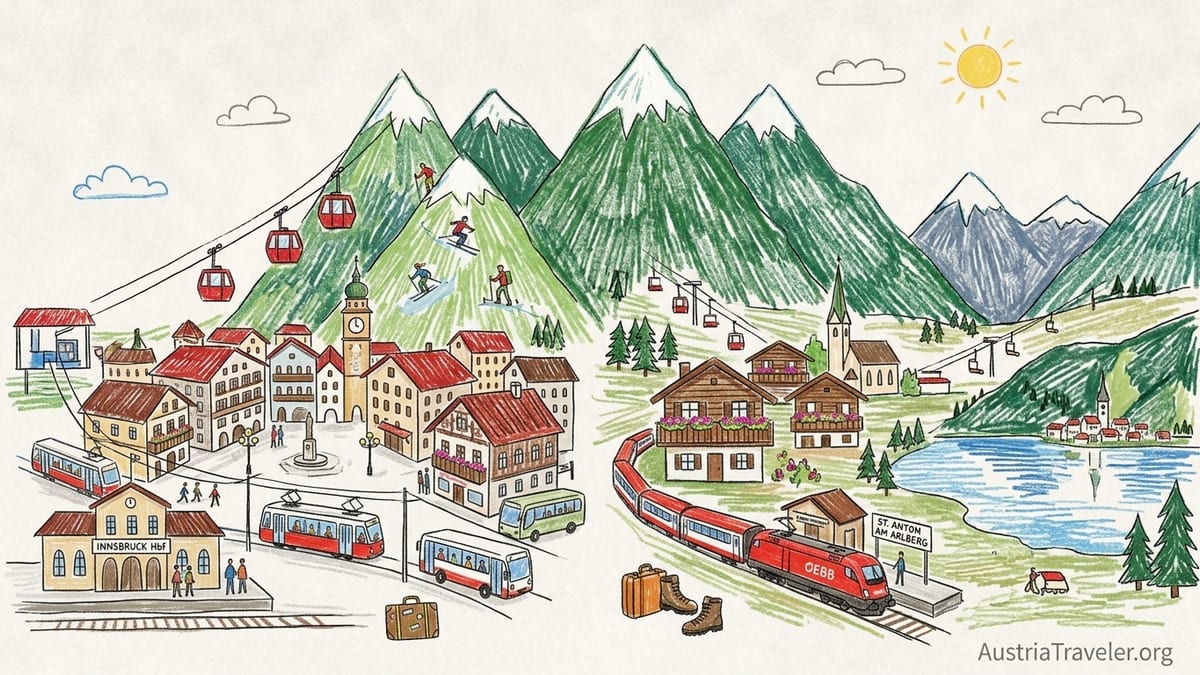
How Many Bases Do You Really Need in the Austrian Alps?
The first decision is not which village, but how many. After several trips, including the three-base itinerary above, my rule of thumb is simple. For a 7 day trip, choose one serious base and resist the urge to move. For a 10 day trip, two bases work well if they are in different valleys or regions. For a 14 day trip, two or at most three bases are enough before packing and check-in start to eat into your mountain time.
On my 12 night route, every move cost about half a day. Even with efficient Austrian check-out routines, I lost a morning to packing, driving, returning rental gear and shopping for the next self-catering kitchen. Over two weeks that is acceptable. On a one week holiday, it would feel like a waste. This is especially true in high valleys where the only road out involves slow traffic behind trucks or motorhomes and regular roadworks in summer.
Your style of travel matters too. If you are coming by train and relying on local buses, every hotel change means handling luggage on platforms and coordinating timetables. Rail hubs like Innsbruck, Zell am See and St. Anton am Arlberg are easy to reach because long distance trains stop right in town, sometimes within a 5 to 10 minute walk of many hotels.([innsbruck.info](https://www.innsbruck.info/en/destinations/arrival-mobility.html?utm_source=openai)) If you are driving, moving is simpler, but valley bottlenecks and weekend traffic can still slow you down.
For most travellers, the biggest gain comes not from chasing new towns, but from choosing one base that lines up with how you actually want to spend your days. If your priority is maximum slope time or daily high-level hiking, base yourself within a short walk or a quick bus ride of lifts and trailheads, and add a few day trips by train or car from there. Think of your second or third base as a change of scenery or climate rather than another version of the same thing.
Major Mountain Cities vs Classic Resort Towns
On my last trip I started with four nights in Innsbruck, the Tyrolean capital, to see how a small city works as an Alpine base. The main station is a long distance rail hub with direct or one change connections from Vienna, Munich, Zurich and beyond, and regional trains spread out along the Inn valley.([innsbruck.info](https://www.innsbruck.info/en/destinations/arrival-mobility.html?utm_source=openai)) From my hotel it was a 10 minute walk to the station, 5 minutes to supermarkets, and 10 to 15 minutes on a tram or bus to reach the base stations of local lifts. In practice that meant I could be on a cable car heading up the Nordkette before many resort-based guests had finished breakfast.
The strength of a city base is everyday convenience. Restaurants cover everything from Tyrolean inns to simple kebab stands, so you are never forced into half board if you do not want it. Supermarkets stay open into the evening, often until 7 or 8 pm, which makes self-catering easy even after a long hike. Hotels and guesthouses usually have structured parking, and if you do not bring a car, integrated guest cards often include free use of city transport and discounts on lifts, which keeps costs predictable.
The trade-off is atmosphere and morning routine. A city centre hotel is rarely ski in or ski out, and even the most scenic urban river promenade is not the same as opening your curtains to cows grazing below a limestone wall. You also may need 30 to 45 minutes from hotel door to mountain trailhead, between walking to a tram stop, cable car ride and any queues. If you are an early riser it is manageable. If you prefer to roll out of bed and onto the first chairlift, a dedicated resort town such as St. Anton am Arlberg, with gondola terminals built around the village edges and a railway station at one end of town, will feel more efficient, but usually more expensive per night.([en.wikipedia.org](https://en.wikipedia.org/wiki/St._Anton_am_Arlberg?utm_source=openai))
In winter, the cost gap between cities and headline resorts becomes very visible. Rail accessible resorts with big names, such as the Arlberg area, command higher room rates during peak weeks, both because of international demand and the convenience of walking from hotel to lifts in 5 to 10 minutes. In a city, the same budget might buy a larger room, wellness area and breakfast, but with that daily commute to the snow.
Quiet Villages: Peace, Dark Skies and a Bit More Transport
After the city section of my itinerary, I moved to a smaller village on a plateau, similar in feel to places like Seefeld in Tirol or Lermoos. Both of those are working Alpine communities that have grown into year round destinations without losing the feel of a village. Seefeld sits on a sunny plateau with its own train station and lifts rising directly from the edge of town, plus an extensive network of cross country trails in winter and hiking routes in summer.([austriadirect.com](https://www.austriadirect.com/olympiaregion-seefeld/?utm_source=openai)) Lermoos looks up at the Zugspitze, with chairlifts and gondolas starting a short walk from many pensions.([innsbruck-trip.com](https://www.innsbruck-trip.com/destinations/lermoos/?utm_source=openai))
In my case, the quiet base changed the rhythm of the day. Instead of grabbing coffee to go near the station, I had breakfast on a balcony with first light reaching the opposite ridge around 7:30 am in early autumn. Morning sun matters more than many guidebooks admit. Villages tucked deep in narrow valleys may not see the sun on their main streets until late morning in winter. Plateau and lakeside villages are brighter earlier, which helps families with small children and anyone who feels low when days are short.
The price for calm and views is that you may depend on your car more. In my plateau village, the supermarket was a 10 minute walk, but the broader choice of restaurants sat in a neighbouring village 10 to 15 minutes away by car. Some evenings the lack of variety within walking distance was noticeable. On the positive side, hotel parking was effortless. Most guesthouses had on site parking free of charge, and there were no tight underground garages to negotiate.
These quieter villages can be excellent value for skiers and hikers who prefer early nights. Several belong to large ski regions even though their names do not headline the brochures. Austrian tourism authorities actively promote the idea of staying small and skiing big: lesser known villages share lift networks with superstar resorts, giving you the same slopes for a lower room rate and quieter streets.([austria.info](https://www.austria.info/en-gb/highlights/small-ski-resorts/?utm_source=openai)) Daily transport might be a regular ski bus or a 10 to 20 minute drive to the main gondola, so you trade a bit of time and planning for savings and peace.
Lake Towns and High Valleys: Sun, Traffic and Daily Driving
The last part of my itinerary brought me to a lake town. Places like Zell am See illustrate both the strengths and challenges of this kind of base. Zell sits between lake and mountain and has a railway station in the middle of town, a few minutes on foot from the promenade and many hotels.([zellamseekaprun.at](https://zellamseekaprun.at/en/by-train-to-zell-am-see/?utm_source=openai)) In summer, that means you can combine boats, lakeside walks and high level hiking without touching a car. In winter, you can ride a gondola from near the centre of town directly into the ski area.
From a practical point of view, lake towns handle travellers without cars better than many high, dead end valleys. Regional and long distance trains arrive next to bus stops and taxi ranks, and guest mobility cards often allow free use of local buses around the lake and into side valleys.([zellamsee-kaprun.com](https://www.zellamsee-kaprun.com/en/service/arrival/direct-train-services?utm_source=openai)) For a couple or solo traveller, this can make car free travel realistic even in winter. For families, the picture is more mixed. The town centre may be walkable, but carrying skis, helmets and children on busy pavements to reach the lift can still be tiring.
By contrast, high valleys that end in big resorts often require more daily driving. If you choose a self catering apartment in a peaceful side hamlet because the view is wonderful and the price is lower, you may find yourself driving out of the valley or up to the main gondola every morning. Ten minutes on the map becomes 20 to 25 minutes door to lift when you factor in parking and walking in ski boots or hiking shoes. On my trip, I averaged around 40 minutes of driving per hiking day from the lake town, including the return journey.
Summer and winter bring different traffic patterns. In July and August, the main bottlenecks are through towns where lakeside roads and valley highways narrow. In winter, Saturday changeover days can be especially slow on the access roads to major resorts and through key motorway tunnels. Planning your base so that you do not need to drive out of the valley every single day reduces frustration and fuel costs. It can be worth paying a little more for a hotel within a 5 to 10 minute walk of lifts or a bus stop that goes straight to the main gondola.
With or Without a Car: How Transport Shapes Your Stay
The Austrian Alps work well without a car if you pick the right base. Night trains and fast daytime services connect major cities directly to mountain gateways such as Innsbruck, Zell am See and St. Anton, where you can step off the train and walk or take a short bus ride to your accommodation.([innsbruck.info](https://www.innsbruck.info/en/destinations/arrival-mobility.html?utm_source=openai)) Many regions then issue guest cards that include free local buses and sometimes mountain lifts, making it practical to spend a week hiking or skiing without driving.
If you travel car free, base choice becomes stricter. Look for a village or small town with its own station or at least a frequent bus link from a mainline station, plus lifts starting near the centre. Seefeld, for example, combines a train station on the route between Innsbruck and Munich with mountain lifts that rise from the village edge and a network of plateau buses.([austriadirect.com](https://www.austriadirect.com/olympiaregion-seefeld/?utm_source=openai)) This layout meant that my friends staying there could walk from their hotel to lifts in under 10 minutes and to supermarkets and restaurants in 5, saving both money and time.
Driving opens up smaller valleys and hamlets that buses serve only a few times a day. It also lets you change plans quickly if weather moves in on one side of the main Alpine ridge. On the other hand, you must think about parking at both the hotel and the lifts. While many guesthouses and holiday apartments include at least one parking space, some city and resort centre hotels charge nightly fees for underground garages. At popular ski areas, lift base car parks can fill by mid morning on sunny days, pushing late arrivals further down the road and adding to the boot walk.
When I split my time between city, plateau village and lake town, I used the car most in the plateau section. The lifts were walkable, but restaurants and alternative trailheads often required short drives, especially in the evening when buses were rarer. Around the lake, efficient buses and the walkable town centre meant I could park the car for days at a time. In the city, I used the car only to arrive and depart, because public transport was faster and parking garages discouraged daily use.
Different Travellers, Different Ideal Bases
Summer hikers have slightly different needs from winter skiers. In hiking season, access to varied trailheads and early morning sun matter more than ski in or ski out convenience. A base with two or three separate gondolas or funiculars within 30 to 45 minutes by bus or train, plus several unmanned trailheads reachable by car, will keep you busy for a week. Plateau villages and lake towns often work well here, giving you valley walks, ridge hikes and occasional lifts to higher ground.
Winter skiers, by contrast, feel every minute between breakfast table and first chair. For them, a base within walking distance of the main lift is worth paying for, especially in areas where morning ski buses fill quickly. Big rail served resorts like St. Anton or Kitzbühel combine high altitude terrain with compact cores where many hotels sit 5 to 10 minutes on foot from gondolas.([austria.info](https://www.austria.info/en-us/planning/car-free-holidays/?utm_source=openai)) Quieter linked villages on the edge of these areas, such as Ellmau in the SkiWelt region, offer access to the same ski area with a more traditional village feel and slightly lower prices, but you must pay attention to where the lifts start and where beginner slopes are located.([en.wikipedia.org](https://en.wikipedia.org/wiki/Ellmau?utm_source=openai))
Families usually benefit from a base that trades nightlife for logistics. Look for level streets, short distances from accommodation to nursery slopes or gondolas, and an easily reached supermarket. Self catering apartments near, but not directly on, a busy main street can hit the sweet spot: children can sleep despite occasional church bells, and you can still push a buggy to the bakery. Guest cards that include free local transport matter here, because buying separate bus tickets for a family several times a day quickly adds up.
Couples and solo travellers seeking quiet often find that smaller villages or hillside hamlets give them more of what they want. A place like Lermoos or Alpbach, with dark skies, traditional architecture and only a handful of evening venues, can be very restful compared with a major resort centre.([austria.info](https://www.austria.info/en-gb/highlights/small-ski-resorts/?utm_source=openai)) The key is to decide how much you value walking to dinner. If your idea of a perfect evening is a single guesthouse restaurant a minute from your room, a tiny hamlet works. If you want a choice between three or four casual places without needing the car, step up to a main village or small town.
What Really Matters When Comparing Bases
Over time, certain practical details have mattered more than any brochure headline when I choose where to stay. Proximity to lifts or trailheads is one. Being within a 5 to 10 minute walk of either a gondola or the bus stop that serves the main lift saves at least an hour of transport faff across a week. In both my plateau village and lake town, that detail made the difference between happy early starts and slightly resentful late arrivals.
Proximity to everyday services is the second. In my Innsbruck base, I had two supermarkets within 5 minutes on foot and multiple bakeries. In the quieter village, the nearest full supermarket was at the other end of town, a 10 to 15 minute walk or a 5 minute drive. In the lake town, a large supermarket sat opposite the station. Across Austria, accommodation categories like hotel, pension, guesthouse and ferienwohnung (holiday apartment) signal different levels of service, but the presence of a supermarket nearby often matters more than whether you have a four star rating or a three star rating.([mondsee.salzkammergut.at](https://mondsee.salzkammergut.at/fileadmin/user_upload/mondsee/Services/Kataloge/2020-11-10_Gastgeberverzeichnis_Web.pdf?utm_source=openai))
Sunlight and noise form the final pair. South facing plateaus and lake shores receive earlier light in shoulder seasons and winter, which lifts the mood and dries balconies and footpaths more quickly after rain or snowfall. In some narrow valleys, lower streets can feel shaded and cool for much of the day in November or January. Noise varies too. Town centres with bars and event calendars can be surprisingly loud on weekends, while villages set slightly above the main valley road stay quieter even when traffic flows below. On my trip, the only night I struggled to sleep was in a lake town room near a popular bar; in the plateau village the silence after 10 pm was complete.
Hotel parking fit into all these decisions. In the city hotel, an underground garage added a noticeable nightly cost and required planning each time I wanted to move the car. In the plateau village, parking was on a gravel apron next to the house, free and informal. In the lake town, structured parking was somewhere in between. When you compare bases, it is worth asking not just whether parking exists, but how easy it is to get in and out during snowy spells and how far you must carry luggage from the car to reception.
The Takeaway
Looking back at my 12 night itinerary, splitting time between a rail connected city, a quiet plateau village and a lakeside town gave me a balanced view of how different Austrian Alpine bases work. What changed most from place to place was not the postcard scenery, but daily practicalities: how long it took to reach a lift or trailhead, whether I needed a car to get dinner, how early the sun reached my balcony, and how much driving it took to escape the valley when weather shifted.
For a 7 day trip, the most efficient approach is to choose one well located base, ideally with lifts or bus stops within a short walk and a supermarket nearby. For a 10 day trip, adding a second base in a different style, for example pairing a lake town with a quieter side valley village, can keep the trip fresh without excessive packing. By the time you reach 14 days, you can justify up to three bases if you accept that each change costs some mountain time.
The Austrian Alps reward travellers who think first about their own routines and only then about famous names. A big resort with lifts at your doorstep may be worth the higher rate if you live for first tracks. A smaller village that plugs into the same ski area or hiking network might suit you better if you cherish dark, quiet nights and do not mind a short bus ride. Either way, the right base will feel less like a hotel and more like a temporary home in the mountains.
FAQ
Q1. How many bases should I choose for a 7 day trip to the Austrian Alps?
For one week, one well chosen base is usually best. You avoid losing a day to packing and moving and can get to know local trails and lifts in more depth.
Q2. Is it realistic to visit the Austrian Alps without renting a car?
Yes, if you choose rail connected bases such as Innsbruck, Zell am See or St. Anton and rely on regional trains, buses and guest mobility cards that include local transport.
Q3. What type of base works best for serious winter skiers?
A compact resort town or large village with accommodation within a short walk of the main gondola works best, so you can reach the lifts quickly each morning.
Q4. What kind of base is ideal for summer hiking?
A plateau village or lake town with multiple lifts or bus served trailheads within 30 to 45 minutes gives you varied terrain, from valley paths to high ridges.
Q5. Are smaller villages in the Austrian Alps really cheaper than famous resorts?
They often are, especially in winter. Linked but lesser known villages can share the same lift network as famous resorts while offering lower room rates and quieter streets.
Q6. How important is proximity to a supermarket when choosing a base?
It is more important than many people expect. Having a supermarket within a short walk simplifies breakfasts, snacks and self catering, and saves repeated drives into town.
Q7. Should I worry about valley traffic when picking a base?
Yes, especially in high, dead end valleys and on winter Saturdays. A base that lets you walk or take a short bus to lifts reduces time spent in traffic jams.
Q8. What kind of base suits families with young children?
Families usually benefit from a level, walkable village where nursery slopes, gondolas, playgrounds and supermarkets are all within a few minutes of their accommodation.
Q9. How does altitude and sunlight affect my stay?
Higher or south facing plateaus and lakes tend to receive more sun in winter and shoulder seasons, which makes mornings brighter and outdoor spaces more pleasant.
Q10. Is it worth splitting a 14 day trip between three different bases?
It can be, as long as you accept losing time on moving days. Many travellers find that two contrasting bases, such as a city plus a quiet village, already provide plenty of variety.