


The Austrian Alps reward even casual mountain travelers with big views and small, specific moments that stay with you for years: the smell of wood smoke in an alpine hut, the shock of icy lake water around your ribs, the quiet clank of cowbells somewhere out of sight. After a decade of repeat trips, I have tried the glossy brochure experiences and the unplanned detours, in summer hiking boots and on winter skis, solo and with friends. Some were absolutely worth the money and logistics. Some felt underwhelming compared to the promise. What follows is a candid account of the mountain experiences I would happily repeat tomorrow, and the ones I would treat differently next time.
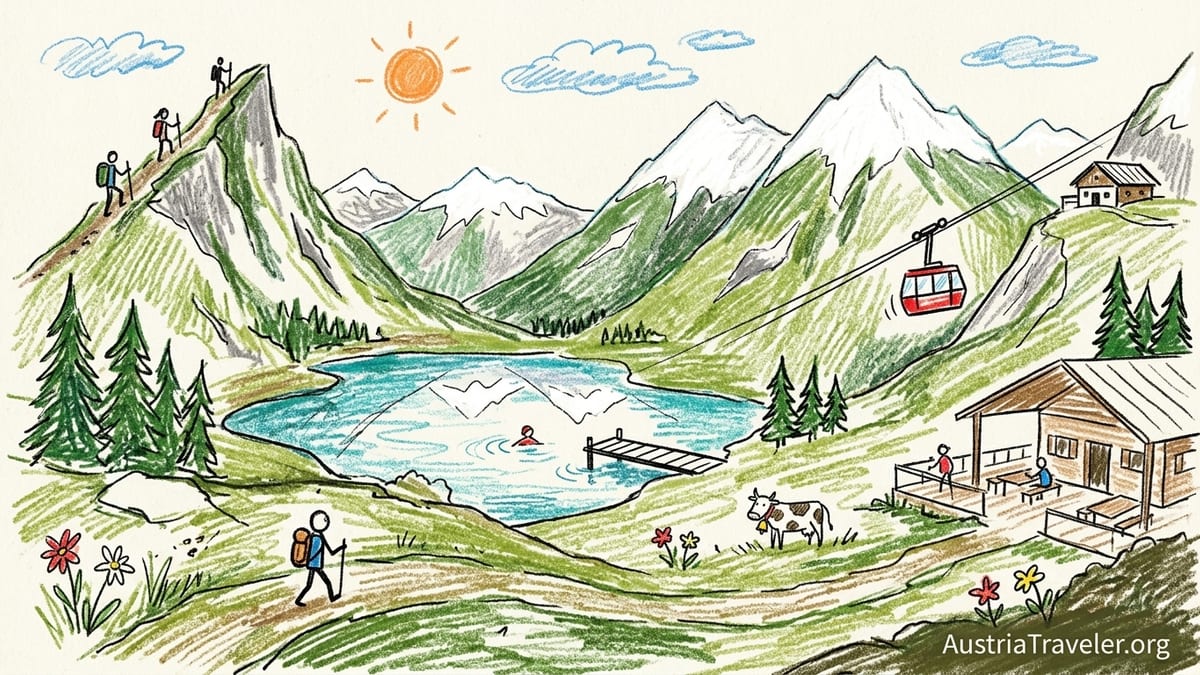
Hiking: From Valley Paths to High Ridges
On paper, hiking is the simplest way into the Austrian Alps. In practice, the gap between a mellow valley stroll and an exposed ridge walk can be enormous. My most balanced day hike started in Neustift im Stubaital in Tyrol, taking the cable car to the Schlick 2000 mid-station and following the Panoramaweg towards the Galtalm. I accessed it by buying a return lift ticket at the base station ticket window after 8:30 a.m.; in summer 2025 this segment was bundled into the local Stubai summer lift pricing, with adult returns typically a few dozen euros depending on guest cards. The walk itself took about four hours with photo breaks, covered roughly 400 meters of gentle ascent and descent, and never felt technically difficult. I wore light hiking boots, carried a waterproof, and used trekking poles more for rhythm than necessity. Even in July the air at around 1,600 to 1,900 meters was noticeably cooler than the valley, the trail was busy but not crowded, and I would repeat this route as a first taste of Tyrol any time.
Not every “panorama trail” felt as relaxed. A contrasting experience was a signed red route above Kitzbühel that I started from an upper lift station on the Kitzbüheler Horn. I had booked nothing in advance, simply bought a same-day ticket at the valley station, which cost in the mid-twenties in euros for the return trip. On the map the loop looked short, and the estimated walking time of three hours seemed reasonable. Once on the ground, one section traversed a steep grassy slope with loose gravel underfoot and a pronounced drop on one side. For experienced alpine hikers this is routine, but for my partner, who was less comfortable with exposure, the stretch felt mentally demanding. We were both wearing solid boots, but the emotional effort far exceeded what the tourist leaflet had implied. We finished in about three and a half hours, but I filed that route under “research better next time.” It did not justify the lift cost for anyone with a fear of heights, and I would now ask the local tourist office specifically about exposed sections before committing to a colored route in this area.
One pattern has held across Austrian regions from the Bregenzerwald to the Salzburger Land: valley-based half-day hikes that start and end on foot from a village tend to feel more relaxed and better value than short walks off a lift. Near Mellau in Vorarlberg I spent a late August afternoon following a signed river path and looping through farm tracks, with about 250 meters of elevation gain and no ticket required beyond a voluntary bus fare of a few euros. The weather was mixed sun and cloud at around 900 meters, and although mountain peaks loomed above, the walking surface was almost entirely on broad farm roads and forest tracks. For travelers unsure about alpine exposure, I would repeat that kind of valley circuit every time and treat high, narrow balcony trails with more caution than the “family” branding often suggests.
Cable Cars & Mountain Platforms: When the Lift Is Worth It
Austrian tourism boards love to promote fast access to high viewpoints, and sometimes the cable car is genuinely the smartest splurge. The Nordkette lift system rising from Innsbruck’s old town to Hafelekar, just below 2,300 meters, is one I have taken three times in different seasons. Tickets are sold at the Congress station or online; in recent summers, a round-trip all the way to Hafelekar has been priced for adults in the upper thirties to low forties in euros, with discounts via city cards. It takes about 20 minutes with changes at Hungerburg and Seegrube. Equipment needs are minimal in summer: sturdy shoes, a windproof layer, and sunglasses. Each time, the sudden shift from urban street to high-alpine rock and views over the Inn valley felt dramatic and worth the outlay, especially under clear blue skies with visibility out to the Karwendel peaks.
The catch is crowds. On a Saturday in mid-August, arriving around 10:30 a.m., we encountered a full, snaking queue at the base station and waited close to 40 minutes before boarding. At Seegrube, the terrace was packed shoulder to shoulder, and reaching the short summit path from Hafelekar station involved joining a thin line of people picking their way over gravel. The altitude, combined with the heat radiating off the rocks, made even this 15-minute stroll to the summit cross feel harder than expected for less acclimatized visitors. I still consider Nordkette an experience worth repeating because the view really is unique, but I would now only go early morning on a clear weekday, or in late season when cruise bus traffic has thinned.
By contrast, another famed panoramic road-access viewpoint, the Franz-Josefs-Höhe on the Grossglockner High Alpine Road above Heiligenblut, left me ambivalent. We drove the toll road in early September in a rented compact car collected in Zell am See, paying the standard passenger car tariff at the gate, which as of mid-2020s sits in the mid-thirties in euros for a day ticket, payable by card without prior reservation. The drive itself, with tight bends and changing light as we climbed to over 2,300 meters, was engaging and felt safe in dry conditions. However, once we reached the main viewing area after about an hour and a half from Zell am See, the large parking terraces were busy with coaches, motorbikes, and cars. The glacier below has visibly retreated, leaving more grey rock than ice, and the viewing platforms were crowded enough that lingering felt awkward. In pure scenery terms the road and side viewpoints justified the toll, but if I were short on time I would skip the central platform area entirely, stop at one or two quieter roadside pull-outs, and allocate more of the day to a short walk away from the road noise.
Swimming in Mountain Lakes: Cold, Free and Unforgettable
Of all the highland experiences I would repeat without hesitation, swimming in alpine lakes is at the top of the list, and also the cheapest. The catch is water temperature and safe access. One of my most memorable dips was in the Seebensee above Ehrwald in the Tiroler Zugspitz Arena. We started from the Ehrwalder Almbahn top station after buying a single ascent ticket in the morning for roughly a dozen euros per adult, then followed the well-signed trail towards Seebensee for about 90 minutes, gaining around 200 meters. I wore hiking boots and carried a small towel and swimsuit. By late July, daytime air temperatures at the lake’s roughly 1,650 meters sat around 18 to 20 degrees Celsius, but the water was significantly colder, likely in the low teens. Entering slowly from the pebbled shore, I managed a quick three-minute swim, enough to feel the shock give way to a powerful freshness before getting out. There were perhaps 40 people scattered around the shoreline, mostly paddling or sunbathing. No fee, no lifeguards, and no facilities beyond informal picnic spots, but as a sensory contrast to cable cars and cafés it felt priceless.
Not every planned lake swim worked. Near Zell am See, I had pictured an evening float in the Zeller See with mountain silhouettes around me. Access is managed through several official lakeside lidos and bathing areas, with day tickets costing around the price of a modest café meal, and there are also free public patches of shoreline. In late June, we arrived at one of the paying lidos after 5 p.m., paid the reduced late-day entry price at the kiosk, and hurried through the changing rooms only to find the water uninvitingly choppy. A stiff wind had blown up, clouds covered the sun, and the water felt biting. I waded in to knee height and stepped back out. On paper it was a minor loss, but it underlined how dependent lakeside plans are on micro-weather and time of day. In hindsight I would have skipped the entrance fee, found a free stretch of shoreline, and been content to sit with a takeaway drink, treating an actual swim as a bonus rather than an expectation.
The clearest win in this category was entirely free. While staying in a guesthouse in the Bregenzerwald, my host pointed me toward a small, signposted Waldsee, a forest pond ten minutes on foot from the village center, with a simple jetty and no lifeguard. The water in early August was warmer than any high-altitude lake, there were only a handful of locals, and the only cost was time. After a day of driving and short walks, a half-hour float here at sunset felt more restorative than any paid spa session. If you enjoy water but not icy temperatures, I would always ask locals about low-key swimming spots rather than aiming only for Instagram-famous high lakes that may be beautiful to look at but brutal to enter.
Alpine Hut Lunches: Paying for Views and Logistics
Austria’s alpine huts are essentially the country’s second restaurant scene, operating at altitudes where trucks cannot reach and most supplies arrive on small cableways or, higher up, by helicopter. Prices reflect that reality. On a July hike in the Schladminger Tauern I stopped for lunch at a staffed hut around 1,900 meters. I had not pre-booked anything; day hikers simply walk in, find a table, and order at the counter or with a server. My plate of Käsespätzle, a pan of dense noodles baked with mountain cheese and onions, cost just under 15 euros, and a half-liter of apple juice spritzer was around 4 euros. Cash and card were both accepted. From a valley restaurant perspective these prices were slightly high, but sitting on a terrace looking across at rugged 2,800 meter peaks, with clouds passing in and out, I did not begrudge a cent. The food was hot, filling, and unpretentious, and I would plan a lunch stop here again as part of the hiking day rather than carrying my own main meal.
Elsewhere, hut meals felt like poor value, especially close to lift infrastructure. At a self-service restaurant near the top of a major Tyrolean ski lift in winter, my tray of fries and a basic sausage plate came to nearly 20 euros, with an additional few euros for a drink. It had been an impromptu stop, paid by card at the register, with no reservation required. Inside, noise bounced off hard surfaces, and outside, seating on the terrace was scarce around lunchtime. The food itself was forgettable and lukewarm. In that instance, the meal was mainly a function of hunger and location. I left with the clear sense that for day-trippers skiing or hiking from big lift stations, a simple packed sandwich or wrap brought from the valley would often be both cheaper and more satisfying, augmenting it with a hut coffee or dessert instead of a full plate.
Spending the night in huts adds another price layer. On a multi-day hut-to-hut trip in the Dachstein region, I booked beds directly with two Alpine Club huts by email using addresses from the regional tourism site, several weeks in advance for an August stay. Bed-only prices for non-members hovered around 30 to 40 euros per night in lager dormitories, while half-board packages, including a set dinner and breakfast, added roughly the same again. At one hut, the mountaineer’s set meal overtook 20 euros, making the total close to 60 euros per person per night. For that price we received hearty mountain food, a bunk with blankets at around 2,000 meters, and a warm common room out of the wind. Given the logistics of operating at altitude and the lack of cheaper alternatives on the ridge, I still found this justifiable. However, for future trips I would strongly consider joining an Alpine Club in advance, as current memberships in Austria and Germany often secure meaningful discounts on overnight and meal rates along with rescue insurance, a combination frequent hut users will recoup quickly.
Skiing & Glacier Days: High Cost, High Reward
Winter turns the same mountains into a different playground, and the cost structure changes with them. My most striking ski day in Austria was on the Stubai Glacier, reached by car from Innsbruck in just under an hour. We parked in the large free lot at the base station and bought day ski passes at the ticket counter on the spot, though online purchase is also offered and sometimes shortens queues. For the 2025 to 2026 season, adult day tickets for the Stubai Glacier alone were advertised starting in the high forties in euros when bought in advance, with dynamic pricing and multi-day passes costing proportionally more. We also rented skis and boots from an Intersport outlet next to the lift station, paying around 35 to 40 euros per day per person for mid-range equipment. Altogether, with fuel and a simple on-mountain lunch, the day approached 120 to 130 euros per person.
In return, we skied broad glacial slopes between roughly 2,300 and 3,150 meters, with snow quality that felt closer to January than spring despite it being late April. Weather on our visit was crisp and mostly sunny with occasional flat light when clouds rolled in. Crowds were moderate in the morning and heavier near popular lifts by midday, but long high-capacity gondolas and multiple runs spread people out reasonably well. Physically, the skiing itself ranged from relaxing on blue pistes to demanding on steeper reds, and altitude made even moderate runs more tiring after several hours. I would repeat this glacier day in similar conditions, but would be cautious on marginal weather days, when wind can close exposed lifts and cloud can turn the expansive landscape into a shallow grey bowl, eroding both visibility and value.
By contrast, a lower valley ski area near Zell am See offered excellent scenery over the lake but less convincing value when snow conditions deteriorated. We bought a same-day lift ticket at the base, paying in the mid-forties in euros for a one-day adult pass, then found that warm temperatures had turned lower slopes into a mix of slush and ice. Only upper runs above around 1,600 meters held enjoyable snow, and by early afternoon these too were heavily chopped. The area did its best with grooming and snowmaking, but we finished the day sore and slightly frustrated. In retrospect, I would have shifted that budget into either a higher, colder area or a non-ski activity such as a scenic rail excursion to a nearby valley, saving the downhill days for when conditions aligned better with the lift prices.
Cycling & Scenic Driving: When the Road Is the Destination
The Austrian Alps invite two very different wheeled experiences: road cycling and scenic motoring. I have done more of the second, though I have also sampled e-bike rentals in mountain regions. In the Gastein Valley, I rented an electric bike from a local sports shop in Bad Hofgastein for a half-day rate of around 35 euros, arranged in person one afternoon in early September without pre-booking. The staff set the saddle, provided a helmet and basic lock, and pointed me toward a signed riverside cycle path that climbed gently towards Böckstein. The route mostly followed quiet back roads and dedicated bike paths, with only occasional short stretches on local roads. Over three hours we covered roughly 35 kilometers with about 400 meters of cumulative ascent, something I would not have attempted comfortably on a regular bike. The weather was mild and dry, in the high teens Celsius, and traffic on the path light. It felt like an ideal way to see lateral valley views without either the stress of mountain driving or the sweat of a full-sport ride.
On the flip side, a planned detour over a well-known panoramic pass by car felt only partially successful. Driving the Gerlos Alpine Road between Salzburg and Tyrol, we paid the private road toll for a standard car at a booth, an amount under 15 euros at the time, and climbed steadily through forests to reach a famous waterfall viewpoint. Unfortunately, low clouds had dropped into the valley, and visibility at the main platform was reduced to a hazy wall of white and grey. There were still several coaches in the parking area and a stream of visitors, but very little scene to enjoy. The drive itself, while pleasant, did not differ dramatically from toll-free high roads in other regions. Given limited travel days, I would probably skip paying for a private panoramic road in doubtful weather and instead pick a regular mountain pass or side valley road that offers similar driving satisfaction for the cost of fuel alone.
As for self-powered climbs, I once joined a small group road ride from Innsbruck up to Igls and further toward the Patscherkofel area using a rented road bike, organized through a local guiding outfit that I had contacted via email the week before. The half-day guided ride, including bike, cost just over 100 euros. That price bought route planning, mechanical backup, and a guide who knew where traffic tended to pinch. Still, the climb on narrow tarmac with local drivers took mental energy, and stretches of the route felt less scenic than alpine marketing material might imply, because tree cover and development limited distant views. For strong, confident cyclists used to traffic, this might be a highlight. For me, the cost-to-reward ratio was weaker than for a quieter e-bike valley ride or a rented car on a free high road, and I would not repeat this specific format.
Via Ferrata & Glacier Edges: Staying Honest About Risk
Via ferrata routes, where climbers clip into fixed steel cables along cliffs, look thrilling in brochures, and Austria has invested heavily in them. My first full via ferrata experience in Austria was near Innsbruck on a beginner-friendly route accessed from a lift. I joined a guided half-day introduction run by a local outdoor school, booked in advance through their online form and confirmed by email. The fee was around 70 euros per person in a small group of six, including a certified guide, full via ferrata kit, and helmet; we supplied sturdy shoes, gloves, water, and a light jacket. After taking a cable car that we paid for separately at the valley station, we walked about 20 minutes to the route start around 1,800 meters. The actual climbing portion lasted roughly two hours and involved rungs, small traverses, and exposure with a few sections looking down several hundred meters.
Physically, the outing was moderately demanding, especially on the forearms and legs when stepping out on metal bars over space. Mentally, it was intense at moments but felt controlled thanks to the guide’s pace and instruction. Weather stayed dry with partial cloud and little wind, and crowds were low, with only one other party of two visible on the line. In terms of value, the experience fully justified both the guiding fee and the cable car ticket, because trying this for the first time without instruction or proper gear would have been reckless. I would repeat a guided via ferrata like this and might tackle slightly harder routes in future, but I would not underplay the seriousness of even “family” graded paths if anyone in the group is uneasy with heights.
Glacier experiences demand even more respect. On the Stubai Glacier, I once joined a short guided walk on a groomed glacier trail, not a full crevasse tour but more than a piste-side stroll. The activity was advertised at the lift station and could be booked on the same day if spaces remained, with a fee in the region of 40 euros per adult including basic equipment like a harness and simple rope use, but excluding the mandatory lift pass. Our small group rode the gondola to a high station over 3,000 meters and spent about 90 minutes walking in light boots with microspikes under the supervision of a mountain guide, roped together on shallow gradients. The thin air was noticeable, and a couple of participants experienced mild headaches and shortness of breath by the end.
The scenery, however, was stark and memorable: blue crevasse mouths, distant rock ridges, and the audible crunch of dry snow underfoot. Physically, it was a steady but not technical walk, yet the altitude and exposure to weather meant it was not a casual add-on. When clouds moved in, temperature dropped sharply, and even in August a windproof shell, hat, and gloves were essential. I would repeat a glacier edge walk like this once every few years, but only with certified guides and in stable weather. I would not recommend it for anyone with significant altitude sensitivity, nor as a last-minute choice at the end of a ski day when fatigue is already high.
The Takeaway
Looking back across these Austrian Alps trips, a pattern emerges. Experiences that combined predictable logistics, clear physical demands, and flexible timing delivered the most satisfaction for the money: valley hikes starting from the door of a guesthouse, lake swims that cost only the courage to get cold, e-bike rides along river paths, and hut lunches integrated into a longer walk. High-cost, weather-sensitive outings like private panoramic toll roads, marginal-condition ski days, and summit platforms at peak crowd times were the ones most likely to disappoint or feel only partially justified.
When planning your own trip, the lesson is not to avoid big-ticket items altogether, but to pick a few that truly align with your interests and accept that some will be more about the journey than the perfect brochure moment. Reserve glacier and via ferrata experiences with reputable local guides, scrutinize the elevation profiles of any “family” trail that sits above treeline, and be willing to swap a famous platform for a quiet forest pond if the clouds and queues are not on your side. Austria’s official line about year-round mountain tourism holds up on the ground, but the best memories often come from simple, flexible days where the only fixed appointment is a hut terrace and a plate of something hot as the weather rolls past.
FAQ
Q1. Do I need special equipment for most summer hikes in the Austrian Alps?
For well-marked summer day hikes below about 2,000 meters, sturdy walking shoes or light hiking boots, a waterproof jacket, and a small pack are usually sufficient. Trekking poles can help on descents, and a hat, sunscreen, and at least one warm layer are useful even in July or August because weather can shift quickly.
Q2. How expensive are alpine hut lunches compared with restaurants in the valley?
On recent trips I typically paid between 12 and 18 euros for a main dish such as Käsespätzle or a stew at staffed huts around 1,800 to 2,000 meters, with drinks adding 3 to 5 euros. This is often a bit more than a similar plate in a town, but you are also paying for supply logistics and the setting. Close to busy lift stations, self-service restaurants can be pricier and feel less satisfying than smaller huts reached only on foot.
Q3. Is swimming in alpine lakes safe, and how cold is the water?
Safety depends on access, swimming ability, and weather. Many popular lakes have gently shelving shores and are widely used for bathing, but there are usually no lifeguards away from official lidos. Even in high summer, water in high-altitude lakes can be icy cold, easily in the low teens Celsius, so most people limit themselves to quick dips. Lower valley lakes and forest ponds are warmer and more comfortable for longer swims.
Q4. Are Austrian cable cars and scenic mountain roads worth the ticket prices?
They can be, particularly when they solve a big elevation gain or connect city centers to genuine high-alpine scenery, as in Innsbruck’s Nordkette lifts. Road tolls for famous passes and entrance fees for panoramic platforms feel most worthwhile on clear days with good visibility and when you plan extra time for a short walk away from the main crowds. In poor weather, or at peak midday times when platforms are packed, the perceived value drops sharply.
Q5. How fit do I need to be to try a via ferrata in the Austrian Alps?
Beginner-friendly via ferrata routes are designed for reasonably active people with no technical climbing background, but you should be comfortable on steep mountain paths and with significant exposure. A guided introductory tour typically lasts three to four hours including approach and return, and you will spend one to two hours on the cables and rungs. Good shoes, steady balance, and a calm head for heights are more important than raw strength.
Q6. What does a typical ski day cost at a major Austrian resort?
Recent visits to large areas such as the Stubai Glacier suggest that an adult day lift ticket alone often runs from the high forties into the fifties in euros, with equipment rental adding roughly 30 to 40 euros per day. On-mountain food and drinks can add another 20 to 30 euros, plus transport costs to the resort. All-in, a full ski day at a flagship area commonly lands between 100 and 150 euros per person, depending on choices.
Q7. Do I need to reserve alpine huts in advance, or can I just show up?
For summer weekends, popular long-distance trails, and any overnight stays above about 2,000 meters, it is wise to reserve a bed directly with the hut weeks in advance, usually by email or phone. On calmer weekdays in shoulder seasons some huts may accept walk-ins, but there is always a risk of being turned away if they are full. Reservations also help huts plan food and staffing, especially in remote locations.
Q8. Are e-bikes a good way to explore Austrian mountain valleys?
In my experience, yes. Renting an e-bike for a half or full day in places such as the Gastein Valley allowed me to cover 30 to 40 kilometers and several hundred meters of ascent with manageable effort. Rental shops usually include a helmet and basic lock and are happy to suggest routes that avoid heavy traffic. Costs are higher than regular bike rentals, but the added range and reduced sweat make them an excellent choice for mixed-ability groups.
Q9. How crowded are the most popular viewing platforms and glacier areas?
Well-known spots linked to roads or large lifts, such as Franz-Josefs-Höhe on the Grossglockner road or high glacier platforms, can be very crowded in high season between late morning and mid-afternoon, especially on sunny weekends. Arriving early in the day, visiting on weekdays, or targeting shoulder-season windows in June or September can significantly reduce crowding and improve the experience.
Q10. What is the best way to balance cost and experience when planning an Austrian Alps trip?
A mix of free or low-cost activities and a few carefully chosen big-ticket experiences works well. Combine valley hikes, local swimming spots, and self-guided sightseeing with one or two standout days, such as a glacier ski outing or a guided via ferrata, that genuinely match your interests. Check recent prices and weather, be realistic about fitness and comfort with heights, and leave room in your schedule to swap plans if conditions or crowds look unfavorable.