

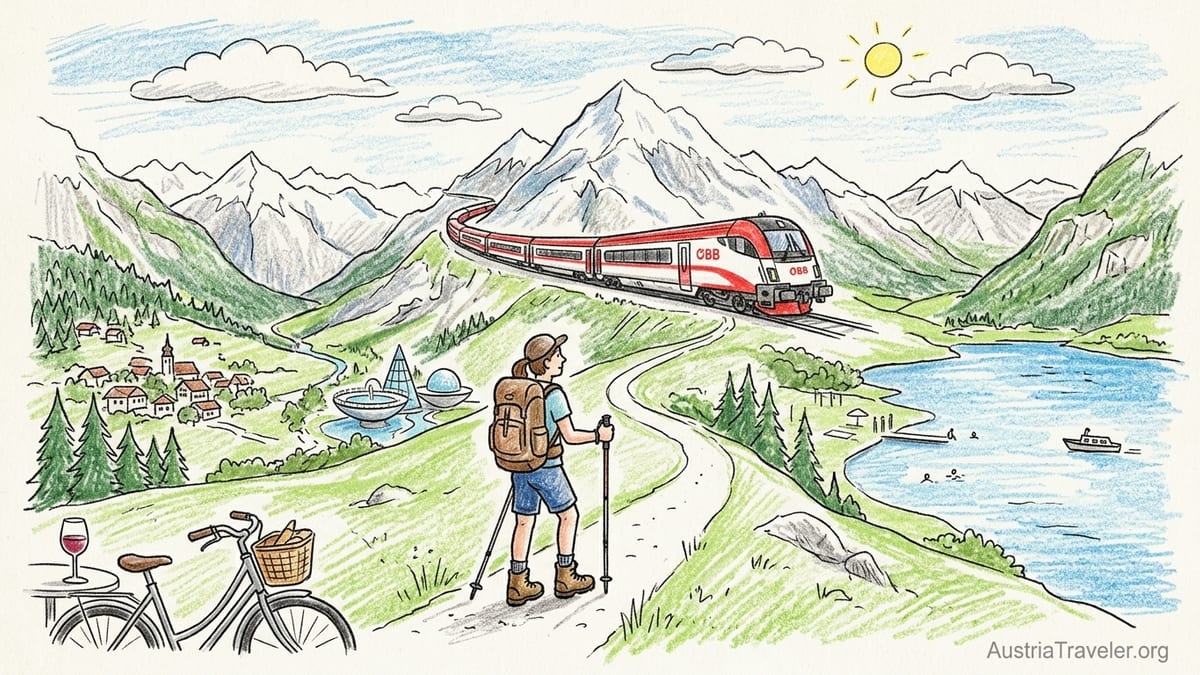
Austria’s tourism campaigns promise flawless Alpine lakes, efficient trains and spa steam rising against glacier views. After several trips spread across different regions, I have learned that some of those promises are justified and some things look better on Instagram than in person. This guide is organized by experience type rather than by destination, and focuses on what I have actually done in Austria: scenic train travel, Alpine hiking, cable cars and mountain huts, lake swimming, thermal spas, wine country, city culture and scenic drives. For each one I explain where it happened, how I booked it, what it cost, what the conditions were like on the ground and, most importantly, whether I would genuinely pay to do it again.
Scenic Train Travel Across the Alps
My favorite way to see a cross-section of Austria in a single day has been by long distance train. The route I have repeated most often runs from Vienna Hauptbahnhof to Innsbruck on an ÖBB Railjet, continuing on a smaller regional train into the Seefeld plateau. I booked directly through the ÖBB website and app, usually grabbing Sparschiene advance fares in second class. On a recent autumn trip I paid just under 40 euros one way booked several weeks ahead, compared with a standard walk up fare that can be roughly double that on busy days. The four hour Vienna to Innsbruck leg gave me river valleys, wind farms and the approach to the high Tyrolean peaks, but the scenery is less dramatic than the photos on rail marketing brochures suggest. I enjoyed the comfort and the ability to work, yet if I were traveling purely for views I would modify this route.
For scenery that actually lived up to expectations, I had better luck piecing together a slower cross Alpine day between Innsbruck and Salzburg, using regional trains via Zell am See. I booked this again through ÖBB, building the trip as two or three separate segments to match the trains I wanted. The overall cost came to around 55 euros in second class without discounts. The run from Innsbruck east through the valleys, and later along the lake near Zell am See, delivered the classic Austria of blue water and steep peaks that I had expected earlier. Travel time stretched to well over five hours with changes, but this was one of the few long train days in Europe that I would happily pay to repeat purely for the views.
There have also been disappointments. A Vienna to Salzburg Railjet at midday in July, again booked via ÖBB with an advance fare of about 25 euros, was efficient but visually dull after the first hour. The cabin was quiet, air conditioned and on time, but large stretches of the route crossed flatter farmland and industrial fringes rather than dramatic mountains. It was excellent transport but not a bucket list scenic ride. If I did it again I would still use the train for the convenience, yet I would not build a trip theme around this particular route. For anyone chasing scenery specifically, I would steer them to itineraries that include the Zell am See region, the Enns valley or the Semmering line and treat the fast Vienna to Salzburg corridor as pure logistics.
In terms of physical difficulty, train travel in Austria has been straightforward. The main strain comes from handling luggage on and off platforms, especially when making tight regional connections. Summer carriages can be busy and I found that an inexpensive seat reservation in second class on the ÖBB Railjet was worthwhile on peak weekends, particularly with a suitcase. Weather mostly matters for what you see out of the window and for the mood inside the carriage. On a clear autumn day, the light on mountain slopes approaching Innsbruck was stunning; on a rain streaked November afternoon the same route felt functional rather than romantic. Overall I would absolutely pay to repeat the longer, more scenic itineraries, but I now treat the flagship high speed routes as the backbone of a trip rather than as an experience in their own right.
Alpine Hiking, Cable Cars and Mountain Huts
Hiking in Austria is heavily promoted, and in this case the reality has matched the brochure shots more often than not. One of my base camps has been the Seefeld plateau in Tyrol, a high valley north of Innsbruck with a web of marked trails, modest peaks and several lifts. I stayed in a mid range hotel that provided the regional guest card, which in turn discounted some lifts and local buses. To reach trailheads I mostly walked straight from the village or took short bus rides included with the card. The cost on the ground came primarily from cable cars on days when I wanted to shortcut the ascent, which ran in the region of 20 to 30 euros for a return ticket depending on the mountain and season. Hiking itself was free, and in several cases these unpaid ridge walks were more memorable than activities that had a ticket price attached.
One outing I would repeat was a day that combined a morning cable car from Seefeld up toward Seefelder Spitze with an undulating ridge hike and a late lunch at a simple mountain hut. I bought the lift ticket at the valley station that morning after checking the weather forecast and cloud levels. The return ticket was just under 30 euros, and the hike from the top station to the summit and along the ridge took around three to four hours at a relaxed pace, with roughly 500 to 700 meters of cumulative ascent. It was rated moderate rather than technical, suitable for reasonably fit day hikers without special equipment beyond sturdy boots, layers and trekking poles. The weather was dry with intermittent cloud, which mattered enormously: on my first attempt in low visibility the same route felt monotonous, while on the clear day the Karwendel Alps stretched out like a textbook diagram of folded rock.
The mountain hut stop that day stands out as one of the best value experiences I have had in Austria. For the price of a soup, a plate of Kaiserschmarrn and a non alcoholic drink, which came to under 20 euros in total, I bought a front row seat for a couple of hours of mountain watching. The terrace was busy but not overwhelming in mid September, mostly with Austrian and German hikers who had taken their time descending from the summit. I did not need any booking; the hut operated on a walk in basis and there were still seats available at off peak lunch hours. If I had to choose between paying again for this hike and hut day or for a more expensive cable car ride that only offered a viewpoint and a restaurant, I would put my money on the hike every time.
Not every mountain outing was equally satisfying. A different day, I tried a shorter tourist oriented cable car behind an Alpine town that promised panoramic viewing platforms, a branded photo point and a busy restaurant at the top station. The return ticket approached 40 euros, the ride itself lasted less than ten minutes and there was limited hiking beyond compact gravel paths laid out near the viewing decks. Crowds at midday were dense, with photo queues and loudspeaker announcements, and even though the weather was fine the experience felt like an amusement park more than a mountain escape. I would not pay to repeat that particular ride. If I had my time again I would either arrive for the first departure in the morning to have some quiet, or choose a smaller local lift that focused more on trails than on theme park style infrastructure.
Lake Swimming and Simple Days on the Water
Austria’s lakes are some of the few places where my actual swims felt even better than the marketing pictures. One of my repeat favorites has been Lake Wolfgangsee in the Salzkammergut region, reachable by bus from Salzburg in under an hour. The shore is dotted with both paid lidos and free public access points. On a recent August visit I spent a day at a small public bathing meadow near St Gilgen, reached on foot from the village center without any transport cost beyond the bus ticket from Salzburg. Entry was free; facilities were limited to basic changing corners and a small kiosk, which kept the area feeling low key and local compared with the larger, paid lakeside complexes that can charge a few euros per adult.
The water at Wolfgangsee was clear enough to see pebbles at my feet several meters from shore, and on a warm day in high summer the surface felt comfortably swimmable even for long stretches. I brought my own towel, a lightweight travel mat and basic water shoes to handle stony entry points. Crowds built up gradually from late morning but even in school holiday season there was room to spread out if you arrived before midday. The only real physical effort came from swimming against light wind chop further out and from climbing back up grassy banks after repeated dips. I would unhesitatingly pay again for the bus fare and a simple picnic to repeat this day, and I would still choose the free meadow over a busier paid lido unless I was traveling with children who needed slides and diving platforms.
Elsewhere, I tried a designated paid bathing beach on another Austrian lake, this time with formal entry gates, changing cabins and a snack bar. The admission price was around 4 to 6 euros for an adult day ticket, with discounts for local guest card holders. The facilities were undeniably convenient and the grassy area was well maintained, but I found the atmosphere more regimented, with loud music over speakers and crowded shallows near the main ladders. The water quality itself was comparable to the free area I had visited elsewhere, and I left feeling that the upgrade had not been necessary for how I personally like to swim. The extra cost made more sense for families that wanted lifeguard presence and amenities, but for a solo traveler who was comfortable reading the safety signs and judging conditions, the free alternatives felt like better value.
Weather plays an outsized role in whether a lake swim justifies the time and cost. On one early September afternoon at a smaller lake near a Tyrolean town, clouds rolled in shortly after I arrived, air temperatures dipped below 20 degrees and the water felt bracing rather than refreshing. I stayed an hour and took one short dip more for the principle than for pleasure before heading back to the train. The entry was free so the financial loss was minimal, but I would not reshape an itinerary around shoulder season lake days unless I had flexibility to chase the sun. In prime summer conditions, though, these swims have been some of the simplest and most satisfying experiences in Austria, often beating far more expensive activities on a pure enjoyment per euro basis.
Thermal Spas and Wellness Days
Austria’s thermal spa culture is almost a parallel universe to its hiking trails, and my most immersive version of this was a full day at Aqua Dome in Längenfeld in the Ötztal valley. I booked a day ticket online directly through the spa’s official booking system a few weeks ahead, which secured entry and avoided queuing at the door. At the time of my last visit, basic day tickets for adults started in the high 20 euro range for the bathing area, with combined thermal and sauna tickets and premium day spa packages climbing significantly higher. I chose a mid range option that included access to the main pools and the sauna complex but not the most premium loungers. By the time I factored in a main meal, snacks and drinks inside the complex, the total outlay for the day approached the 70 to 80 euro range.
The financial investment was considerable compared with a free hike or a simple lake swim, but the experience justified it more than I expected. The outdoor thermal pools are arranged in futuristic bowls with views of the surrounding peaks, and on the autumn day I visited steam rose against a backdrop of early snow higher up the slopes. I arrived mid morning and stayed until early evening, rotating between hotter pools, cooler swimming basins and the various saunas. The day was not physically demanding in the way a hike would be, though climbing stairs between levels and staying hydrated in the heat required some attention. The biggest challenge was pacing myself so that I did not feel sluggish by late afternoon. I brought only basic swimwear and flip flops; towels and robes were available on site for an additional rental fee, which added to the overall cost.
Crowds at Aqua Dome were manageable on a weekday outside local school holidays, with enough loungers and quiet corners to avoid feeling packed. I have seen photos and heard reports of much busier weekends, and based on that I would avoid Saturdays in peak seasons. From a value perspective, I would pay to repeat this specific spa day on a trip designed around relaxation or recovery after difficult hikes. It is not something I would add on a short city break purely to tick a box, partly because of the money involved and partly because a rushed four hour visit would undermine what the place does best, which is to make you forget about time.
Not all spa style experiences have felt as worthwhile. I have also tried smaller hotel wellness areas included in room rates in Austrian mountain towns, featuring compact pools, one or two saunas and relaxation rooms. These spaces were pleasant and essentially free once I had booked the accommodation, yet compared with a dedicated thermal destination they tended to blur together. Lighting often felt more functional, views were sometimes blocked by nearby buildings and there was less variety of temperatures and atmospheres. I would not pay a separate day ticket for most of these, but as included amenities they were a comfortable way to unwind muscles after hiking, especially in poor weather when outdoor options were limited.
Wine Country, Cycling and Scenic Driving
To get a sense of Austria’s wine and cycling culture, I spent several days in the Wachau valley along the Danube between Krems and Melk. Although this area is closer to gentle hills than to high Alpine drama, it offered a useful counterpoint to the mountain trips. I based myself in a small guesthouse in a wine village and rented a simple city style bike from a local shop for a day, paying around 20 to 30 euros for a full day including lock and basic repair kit. The route followed the marked cycle path along the river, mostly flat and separated from traffic, which kept physical difficulty at an easy to moderate level even for someone who does not ride regularly.
Along the way I stopped at a family run winery that advertised a short tasting on a chalkboard outside. No reservation was required for a basic tasting; I simply rolled up, parked the bike in the courtyard and followed the signs. The tasting flight included several small pours of Grüner Veltliner and Riesling, with a modest fee credited back against any bottle purchase. Between the tasting and a light snack of bread and cheese, I spent under 20 euros, and the winemaker was happy to talk through vintages and soils in a mix of German and English. This felt more personal and grounded than some big city cellar tours I have done elsewhere in Europe, and I would gladly repeat it on a future trip.
In terms of scenic driving, I have mixed feelings. I have rented a car for a loop from Innsbruck through some Tyrolean side valleys and back, booking through a mainstream international rental firm at Innsbruck station. The daily rate in high season, with automatic transmission and basic insurance, landed around 100 to 130 euros once mandatory fees were included, not counting fuel. The freedom to stop at viewpoints and small villages was enjoyable, and on a sunny early summer day the drives up certain side valleys were objectively beautiful, with waterfalls, traditional farmhouses and views into glacier basins. Yet the stress of narrow roads, hairpin bends and managing parking in small villages reduced my overall enjoyment. On balance, I would only rent a car again in Austria if I had companions to share both cost and driving, and a specific plan for remote trailheads that public transport could not reach comfortably.
Cycling, by contrast, felt like a more relaxed way to access scenery without the stress of car rental. The Wachau, for example, linked art and culture through its river towns with active time on the bike in a way that never felt punishing. Weather again was key: on a crisp spring day with temperatures in the high teens and low traffic on the path, it was one of the more balanced days I have had in Austria. In heavy heat or rain, the same route would likely have been a slog. Crowd levels on the path peaked near ferry crossings and in front of famous monasteries but never reached the density of urban cycle commutes. If I had to choose, I would spend marginal euros on another day of cycling and tasting along the river rather than renting a car solely for sightseeing, unless there was a compelling off grid destination on my list.
City Culture Days in Vienna and Beyond
No account of Austria would feel complete without its cities, and for me Vienna remains the most satisfying urban base in the country. On repeated visits I have structured culture days around one or two major museums and plenty of walking rather than trying to tick off every palace in a single weekend. I usually buy individual tickets at museum entrances or online the night before, with major institutions charging in the region of the low to mid 20 euros for adult entry. Combined or annual passes can offer better value for locals or long stays, but as a short term visitor I have preferred the flexibility of picking only what I felt like engaging with deeply.
One standout day paired a morning in an art museum with an afternoon wandering through historic neighborhoods and coffee houses. The physical difficulty was minimal apart from hours on my feet, which good shoes handled easily. Public transport in Vienna has been straightforward to navigate, and I purchased 24 or 48 hour passes through ticket machines or the local app, usually spending under 20 euros for unlimited trams, buses and metro rides over a couple of days. Weather conditions changed the flavors of these days more than their feasibility; in winter I ducked into interior courtyards and cafés more often between visits, while in summer I took more breaks in shaded parks.
There have been culture experiences that felt overhyped in person. Certain palace tours, for example, involved dense crowds shuffling through roped off rooms that blended together after a while. Even though the ticket price was moderate by European big city standards, I left with more appreciation for the building’s exterior and gardens, which in some cases were free or far cheaper to access. If I were advising someone with limited time and budget, I would nudge them toward a single interior palace visit combined with multiple free or low cost outdoor experiences. The quality of everyday architecture, street life and riverside paths in cities like Vienna, Graz and Salzburg means you do not have to buy a ticket at every gate to feel immersed in Austrian culture.
I would certainly pay to repeat city culture days focused on a mix of art, music and simple neighborhood walks. For example, an evening concert in a less formal venue, booked online for a moderate ticket price and combined with a slow walk back to the hotel through the city center, has often felt more personal than a big night at a world famous opera house purchased months in advance. As with many experiences in Austria, the more I allowed space for unstructured wandering between headline sights, the more the country’s cultural texture emerged without extra fees.
The Takeaway
After weaving through Austria by train, foot, bike, bus, car and thermal water, the pattern that emerges is not simply that expensive equals better. The experiences I would most readily pay to repeat tend to be those where time and setting aligned: a ridge hike with a hut lunch in clear weather, a free or low cost swim in clean lake water on a hot day, a full unhurried spa day when my body actually needed rest, a rail journey that treated scenery as a bonus to already useful transport, and a cycle through wine villages where cultural encounters felt incidental rather than choreographed.
By contrast, activities that sounded impressive online but fell flat in person shared some traits. They were often heavily packaged, time limited and crowded, such as short, expensive cable car rides with little trail access, or palace interiors that funneled visitors through dense lines of rooms. Their costs were not only measured in euros but in energy and patience. When I build future trips to Austria, I will tilt my budget toward longer, slower experiences and accept that I do not need to sample every branded attraction to feel that I have seen the country properly.
Austria’s national tourism messaging emphasizes hiking, cycling, skiing, lake swimming and culture, and my own trips suggest that this range is not mere marketing. The key is to choose the right version of each activity for your own style. A moderate plateau hike might be more rewarding than a cramped via ferrata you do for bragging rights. A quiet lake meadow can beat any water park on a calm summer afternoon. A day on a bike with a couple of spontaneous vineyard stops may bring you closer to Austrian life than back to back bus tours. The country rewards travelers who give themselves the time to find these rhythms rather than chasing only the most photographed postcards.
FAQ
Q1. Is it worth paying extra for first class on Austrian long distance trains?
On routes like Vienna to Innsbruck I have been comfortable in second class with a reserved seat and would only pay for first class if I expected peak hour crowds, needed guaranteed quiet and space to work, or if a modest upgrade price made the difference negligible.
Q2. How fit do you need to be for typical Austrian Alpine hikes like those around Seefeld?
Most marked day hikes I have done near Seefeld and similar regions involve a few hundred meters of ascent and descent on well maintained paths, which a reasonably active person who is comfortable walking several hours can handle, especially if they use cable cars to cut out the steepest sections.
Q3. Do you need to book Austrian cable cars and mountain huts in advance?
For day hikes I have simply bought cable car tickets at the station on the day, but for overnight stays in popular mountain huts during peak season you usually need to book ahead through the hut operator or Alpine club, something I would do on a future trip if I planned to sleep at altitude.
Q4. Are Austria’s lakes really clean and safe for swimming?
In the lakes where I have swum, such as parts of Wolfgangsee and smaller regional lakes, the water has been clear and posted information boards at official bathing areas help you assess conditions, but you should still respect weather warnings, avoid swimming during storms and stay within your ability.
Q5. How expensive is a full day at a major Austrian thermal spa?
At large complexes like Aqua Dome my total outlay for an adult day, including entry to pools and saunas, towel rental and meals, has landed roughly in the 70 to 80 euro range, which I considered worthwhile for a once per trip recovery day after more strenuous activities.
Q6. Is renting a car in Austria necessary to reach scenic spots?
I have reached many scenic areas by train and bus, including high plateaus and lake regions, so I only consider renting a car worthwhile when I want to explore remote valleys or trailheads with limited public transport, especially if I am sharing costs and driving with others.
Q7. Can you combine wine tasting with cycling safely in regions like the Wachau?
On my cycling day in the Wachau I limited myself to small tastings, drank plenty of water and kept distances modest, and under those conditions I felt comfortable riding; if you plan heavier drinking it is better to switch to walking or organized transport instead of biking.
Q8. Are big city palace and museum tickets good value compared with free cultural experiences?
Some major museums and one carefully chosen palace interior have felt worth their 20 euro plus entry fees to me, but I balance them with plenty of free experiences like walking historic districts, riverside paths and markets, which often deliver just as much atmosphere.
Q9. When is the best time to visit Austria for outdoor activities like hiking and lake swimming?
Early summer and early autumn have given me the best mix of stable weather, open mountain infrastructure and manageable crowds, while July and August are warmer for lake swimming but busier and sometimes too hot for midday hiking or cycling in exposed areas.
Q10. Which Austrian experiences would you personally prioritize on a first trip?
Based on what I have enjoyed most, I would prioritize at least one scenic train day that also gets you somewhere useful, a moderate hike with a mountain hut lunch, a warm day at a lake, an unhurried spa visit if budget allows, and a flexible city day built around one major cultural site and lots of improvised wandering.