


Austria has a reputation for being beautiful and expensive. After a 10-day trip in June 2025, mostly by train with a few days in a rental car, I came home with a very clear view of what Austria really costs. Some categories were pricier than expected, especially mountain lifts and parking. Others, like regional trains and lakeside activities, felt like surprisingly good value. This article breaks down exactly what I spent, when and where, and then compares those numbers with 2026 price checks so you can budget with your eyes open.
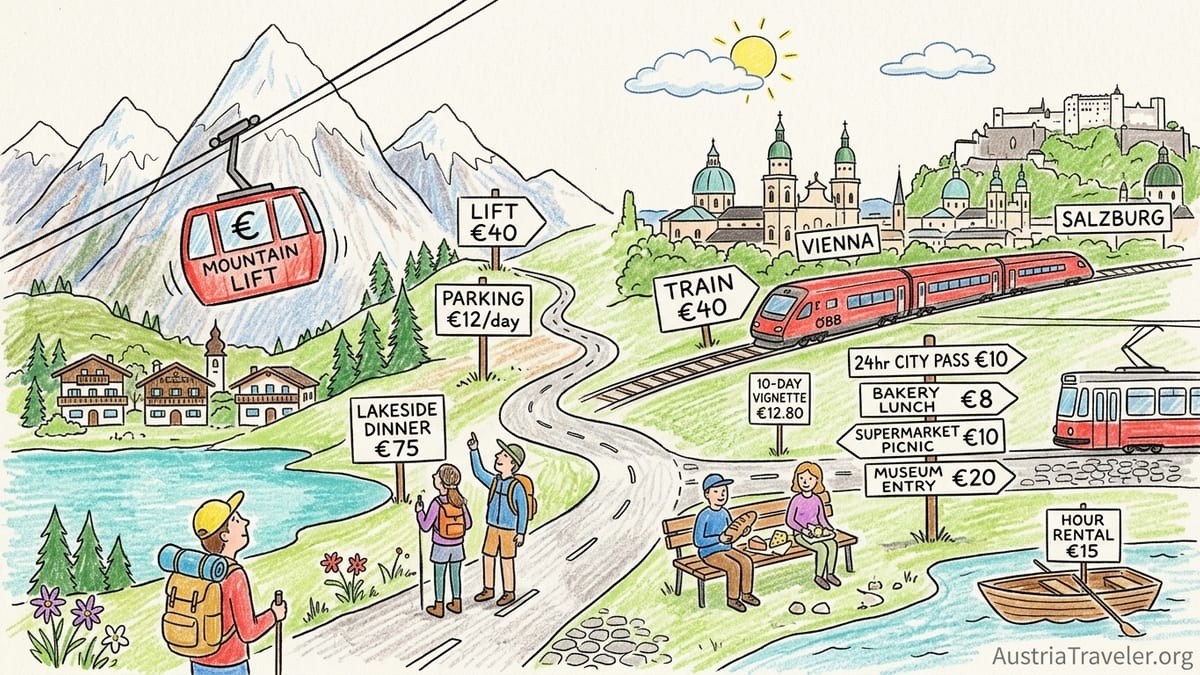
Trip Overview and Daily Budget Benchmarks
My most recent Austria trip ran from 14 to 24 June 2025, starting and ending in Vienna. I traveled with one other adult, sharing accommodation and most transport costs. We spent three nights in Vienna, three nights in Salzburg, two nights in the Salzkammergut lake region near Hallstatt, and two nights in the Tyrolean Alps near Innsbruck. For clarity, all costs below are in euros and reflect what I actually paid in 2025 unless otherwise noted.
Over 10 days, my total spend was about 2,450 euros for two people, excluding flights into Vienna. That worked out to roughly 245 euros per day for both of us, or about 120 to 125 euros per person per day. Our style was midrange: private rooms in small hotels or pensions, restaurant meals once or twice a day, and generous spending on mountain lifts, museums, and thermal baths.
Accommodation and transport were the two biggest fixed costs, but what really pushed up the budget were activities in mountain and resort areas. A clear pattern emerged. Days in Vienna, even with museum tickets and coffeehouse visits, rarely topped 220 euros for two, while alpine days with multiple cable cars, parking, and restaurant meals could easily pass 300 euros.
If you are trying to benchmark your own trip, a realistic target for a similar midrange style in 2026 is around 130 to 150 euros per person per day outside of ski high season. You can go lower by self-catering and skipping some lifts, or much higher by choosing central luxury hotels and fine dining.
Accommodation Costs: Cities vs Mountain Towns
In June 2025, my accommodation spend averaged about 120 euros per night for two people, including breakfast in most places. Vienna was the most expensive city on this trip. For a simple but modern double room in a three-star hotel about a 10-minute walk from the historic center, I paid around 135 euros per night. I briefly looked at options inside the Innere Stadt and found that comparable rooms were typically 170 to 220 euros or more, which pushed me to stay just outside the very center.
Salzburg followed a similar pattern. I paid 125 euros per night for a small hotel about 15 minutes on foot from the old town, with breakfast included. When I checked the same dates for properties within a few minutes of the cathedral and main sights, many standard doubles were at least 160 to 200 euros. That central-city premium, especially in compact historic centers, was one of the cost differences that surprised me most. A short walk or tram ride brought meaningful savings without feeling inconvenient.
In the Salzkammergut lake region, I chose a family-run pension a short drive from Hallstatt for 110 euros per night, including breakfast and parking. Rooms right in or next to Hallstatt itself, even for simple guesthouses, frequently ran 160 euros and up when I checked in early 2025, which helped confirm that staying slightly away from the most photographed village can provide much better value.
The Tyrolean Alps around Innsbruck showed the widest range. I spent 115 euros per night in a village guesthouse with a balcony and mountain view, again with breakfast included. On the same dates, resort-style hotels with spas and half board in top alpine villages often charged 200 to 260 euros for a double room. In 2026, published midrange hotel prices in cities like Vienna and Salzburg still commonly fall in the 120 to 180 euro range for central locations in summer, while pensions and guesthouses outside the strict center or in smaller towns often start around 90 to 130 euros for a comparable double room.
Trains, Rail Passes, and Rental Car Costs
For the first half of the June 2025 trip, I relied entirely on trains and local public transport. Vienna to Salzburg on a standard Austrian Railways long-distance train cost about 40 euros per person booked a few weeks in advance in second class, with seat reservations adding roughly 3 euros per person. I repeated this pattern from Salzburg to Attnang-Puchheim to access the Salzkammergut region, where regional trains were much cheaper, usually under 15 euros per person for medium distances.
I did not buy a Vorteilscard discount card in 2025 for that trip because my intercity train segments were limited, but in 2026 the Vorteilscard Classic is broadly advertised around 73 euros per year for adults. For anyone planning several long-distance rail journeys in Austria over a year, that card can reduce ticket prices by about a quarter on many routes and quickly become worthwhile.
In 2025, I used a straightforward point-to-point ticket system, but one product that has become important to highlight for value in 2026 is the Einfach Raus Ticket. As of autumn 2026, the Einfach Raus regional group ticket for two to five people, valid on regional trains within Austria, is generally advertised in the range of about 38 to 50 euros depending on the group size and specific offer conditions. For small groups focused on slower regional services, it can bring daily rail costs down significantly compared with buying separate tickets.
For the second half of the June 2025 itinerary, I rented a compact car in Salzburg to explore smaller villages and alpine valleys. A four-day rental in 2025 from a major international agency cost 220 euros including basic insurance, or about 55 euros per day, picked up in Salzburg and dropped off in Innsbruck. Fuel for around 600 kilometers of mixed driving came to roughly 90 euros, based on average Austrian petrol prices at the time. The car was convenient for scattered lake towns and trailheads, but when I added up rental, fuel, and parking, it did not save money compared with careful use of regional trains and buses.
Driving Costs: Vignettes, Tolls, and Parking Surprises
Austria’s motorway vignette system was one of the clearest, fixed costs. In June 2025, the standard short-term vignette for passenger cars covered 10 days. In 2026, the official vignette options have become more flexible. A one-day motorway vignette for cars is widely listed around 9.60 euros and the 10-day version around 12.80 euros. Digital vignettes, purchased online or at service stations, are increasingly common and remove the need for windshield stickers.
On my June 2025 trip, I drove mainly on motorways between Salzburg, the Salzkammergut, and Tyrol, so a 10-day vignette would have comfortably covered my four-day rental period. Because my car was hired locally, the vignette was already included on the vehicle, rolled into the rental price. If you rent in Austria, it is still important to confirm that a valid vignette is included, as fines for missing one can be steep.
Parking, not fuel, was the most surprising driving cost. In Salzburg, my hotel on the first visit did not have its own garage, and a nearby public garage charged 24 euros for 24 hours. In Hallstatt, where access is tightly controlled, the main visitor parking lots were priced around 12 to 15 euros for day parking in 2025. At popular trailheads and lakeside spots in the Salzkammergut and Tyrol, it was common to pay 4 to 8 euros for a few hours of parking. These charges accumulated quickly and were one of the reasons the car did not feel like a money saver overall.
By contrast, local public transport in cities offered good value. In 2025, a 24-hour ticket for Vienna’s trams, buses, and U-Bahn cost under 10 euros per person, and Salzburg’s day passes were similarly priced. In 2026, these day-ticket prices remain broadly under 10 to 12 euros in most major cities, making it more economical to combine rail travel and urban transit instead of driving into historic centers and paying premium garage rates.
Food and Drink: From Supermarkets to Resort Restaurants
Before the June 2025 trip, I expected food to be one of the biggest budget challenges, particularly in resort areas. In practice, dining costs varied widely between cities, villages, and high-altitude restaurants. In Vienna, casual sit-down meals in traditional gasthäuser usually cost me around 15 to 20 euros per main course, with a beer or soft drink adding 4 to 6 euros. A typical two-person dinner with mains, shared dessert, and two drinks came to roughly 45 to 55 euros including a modest tip.
Lunchtime bakeries and supermarkets offered some of the best value of the trip. A filled roll, pastry, and coffee from a bakery chain often cost around 6 to 8 euros per person in 2025. Supermarket picnic lunches in the Salzkammergut, made up of bread, cheese, fruit, and bottled water, usually came in under 10 euros for two people. These simple meals are one of the easiest ways to keep daily food costs under control without feeling deprived.
Prices rose sharply at restaurants in resort and mountain areas. In a lakeside village near Hallstatt, main dishes at popular view restaurants were often priced at 22 to 28 euros in 2025. A two-person dinner here could easily reach 70 to 80 euros with drinks. At a panoramic restaurant reached by cable car in Tyrol, I paid 6 euros for a soft drink and nearly 8 euros for a slice of cake, which felt markedly higher than similar items in the valley. These high-altitude and high-demand venues were a clear example of where Austria was more expensive than I anticipated.
Overall, my 2025 food and drink spending averaged around 60 to 70 euros per day for two people, mixing supermarket breakfasts, bakery lunches, and one main restaurant meal. In 2026, menu prices in major cities and alpine resorts have generally continued to edge up but remain in similar bands, with many midrange restaurant mains hovering in the high teens to mid-twenties in euros. Travelers who focus on supermarket breakfasts and lunches with only occasional restaurant dinners can comfortably trim their daily food budget by a third.
Mountain Lifts, Museums, Thermal Baths, and Lake Activities
Activity costs are where Austria can quietly turn from affordable to expensive. On my June 2025 trip, I made a point of trying a range of experiences, from museums to mountain lifts and thermal baths. Without question, mountain cable cars and gondolas were the biggest surprise. In the Salzkammergut, a return trip on a major cable car to a popular viewpoint cost around 36 euros per adult in 2025. In Tyrol, a combined gondola and chairlift ticket for a high-altitude hiking area was priced at about 40 euros per adult for a return.
On one clear day in the Tyrolean Alps, I took two different lift systems to connect hikes, spending close to 70 euros per person just on cable cars. When I added lunch at the summit restaurant, the day’s activity cost exceeded 110 euros per person. This category alone pushed the daily budget far beyond the trip’s average and was the single biggest area where Austria felt more expensive than I had forecast.
Museums, by comparison, felt reasonable. In June 2025, major Vienna museums often charged between 16 and 22 euros per adult. I visited two in a single day, paying about 40 euros total. In Salzburg, entry to a prominent fortress and associated museums with a combined ticket was just over 15 euros. These prices aligned with other Western European capitals. What did catch me off guard was the temptation to revisit favorites. I returned to one Vienna museum later in the trip and paid full admission again, which added an unplanned 20 euros to the budget. In hindsight, I would have planned longer initial visits and combined more exhibits in a single ticket where possible.
Thermal baths were a midrange indulgence. In a well-known spa town in Styria on a previous 2023 Austria visit, a three-hour evening entry ticket cost around 25 to 30 euros per adult, with full-day access higher. Prices in Tyrol and Salzburg regions on the 2025 trip were comparable, usually in the mid-twenties to low-thirties for several hours. These experiences are not cheap for families, but for the amount of time spent, they felt like solid value compared with a single, quick cable car ride.
Lake activities were often better value than expected. Renting a simple rowing boat on a Salzkammergut lake in 2025 cost around 15 euros for an hour, comfortably shared by two people. Stand up paddleboard rentals were typically in the range of 15 to 20 euros per hour. Compared with alpine lifts, these water-based activities offered memorable experiences at a fraction of the cost.
Skiing, Hiking, and Seasonal Price Patterns
The June 2025 trip was focused on summer hiking, not skiing, but the price structure of ski resorts influences costs year-round. In winter, day ski passes in major Austrian resorts frequently reach 60 to 75 euros per adult, with higher prices in premium areas. Accommodation also climbs during peak ski weeks. While I did not ski on this specific trip, I spent enough time in alpine villages to see how infrastructure built for skiing translates into summer hiking and lift pricing.
In summer, hiking itself is free, but reaching high-altitude trailheads usually requires a lift. On this trip, standard lift prices in June were already close to winter rates, even though crowds were lighter. That meant a supposedly low-cost hiking day could quickly become expensive once you factored in one or two gondola rides plus food and parking. This was one of the central realities I only fully appreciated after reviewing my receipts at home.
I also noticed clear weekday and shoulder-season differences. A spring 2023 shoulder-season visit to Innsbruck, for example, came with slightly lower hotel rates, and some mountain lifts ran less frequently or were shut for maintenance between winter and summer seasons. In June 2025, operations were fully geared up and prices reflected that. Looking at 2026 pricing, the pattern persists. Visiting in May or late September can modestly reduce accommodation costs, but lift prices in operating periods do not tend to vary much by day of week.
If skiing is your main goal, you should expect the per-day cost of your trip to be substantially higher than a summer hiking visit, primarily because of lift passes and the higher lodging rates that accompany peak snow conditions. For hikers, the budget equation is more flexible. Choosing valley-based walks without lifts and bringing your own snacks can make certain days extremely affordable even in high season.
Where Austria Felt Like Good Value
It would be easy to focus only on the expensive categories and conclude that Austria is uniformly costly, but that was not my experience. Several parts of the trip felt distinctly good value compared with neighboring countries. Regional public transport, especially when combined with group tickets or simple point-to-point fares, delivered a lot of mobility for modest prices. A 2025 regional rail trip from Salzburg to a gateway town in the Salzkammergut cost under 10 euros per person, and local buses connecting villages were often just a few euros.
City sightseeing passes can also be advantageous for heavy museum-goers. In Vienna, I did not purchase a multi-attraction pass in June 2025 because my schedule was spread out, but I spoke with several travelers who did and calculated that they saved 20 to 30 percent compared with buying single tickets to three or more major sights in a short span. In 2026, updated versions of these passes still bundle public transport and museum entries, offering solid value if you plan tightly packed sightseeing days.
Simple pleasures such as lake swimming, walking historic old towns, and exploring markets were consistently free or inexpensive. Public lake access points in the Salzkammergut were often available at little or no cost, creating entire afternoons of enjoyment for the price of a snack. In Vienna and Salzburg, wandering through historic streets and gardens cost nothing and remained a highlight of the trip, reminding me that the most memorable moments are not always tied to big ticket purchases.
Lastly, supermarket and bakery culture in Austria made it easy to keep costs in check while still enjoying local flavors. Grabbing a still-warm pretzel, a slice of strudel, or a takeaway schnitzel sandwich for just a few euros helped keep overall food spending at a comfortable level. These small, everyday transactions were where Austria felt more affordable than its reputation might suggest.
Current 2026 Price Checks and How to Plan
Looking at 2026, several key cost points help frame realistic budgets. The Austrian motorway vignette for passenger cars now includes very short and convenient options. The one-day vignette sits around 9.60 euros and the 10-day vignette at about 12.80 euros. Drivers planning a brief rental to reach one or two destinations can factor this in quite precisely.
On the rail side, the Vorteilscard Classic in 2026 is widely priced around 73 euros for adults and offers ongoing percentage discounts on many Austrian Railways tickets. It makes particular sense for repeat or long-distance travelers. The Einfach Raus regional group ticket, geared toward two to five people traveling together on regional trains, is being promoted in the high-thirties to around 50 euros range, depending on group size and specific rules. For small groups planning slow travel days, this can bring per-person daily transport costs close to the low teens in euros.
Major city day tickets for urban public transport remain a budget-friendly tool. In 2026, many Austrian cities still offer 24-hour or 48-hour passes priced broadly under 10 to 14 euros, giving unlimited rides on trams, buses, and metros where available. For travelers who build itineraries around public transport, this predictable outlay simplifies daily cost planning.
Mountain lift prices, on the other hand, continue to be one of the least flexible categories. While exact prices vary by region, a return ticket on a major scenic cable car in 2026 can easily land in the 35 to 45 euro range per adult and sometimes higher for combination tickets. When sketching out your Austria budget, it is worth listing each desired lift in advance, assigning a realistic price per ride, and accepting that a single clear weather day could end up being the most expensive of your trip.
The Takeaway: What Really Drives Austria Trip Costs
Looking back at my June 2025 trip with the benefit of 2026 price updates, Austria’s costs make more sense. My daily spending was not driven by a simple baseline of hotels and food, but by peak days packed with mountain lifts, resort meals, and parking. In cities like Vienna and Salzburg, I could keep the budget in check with public transport and a mix of restaurant and self-catered meals. In alpine resorts, one or two big-ticket activities could double the day’s expenses.
If I were planning the same itinerary again, I would spend more on a few carefully chosen experiences and cut back on repetition. I would still invest in one or two spectacular cable car rides with clear weather, but I would avoid stacking multiple lift systems in a single day. I would also plan longer visits to major museums to get full value from each ticket, rather than paying repeated entry for short sessions.
On the saving side, I would lean even harder on trains and regional group tickets, reserving rental cars for truly off-grid areas. When possible, I would choose accommodations a short tram ride or walk from city centers instead of paying the steep premium for the most central hotels. In lake and mountain regions, I would combine free or low-cost activities, like lakeside walks and swims, with only occasional high-priced alpine attractions.
Ultimately, Austria is neither a bargain nor a budget-breaker by default. It is a country where smart planning and a clear sense of priorities matter more than anything else. If you accept that mountain lifts, central-city hotels, resort restaurants, and peak-season ski passes are inherently pricey, you can design a trip that splurges selectively on these highlights while relying on Austria’s excellent public transport, welcoming pensions, and abundant low-cost outdoor experiences to keep your overall budget under control.
FAQ
Q1. How much should I budget per day for a midrange Austria trip in 2026?
For a midrange trip with private rooms, restaurant meals once daily, public transport, and several paid activities, a realistic estimate is about 130 to 150 euros per person per day, not including flights.
Q2. Are trains or rental cars cheaper for getting around Austria?
For most itineraries between major cities and popular regions, trains combined with local buses are usually cheaper, especially with discount cards or group tickets. Rental cars become more cost effective mainly when exploring very remote valleys or when shared by three or four people who would otherwise buy separate rail tickets.
Q3. How much does the Austrian motorway vignette cost in 2026?
In 2026, the common vignette prices for passenger cars are about 9.60 euros for a one-day vignette and 12.80 euros for a 10-day vignette, with digital options widely available.
Q4. What is the Vorteilscard Classic and is it worth it?
The Vorteilscard Classic is an Austrian Railways discount card that costs around 73 euros per year for adults in 2026. It is generally worthwhile if you plan several longer rail journeys in Austria within a year, as it can reduce many ticket prices by a noticeable percentage.
Q5. How expensive are mountain cable cars and gondolas?
Mountain lifts are one of Austria’s priciest categories. In many scenic regions, return tickets for a single cable car ride can be around 35 to 45 euros per adult, and combining multiple lifts in a day can quickly become the largest line item in your daily budget.
Q6. Are hotels much cheaper outside city centers?
Yes, staying a short walk or tram ride from historic centers can meaningfully reduce costs. On my June 2025 trip, hotels just outside central Vienna and Salzburg were often 30 to 50 euros per night cheaper than similarly rated properties inside the most central districts.
Q7. How can I save money on food in Austria without cooking every meal?
Using bakeries and supermarkets for breakfast and lunch is the easiest way to save. Grabbing a bakery sandwich, pastry, and coffee typically costs much less than a sit-down meal, leaving room in the budget for one main restaurant dinner each day.
Q8. Are thermal baths in Austria worth the cost?
Thermal baths are not cheap, with several-hour tickets often in the mid-twenties to low-thirties in euros per adult, but they usually provide multiple hours of relaxation. Many travelers, including me, find them good value compared with equally priced short attractions.
Q9. What is the Einfach Raus Ticket and who should use it?
The Einfach Raus Ticket is a regional group ticket valid on many Austrian regional trains. In 2026, it generally costs in the high-thirties to around 50 euros for two to five people. It suits small groups who want unlimited travel on slower regional services for a day without buying individual tickets.
Q10. Which expenses in Austria most often surprise travelers?
Common surprises include high prices for central-city hotels, parking fees in historic centers and resorts, the cost of mountain cable cars and summit restaurants, and how quickly repeated museum or attraction tickets add up if not planned carefully.