


Across fifteen winters in Austria I have skied everything from slushy Easter valley runs to bitterly cold January powder days high above tree line. What follows is not a theoretical season calendar but a report from weeks when I was actually on snow in Austria, combined with carefully checked current information about how the 2026/27 season is planned to run. Consider this an honest field guide: how the pistes looked first thing and at 3 pm, when the valley runs died, when school holidays turned lift lines into human slalom, and how altitude changed the experience far more than the month printed on the calendar.
How Altitude, Not Just Month, Shaped Every One of My Austria Trips
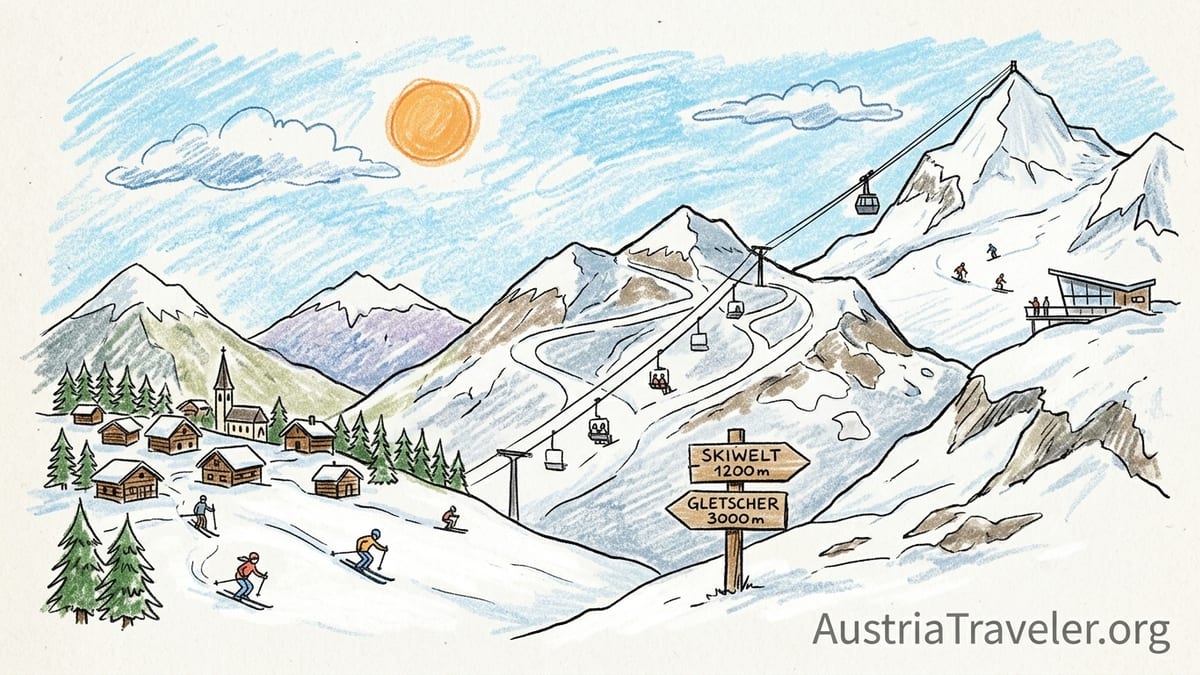
My first lesson in Austria was that “January is best” is far too simple. I have skied low, tree lined areas around 800 to 1,000 meters in the northern Alps, mid altitude linked areas like Ski amadé with village bases around 850 to 1,100 meters and peaks just over 2,000, and glacier or glacier linked giants like Sölden and the Zillertal glaciers, with skiing above 3,000 meters. The same week on the calendar felt completely different depending on where the top lift finished and whether there was a glacier in the mix.
On trips to mid altitude Salzburg and Styria, early December often meant thin natural cover on lower pistes. First thing in the morning groomed runs were firm but perfectly skiable down to the village thanks to intensive snowmaking. By 3 pm the lowest blue runs were polished and sometimes showing brown edges where the man made stripe narrowed. Contrast that with late November and early December days I spent at higher resorts with glacier access, where top to bottom cover felt more like mid winter, and afternoon pistes at 2,800 meters still held soft chalky snow because the sun angle was low and the air stayed cold.
Altitude also dictated how long valley runs survived in spring. In lower valleys I have watched impeccably groomed red pistes start the day crisp in the shade, only to turn into deep, sugary piles by lunchtime once the sun hit them. Skiing back to the village after 2 pm became a leg burner and sometimes a game of “follow the white strip” across green pastures. In higher valleys such as those feeding into the big Tyrolean areas, I was still skiing continuous white carpets to the bottom at Easter, helped by nights well below freezing and extensive snowmaking on the home runs.
Wind and visibility punished the high areas more, but even here altitude gave with one hand and took with the other. I have lost days on exposed glaciers to lift closures when the Föhn wind roared over the ridge, yet on calmer weeks those same high slopes offered dry, grippy snow while rain was falling on the village streets 1,800 vertical meters below. The key pattern over all my trips was simple: if you are pushing the season early or late, altitude and glacier access matter more than the name of the month, while in mid winter a good mid altitude area delivers superb piste skiing with more shelter and trees.
October and November: My Glacial Season Openers
I have never skied ordinary non glacier Austrian resorts in October or early November, and on most of my autumn trips the regular chairlifts in classic valleys were still parked. My early season turns have all been on glaciers or glacier linked sectors, reached from modest valley villages where the grass was still green and farmers were finishing their autumn work. In practical terms this meant riding a gondola from around 1,300 to 1,600 meters up to terrain starting somewhere between 2,600 and 3,000 meters.
On late October visits, piste conditions first thing in the morning were generally very firm, bordering on icy on the busiest training lanes. Race teams from across Europe had carved deep ruts into a handful of main pistes, and the skiing public was funneled onto the remaining runs. Visibility varied sharply from bluebird days with huge views across the main Alpine ridge to flat light when high cloud or fog pushed in. Wind closures were a real factor on these trips. I lost half days when upper T bar and chairlifts above roughly 3,100 meters shut for safety, leaving only shorter mid mountain laps.
By early afternoon on sunny days the south facing sides of the glacier softened into pleasant spring like snow, and bumps developed where skiers side slipped the steeper pitches. There was virtually no natural snow at valley level, and the access pistes down to intermediate mid stations were strips of machine made snow across brown rock. Valley runs to the actual villages were not open. Crowds depended heavily on the calendar. On one late October trip that overlapped with a World Cup race weekend, I queued 10 to 15 minutes at peak times as national teams and recreational skiers shared a small open area. On another non event week in early November, even on the same glacier, strings of six person chairs left half empty and I could lap with almost no waiting.
Temperatures at altitude in autumn felt surprisingly tolerable compared with January. Morning readings between minus 5 and minus 8 Celsius at 3,000 meters were common on my trips, rising just above freezing in the sun by lunchtime. This created good man made snow conditions overnight but meant that south facing sections could get slick again when they refroze in shadow later in the day. For value and quiet skiing, my personal autumn sweet spot on glaciers has been the first half of November outside public holidays, when more pistes are usually open than in October but the crowds of race fans and opening parties have gone home.
December and Christmas: From Empty Pre Season to Festive Crowds
My December skiing in Austria splits sharply into two phases. I have had multiple trips in the second week of December, just before the major Christmas wave, and several full family holidays over Christmas and New Year in both mid altitude and higher Tyrolean resorts. The snow, crowds and prices felt like different worlds despite sharing the same month.
On my pre Christmas weeks in places like the Ski amadé areas around Schladming and Gastein, mornings often started with hard, well groomed pistes and air temperatures between minus 3 and minus 8 Celsius at around 1,800 to 2,000 meters. Natural snow depth was sometimes modest, particularly on south facing lower slopes, but the Austrian emphasis on snowmaking meant the main red and blue runs back to each village were covered and officially open. First thing in the day, corduroy pistes felt secure, and for the first two or three hours I could carve comfortably with very little traffic. By mid afternoon, especially below 1,200 meters, the snow surface began to show the limits of early season cover. Small stones appeared on some steeper pitches, and on sun exposed sections the upper few centimeters turned sugary while a firm base remained underneath.
Crowd wise, these early to mid December trips were some of my quietest Austrian experiences. Lift queues were typically under two minutes, often non existent. I could ski straight into gondolas outside of the first uplift rush, and six pack chairs rarely had more than a couple of groups waiting. Cafes on the mountain still had space for lunch at 1 pm without reservations. Accommodation prices, checking receipts from these years, were notably lower than the festive peak; simple half board hotels in village centers cost roughly a third less than the same rooms did over New Year.
Once I returned with extended family for Christmas and New Year, first in a mid altitude Salzburgerland village and later in a higher Tyrolean resort with skiing above 2,500 meters, the feel changed. Snow conditions were not automatically better. I have had Christmas weeks with beautiful cold powder on higher north facing runs and others where rain at village level around 800 to 1,000 meters left lower pistes heavy and cut up by midday. On one particularly mild New Year, valley runs officially stayed open thanks to intense snowmaking, but by late afternoon they were soft, grey and crowded. Skiing them after 2:30 pm with young children required patience and conservative line choice.
However the main difference was people and price. Queue lengths at key gondolas hit 15 minutes on bluebird late December mornings. Popular mountain restaurants were fully booked for lunch, and ski schools ran at full capacity. For families tied to school holidays, these weeks are still workable if you accept the bustle and budget accordingly. From my personal perspective though, for piste quality and calmer skiing in December I would always choose the two weeks before Christmas in a mid or high altitude area, arriving around the time many resorts now hold their season opening concerts and leaving just as the main festive wave begins.
January: My Coldest Powder Days and Quietest Lifts
Across my Austrian skiing life, mid January has delivered the most consistently excellent combination of snow quality and manageable crowds, especially in higher valleys. I have skied several weeks between roughly 7 and 25 January in Tyrol and Salzburg, including high altitude areas with peaks over 2,800 meters and more modest networks where the highest lifts reach around 2,100 meters. In almost every case, mornings began with crisp, well set pistes and air temperatures between minus 8 and minus 15 Celsius at 2,000 to 2,500 meters.
On my coldest January week, staying in a Tyrolean valley with access to slopes up to roughly 2,900 meters, the thermometer at the mid mountain restaurant showed minus 18 Celsius at 10 am. Piste conditions first thing were flawless but extremely grippy. The grooming teams had left a firm surface with a delicate top layer of fresh snow from overnight flurries. For the first few hours every carve felt precise and controlled, and even by mid afternoon the snow on north facing runs remained chalky rather than sugary. Valley runs on shady aspects were still skiing perfectly at 4 pm, with only gentle softening where the sun reached flatter sections.
Natural snowfall in January has given me my deepest Austrian powder days. On one trip we woke to around 30 centimeters of new snow at village level and significantly more higher up. Visibility was limited and some higher lifts closed temporarily because of avalanche control work and wind, but once patrols opened selected routes the experience was outstanding. Off the groomed runs, untracked powder lasted into the afternoon, especially between trees around 1,600 to 2,000 meters. The downside on that particular day was crowds funneled onto the lifts that were open, with 10 to 20 minute waits at key gondolas until mid morning. On drier January weeks with stable weather, lift queues were back down to near zero after the first uplift rush.
Crowding patterns in January felt closely tied to national school calendars. Outside the early January overlap with Orthodox Christmas travel and a few long weekend peaks, mid January midweeks were quiet even in famous destinations. Accommodation costs for my January trips were generally lower than at New Year or the February holiday period that followed, and last minute deals were common. If I had to pick one period in the Austrian winter that I personally trust for piste quality, comfortable but cold temperatures, and a sane balance between life in the lift queues and on the slopes, it would be the second and third weeks of January in a resort with at least some terrain above 2,200 meters.
February: Exceptional Snow, Heavy School Holiday Pressure
My relationship with February in Austria is complicated. I have skied several weeks that straddled the main half term holidays for Austria and key source markets like Germany and the Netherlands, as well as one quieter late February week that avoided most school breaks. Snow quality in these weeks was excellent almost without exception. The issue was how many other people had noticed the same thing.
On a classic mid February family trip to a large Tyrolean area, mornings after new snow were about as good as lift served skiing gets. At 2,000 to 2,500 meters the pistes held a few centimeters of soft, cold snow on top of a deep winter base. Visibility was generally good between storms, and temperatures hovered between minus 5 and minus 10 Celsius in the mornings, rising a little on sunny afternoons. Valley runs stayed in full winter condition all day on north and east facing routes. Even late in the afternoon it was possible to ski right to the village on grippy, packed powder rather than slush.
The trade off was crowd pressure. During that particular week, which matched Carnival holidays in several European regions, we routinely waited 20 minutes for the main gondola out of the valley at 9 am. Popular mid mountain chairs developed snaking lines between 10 and 11 am. Ski schools ran huge classes, and easy blue pistes near the base stations felt congested, especially in the late morning when lesson groups overlapped with free skiing families. Afternoon skiing improved slightly as some people retired to sun terraces, but even then the difference from January was obvious.
In contrast, a late February week I spent in a Salzburg region resort that was outside most school break dates felt more like early March. Snow quality remained very good on pistes above 1,600 meters, with firm morning corduroy and only light softening by mid afternoon on sunny lower slopes. Valley runs were still open but began to show the season’s wear, with icier patches in the morning and small bare spots near lift bases by the end of the week. Crucially, lift queues were far shorter than during my earlier February experiences. Most waits were in the 3 to 5 minute range even at main gondolas, and many secondary chairs were effectively ski on.
Based on these firsthand weeks, I personally would now only choose February in Austria for two scenarios. The first is a family trip locked to school holidays, in which case I would favor a high, extensive area so that crowding spreads out and snow quality remains excellent even if warm spells arrive. The second is a late February or very early March week that falls just outside peak holiday calendars, trading slightly softer afternoon snow at low altitude for much less pressure on lifts, ski schools and accommodation prices.
March and Easter: From Perfect Cruising to Slushy Valley Runs
Over the years my March skiing in Austria has ranged from cold, mid winter feeling weeks in the first half of the month to sun soaked Easter holidays in early to mid April. Altitude made the biggest difference to whether those trips felt like an extension of winter or the start of spring.
On early March trips to mid altitude networks around 2,000 to 2,200 meters, I often started the week in full winter conditions. Morning temperatures at 1,800 meters sat around minus 5 Celsius, rising to just above freezing in the afternoons. Piste conditions first thing remained firm and supportive. North facing red runs held winter snow all day, while south facing blues began to soften into forgiving, almost creamy snow by lunchtime. By 3 pm those lower southern sections could be heavy, and skiing them required a more centered stance to avoid being thrown by piles of pushed around snow. Valley runs were fully open, and while they did get slushy late in the day, they remained continuous white strips back to the lifts.
By the time I skied Austria over Easter on several occasions, both in mid altitude and higher glacier linked areas, the character of the skiing changed again. In a mid altitude valley where the village sat around 900 meters, there were mornings when rain fell overnight at village level while snow accumulated above about 1,400 meters. First lifts after such nights revealed damp, somewhat sticky snow on the lower pistes and fresher, lighter snow higher up. As the day went on, the lower third of the mountain turned into full spring conditions. By 2 pm it was common to see skiers in light jackets weaving through deep, wet piles on south facing runs, while shaded north facing and higher slopes remained surprisingly enjoyable with softened but controlled snow.
In higher Tyrolean resorts with glacier connections, my Easter weeks were markedly more reliable. The valley bases still saw mild afternoons and melting snow banks in the village streets, but once I rode the gondola above 2,000 meters the pistes told a different story. Thanks to freezing nights and a deep winter snowpack, the main high runs started each morning with refrozen, firm surfaces. By mid to late morning the sun had softened the top layer into classic spring corn snow, which was a joy to ski. Wind closures were rare in these calmer spring periods, though occasional afternoon thunderstorms built on warmer days.
Crowds around Easter were very date sensitive. When Easter fell in late March, my trips coincided with significant school holiday traffic from the UK, Germany and the Benelux countries. Lift queues were not as intense as peak February but still noticeably longer than in early March. When Easter landed in mid April, some regions had already returned to school, and the atmosphere on the slopes felt more relaxed, with midweek lift lines often under five minutes. Prices for accommodation usually dipped compared with February and New Year, although still higher than in the very quiet pre Christmas or mid January windows.
How I Now Choose My Own Weeks: Powder, Piste, Families and Value
After all these seasons, the pattern of what actually worked for me in Austria is clearer than any generic “best month” advice. For chasing powder and deep winter snow on and off piste, my standout period based on firsthand experience is mid January in higher valleys, ideally with access to slopes above 2,300 meters. The combination of cold temperatures, solid base and generally lighter crowd levels has produced more honest, dry powder days for me than any other time.
For pure piste quality without necessarily needing fresh snow, I would again favor mid January and also early March. On my trips, these weeks offered firm, confidence inspiring grooming in the mornings and predictable softening patterns through the day. In March in particular, planning a daily rhythm of high, shady runs before lunch and then moving to sunny but not yet slushy slopes after midday gave me hours of excellent skiing before the snow tired in the late afternoon.
For quieter skiing in terms of lift queues and on slope traffic, my experience in Austria points clearly to early to mid December before Christmas and the two or three weeks after the New Year rush but before the main mid February school holidays. During these windows I have often skied into gondolas without removing my pole straps and found whole pistes with only a handful of people in sight, especially midweek. The main caveat in early December is snow reliability at low altitude. If I were booking that period again, I would choose an area with at least some terrain above 2,000 meters and strong snowmaking on valley runs.
For family trips tied to school holidays, I would personally lean towards Easter over the February peak, based on how my own weeks unfolded. At Easter, especially in higher or glacier linked resorts, we enjoyed longer, sunnier days, gentler temperatures for children, and a more relaxed atmosphere even when official holiday periods overlapped. The trade off was softer snow on lower runs in the afternoon, which we managed by ski school in the morning and non ski activities later in the day. In February the snow was superb but the intensity of crowding, especially at ski school meeting points and main choke points, made logistics with younger kids far more stressful.
From a value perspective, my receipts and current research tell the same story. Lift passes and accommodation have climbed noticeably in price in recent seasons, especially in flagship areas, but shoulder weeks in early December and mid January still come in well below New Year, February and main Easter. Package deals from the UK and other markets into Austria in March, often including flights, hotel and lift pass, can undercut peak season by a significant margin. When I combine this with the on snow experience I have actually had, my own booking pattern now gravitates strongly towards mid January for dedicated skiing and March for mixed ski and sun trips.
FAQ
Q1. What period would you personally choose for the best powder in Austria?
Based on my own trips, I would target the middle two weeks of January in a higher Tyrolean or Salzburgerland resort with lifts reaching at least 2,300 meters and, if possible, some glacier or very high north facing terrain. That is when I have repeatedly found cold temperatures, a deep base and the highest chance of genuine dry powder days.
Q2. When did you find the best overall piste quality from first lift to last run?
The most consistently excellent piste days for me have been in mid January and early March. In mid January, cold kept the snow dry and grippy all day, even on valley runs. In early March, firm overnight refreezes followed by gradual softening created a rhythm of perfect groomers in the morning and enjoyable, predictable spring snow later on higher slopes.
Q3. Which weeks felt quietest in terms of lift queues and crowded pistes?
My quietest weeks in Austria have been the pre Christmas period in early to mid December and the mid January lull once New Year visitors have left and before the main February school holidays. On those trips I often skied straight onto lifts, especially midweek, and had whole pistes almost to myself, even in well known areas.
Q4. How bad were the queues and crowds during your February holidays?
On my February half term style trips, main valley gondolas regularly had 15 to 20 minute queues between 9 and 10 am, and busy mid mountain chairs saw lines of similar length at peak times. Pistes near ski school meeting points were very congested late morning. The snow was superb, but the experience felt significantly more crowded than in January or March.
Q5. Did valley runs stay open on your Easter trips, and were they enjoyable?
On my Easter weeks in mid altitude areas, valley runs were generally still open but turned slushy and rutted by early afternoon, especially on sunny aspects. In higher or glacier linked resorts the home runs stayed in better shape, but even there I found the best, most enjoyable skiing above about 1,800 to 2,000 meters after midday.
Q6. How often did wind or weather close lifts on your glacier and high altitude trips?
On my autumn and mid winter glacier visits, I lost parts of several days to wind closures on the highest lifts, particularly above 3,000 meters. However complete closure of an entire area for a whole day was rare. In spring, especially from late March onwards, wind related shutdowns were less frequent, though afternoon visibility sometimes suffered when clouds built up.
Q7. What temperatures did you actually experience at altitude in mid winter?
During my January and February weeks, typical morning temperatures at 2,000 to 2,500 meters ranged from around minus 5 to minus 15 Celsius. On my coldest days mid mountain readings dropped below minus 18 Celsius at 10 am. Afternoon temperatures usually rose several degrees but often stayed below freezing on higher slopes.
Q8. For families tied to school holidays, which period felt more relaxed, February or Easter?
For my family, Easter felt more relaxed overall. While some Easter weeks still coincided with school breaks and brought healthy crowds, the combination of longer days, milder temperatures for children and a less intense morning rush at ski schools made the logistics easier than in peak February, even though February offered colder, more consistently winter like snow.
Q9. If you wanted a cheaper Austria ski trip with decent snow, which weeks would you now book?
Purely from my own experience, I would look first at early to mid December in a reasonably high, snow secure area and the middle two weeks of January almost anywhere with lifts above 2,000 meters. Both periods have given me good piste skiing and significantly lower accommodation prices than New Year, February or prime Easter.
Q10. How do your firsthand observations differ from what general season guides say?
General guides often state simply that “January and February are best,” without distinguishing altitude, valley height or holiday dates. My own weeks showed that a quiet mid January in a high valley can be far better than a crowded low altitude February, that early December is delightful in snow secure resorts but marginal lower down, and that Easter in a glacier linked area can offer more enjoyable family skiing than peak half term despite softer snow on the lowest runs.