


I have spent repeated summers and shoulder-season weeks around Austria’s lakes, from Carinthia’s almost Mediterranean-feeling waters to the high, cool bowl of Achensee in Tyrol. What follows is not a theoretical climate guide but what I actually felt on my skin: when the water was warm enough for a lazy one-hour swim, when afternoon thunderstorms chased everyone off the jetties, how early boat services really started in the year, and what parking lots looked like on school-holiday Saturdays. Where I have not personally travelled in a season, I say so clearly and rely on researched patterns instead of pretending to have been there.
How Altitude and Depth Change Everything
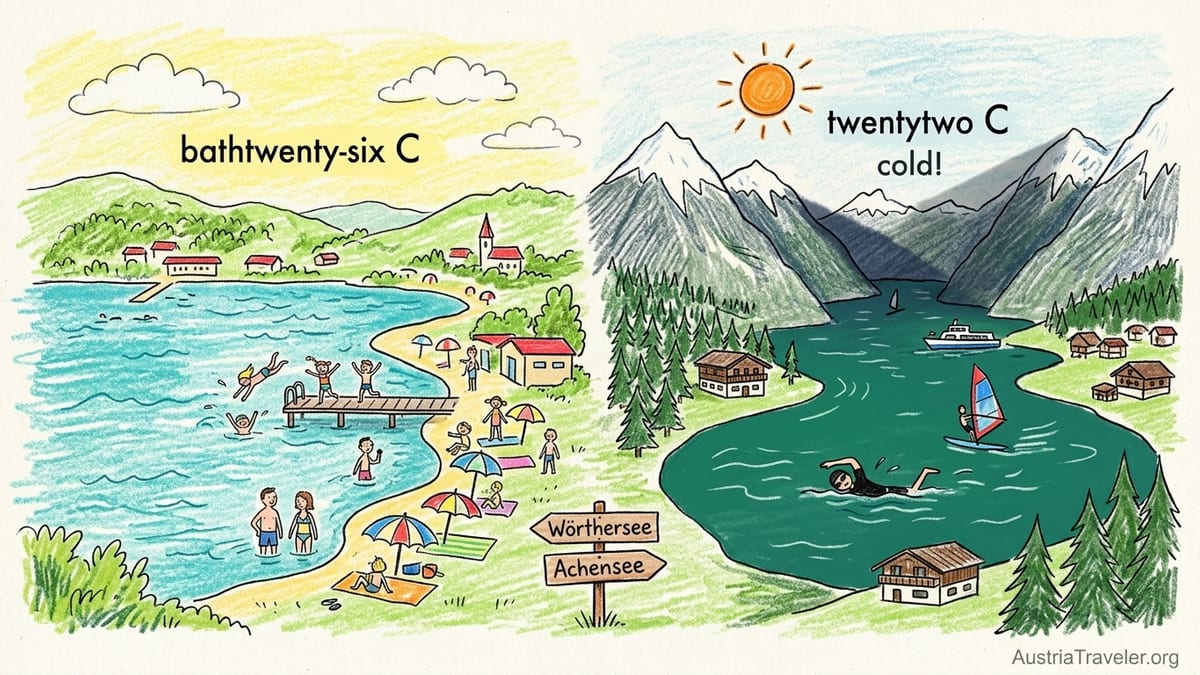
The first thing that surprised me about Austrian lakes is how dramatically water temperature changes over a few hours’ drive. In Carinthia, I have swum in lakes where the water felt comparable to a mild indoor pool by late July, genuinely in the mid-twenties Celsius and locally advertised as reaching up to about 26 to 28 degrees in sheltered bays during hot summers. In contrast, Achensee in Tyrol, sitting at roughly 929 metres above sea level, rarely rises much above 20 to 22 degrees even at the height of summer, and the overall average stays significantly lower because the lake is deep and constantly fed by cold mountain water.
You feel that difference the moment you step in. In Carinthian lakes like Wörthersee or Faaker See, by late July my first steps from a public lido jetty were followed by a quick, almost carefree dive. The initial shock disappeared by the time my shoulders were under water, and I could swim long stretches without thinking about the temperature. It felt like a warm, dense cushion around the body, the sort of water where you can float and chat for half an hour without your teeth starting to chatter.
Achensee, by comparison, is invigorating in every sense of the word. In early August I still needed a short breathing routine before plunging in. The first ten seconds in chest-deep water were a tight squeeze in the lungs, and even after a few minutes of steady front crawl I was always conscious of a cool edge on my fingers and face. I could comfortably swim for 10 to 15 minutes without a wetsuit on sunny days, but lingering motionless or long social bobbing sessions simply never felt as relaxed as in Carinthia. The lower average temperature, confirmed by local tourism information as typically around 20 to 22 degrees at best, matches the impression on the body.
That altitude difference also affects the air. On the shore of Achensee, mornings even in July started with a light fleece over a T-shirt while sipping coffee, air temperatures in the low teens before the sun cleared the surrounding peaks. Down in Carinthia at roughly 400 to 500 metres, July and August mornings were often already in the high teens, and by late afternoon on still days it could feel almost sticky, making every jump into the lake feel like a relief rather than a test.
My Summer on Carinthian Lakes: Warm Water and Busy Shores
Most of my warmest lake experiences have been in Carinthia, on Wörthersee, Faaker See and Ossiacher See, all at valley-floor altitude and known locally for their “bath-warm” water in good summers. Official Carinthian tourism materials describe how surface layers in these lakes frequently reach 22 to 26 degrees, with 26 to 28 degrees in shallower bays during hot spells. In practice, that translated, during my late-July and early-August visits, into water where a slow breaststroke felt like a moving sauna cool-down rather than cold therapy.
On Wörthersee around Velden, I remember wading in from a public lido in early August shortly after lunch. The jetty planks were almost hot under bare feet. The first knee-deep water felt pleasantly cool, not sharp. By the time I reached hip depth, there was only a mild temperature line and then a very even, velvety warmth. We stayed in for 40 minutes, alternating lazy laps with floating on our backs, and none of us emerged shivering. In shallow, roped-off children’s sections, parents spent entire afternoons standing waist-deep while talking, which simply is not something you see at a cold mountain lake.
Faaker See, smaller and relatively shallow, warmed up even faster on my visits. One late July week there, I started most days with a morning dip around 8:30. The sun was already on the water and the air temperature in the high teens, but the lake had not yet been churned by boats. The water was cooler than at 3 p.m. but still comfortable for a 15 to 20 minute continuous swim. By mid-afternoon, after hours of strong sun, the top layer in the bays felt almost bath-like. SUP paddlers drifted around barefoot without shirts, occasionally sliding in to cool off, and small inflatable rings gathered in clusters near the shore where people sipped cold drinks.
The trade-off for that warmth in Carinthia is crowd pressure during Austria’s main school holidays. In 2024, for example, Carinthia’s summer break ran from 6 July to 8 September, and similar dates apply most years. Across several summers I have seen what that looks like on the ground: by 10:30 on sunny Saturdays, free public beaches around Velden, Pörtschach and Krumpendorf could already feel tightly packed. Parking areas that were half-empty at 9:00 filled by late morning, with cars slowly cruising for a spot and, in some cases, local police monitoring roadside parking rules. Popular paid lidos with slides and lawns often had lively but manageable crowds by weekday late mornings, yet on peak weekends the lawns became patchworks of towels with little free shade.
Afternoons on Achensee and the High Lakes: Clear Mornings, Cool Swims
My time around Achensee has been centred on high summer, mainly late July and early to mid-August. Achensee’s elevation and surrounding mountains shape each day in a very different pattern compared to Carinthia. Mornings typically started crystal clear, with bright sun on glassy turquoise water and almost no wind. Walking from Pertisau along the lakeside path at 8:00, the air could still feel crisp, and the lake looked almost opaque green-blue, cold but inviting.
For swimming, I found mid to late morning best. By then, the air temperature usually had risen enough to make changing on the shore comfortable, and before midday the wind was often still light. At these times, a quick plunge felt sharply cool but manageable, and I could clock ten or fifteen minutes of strong crawl without feeling numb. After getting out, though, I usually reached for a towel and a dry top immediately, even in sunshine. Friends who dislike cold water did go in with me but rarely stayed more than five minutes; in that sense the advertised 20 to 22 degree peak feels correct. This is the kind of lake where many people perch on the bank admiring the colour rather than spending an hour in the water.
Afternoons on Achensee brought two recurring elements: wind and, on some days, towering clouds. Several times I watched as by 2 or 3 p.m. a solid breeze built up along the length of the lake, enough for whitecaps in the middle and busy activity from windsurfers and sailors. Temperatures on land were still pleasant, but the combination of wind chill and cool water made later swims feel significantly harsher. On days with humid air masses, cumulus clouds stacked over the surrounding peaks, occasionally building into short thunderstorms. Twice, in early August, I saw classic mountain storms roll through around 4 p.m.: sharp rain, a sudden drop in temperature, and loud thunder echoing off the valley walls.
These conditions also shape services. The main Achensee boat line operated predictably through the main summer season during my visits, but on days with stronger afternoon wind, departures were attended by staff reminding passengers about choppy conditions. Published schedules in recent years have shown the core season running broadly from early May to early November for standard hop-on hop-off services, but shoulder-season frequencies are lower, and on windy autumn days some crossings can be noticeably rough. Lakeside lidos in Pertisau and Achenkirch typically had jetties and sunbathing areas ready from late spring, but lifeguard hours outside July and August were visibly reduced, and kiosk opening times shrank on cooler or cloudier days.
Weather Patterns, Storms and Daily Rhythms
Across both lowland and higher lakes, a consistent daily rhythm shaped how comfortable it was to be in the water. Clear mornings were often the stillest time, with mirror-flat surfaces and reflections of mountains that looked almost painted. This was when I preferred longer swims, particularly in Carinthia. Air temperatures were already getting warm but had not reached the afternoon’s humid extremes, and the wind had not yet picked up, which made open-water swimming safer and less choppy.
By early afternoon, particularly from late June to mid-August, convection often produced tall cumulus clouds over nearby ranges. Around Wörthersee and Ossiacher See I experienced several classic Austrian summer storm days: a bright, almost cloudless morning, temperatures climbing above 30 degrees on land, then around 3 or 4 p.m. a fast-building wall of dark cloud from one side of the lake. On two occasions, lido loudspeakers announced temporary swimming restrictions and cleared diving platforms as lightning approached. The storms usually passed within an hour, leaving fresh, slightly cooled air. After such storms, the very surface layer of the water often felt marginally cooler but still swim-ready in Carinthia; at Achensee a stormy afternoon could make the water feel biting by comparison.
Cloud and mountain shadow also matter more at higher elevations. On Achensee, shaded stretches of shore lost direct sun surprisingly early, sometimes by 5 p.m. in late August, as the sun slid behind ridges. Even on days when the air temperature remained pleasant, stepping out from a late swim into immediate shadow felt significantly colder than the same manoeuvre on Wörthersee or a flatland lake, where low western sun kept beaches warm until much later. For families with children or anyone prone to feeling cold, scheduling high-lake swims before mid-afternoon made a big difference to comfort.
Wind, especially on long lakes, is another practical factor. On Achensee, the afternoon breeze created short, sharp chop that made swimming parallel to the shore noticeably taxing and sometimes disorienting for less experienced swimmers. Kayak and SUP rentals thrived in this window, but paddlers frequently wore light neoprene tops or at least windproof layers. On Carinthian lakes of similar length, I also saw afternoon breezes, but because the water itself was warmer, the combined effect remained more playful than punishing. Small pedal boats bobbed, but bathers stayed in happily, using the waves as entertainment rather than a reason to head for the café.
Shoulder Seasons: What I Researched Versus What I Felt
My own travel around Austrian lakes has mostly focused on late June through early September. I have not personally stayed on the lakeshores in April or October for sustained periods, so my view on spring and late autumn relies on short day visits and researched patterns rather than long stretches of first-hand swimming. It is important to be transparent about that.
From what I have seen on occasional May and late September day trips, water in both Carinthia and the Salzkammergut remains on the cool side then, even if air temperatures spike. Locals I chatted with on Wolfgangsee in early June spoke of typical water temperatures only in the mid-teens Celsius at that point, which aligns with information from regional tourism offices that these mid-altitude lakes usually reach around 16 to 20 degrees in June before warming further in July. In such conditions, I limited myself to brief plunges or knee-deep paddling, and many visible bathers wore short wetsuits or quickly retreated to saunas in nearby hotels.
For autumn, I rely largely on climate statistics and local reports. In Carinthia, the lakes reportedly stay swimmable for hardy people into mid or even late September during warm years, but overnight cooling and shorter days mean that the surface layer gradually loses the peak warmth of August. Regional tourism information suggests that while you may still see 20 degrees in early September, by late September water often settles lower, and the classic “Mediterranean-feeling” bathing days become rarer. I have walked lakeside promenades at that time in a light jacket, seeing only a handful of swimmers, usually strong locals doing quick exercise laps rather than families lounging in the shallows.
High lakes like Achensee are different again. With the peak rarely much above 20 to 22 degrees even in August, any seasonal drop hits quicker and harder. I would not plan a dedicated swimming holiday there outside roughly mid-July to late August unless you are specifically comfortable in cold water or using a wetsuit. Spring and autumn, however, still look appealing for hiking and views around these lakes, with reported clearer air and fewer thunderstorms than in the overheated peak of summer, albeit with a higher chance of cool, grey days.
Crowds, Parking and Restaurant Capacity Through the Season
Traffic and crowds around Austrian lakes rise and fall on a fairly predictable calendar, shaped above all by the national school holidays. For most Austrian provinces with major lakes such as Carinthia, Salzburg and Tyrol, the long summer holiday typically starts in the first week of July and runs into the first week of September. In 2024, for example, Carinthia’s official summer break ran from 6 July to 8 September. In practice, I have found the busiest phase to cluster from about mid-July to around the third week of August, especially in Carinthia and on marquee lakes like Wolfgangsee and Wörthersee.
On Wörthersee’s northern shore around July and August weekends, finding parking after 10:30 a.m. near popular free stretches required either luck or a willingness to park further up the hills and walk down. Paid car parks near lidos filled quickly, and local residents I spoke to described occasionally avoiding the lakes on hot Saturday afternoons altogether. The payoff for those who stayed was a lively, almost Riviera-like atmosphere, with beach bars running at near full capacity, frequent live music in the evenings and boat excursion companies operating at dense intervals.
Weekdays outside central holiday peaks felt more balanced. In late June and in the first days of July before all federal states had officially begun their holidays, I could still arrive mid-morning and find a lakeside car space without stress. Restaurant terraces in towns like Pörtschach or Velden were pleasantly busy in the evenings but rarely fully booked out for walk-ins, especially if I was flexible about exact shoreline location. By late August, particularly from the last week onwards, there was a noticeable easing again: more open tables, quieter promenades after dinner, and fewer inflatables on the water, even if day temperatures remained warm.
On Achensee, crowding felt more controlled thanks to more limited accommodation stock and a smaller number of large towns. Parking at trailheads and main boat jetties around Pertisau and Achenkirch could still fill on sunny peak-season days, but the general vibe was more of a hiking and day-excursion crowd than the dense beach scene in Carinthia. Lakeside cafés and restaurants around Achensee were usually busy at lunch but far from overwhelmed, and we often secured outdoor tables on the day with only a short wait. This difference matters if you value quieter evenings and fewer late-night events; Carinthia’s main lakes deliver a stronger summer-holiday buzz, while Achensee leans more towards an outdoorsy, early-riser rhythm.
Boat Services, Lidos and What Actually Operated When
One repeated lesson from my trips has been that “season” on paper and what feels fully open on the ground can differ at the margins. On Carinthian lakes, most major lidos and boat rentals were fully operational by mid-June during the years I visited. Slides, diving platforms and snack kiosks were ready to go even before the formal school break, catering to weekenders and early-summer tourists. By the first half of September, many facilities were still open, especially in good weather, but I started to see shorter opening hours and occasional weekday closures of smaller kiosks. Full late-evening operations and events at beach clubs tapered off significantly once families left after the holidays.
Scheduled boat services, particularly tourist round-trips, generally mirrored these rhythms. On Wörthersee, high-frequency round trips ran reliably in July and August during my visits, while in June and September timetables showed fewer daily connections and slightly reduced operating hours. Staff and local timetables advised clearly that while boats still ran in shoulder weeks, planning day itineraries required a closer look at the schedule and less assumption that one could spontaneously hop on a late-evening return without checking.
At Achensee, the main boat line provided by Achenseeschifffahrt showed a structured season with a pre-season, main season and late season. As of recent timetables, standard hop-on hop-off tickets are valid from around the start of May through to roughly the start of November, with the highest frequencies in mid-summer. On the ground in July and August, I never had trouble finding a sailing every hour or so during the day, and the boats were busy but not uncomfortably packed. In late September, by contrast, departures became less frequent, and operations were more weather-dependent. Lakeside information boards made this clear, and hotel staff generally encouraged guests to double check boat times the evening before planned excursions.
Lidos at higher lakes reflected the shorter effective bathing window. At Achensee, jetties and bathing areas were accessible earlier and later in the year, but full lifeguard staffing, opened changing cabins and active kiosk operations appeared concentrated from roughly early July to late August. Outside these months, sunny weekends could still see small clusters of locals in swimsuits, but with a more self-reliant feel. In Carinthia, by contrast, the combination of warmer water and a strong summer holiday industry meant that many lakeside facilities felt fully “on” from mid-June through at least the first week of September.
Which Seasons I Would Personally Choose
After multiple trips across different lakes and years, my own preferences have settled into clear patterns. For warm, extended swimming without a wetsuit and a lively holiday atmosphere, I would choose Carinthian lakes like Wörthersee, Faaker See or Ossiacher See from approximately mid-July to about the third week of August. During this window, I have consistently found water that felt genuinely warm to stay in for long periods, air temperatures that made evening swims pleasant and late-opening restaurants and beach bars that gave the shoreline a festive glow. The price for that is crowding, but if you are prepared to head to the lake early and book accommodation and some dinners ahead, it is a richly rewarding time.
For hiking-focused trips with some refreshing but shorter swims, Achensee and other higher lakes work beautifully from roughly early July to late August. I would not come here expecting bath-like water, but as part of a multi-activity day, a ten-minute brisk swim after a morning hike up to viewpoints such as the Bärenkopf or Rofan area felt invigorating rather than punishing. Outside these months, I would still gladly visit Achensee for walking, scenery and perhaps a brief cold plunge, but I would not present it to friends as a classic “lake bathing holiday.”
For quieter travel around lakes in general, I would aim for late June and early September. In late June, water in Carinthia and mid-altitude lakes has usually warmed enough for at least pleasant daytime dips, but school holidays in some regions have not yet fully started, so promenades and car parks are less intense. Early September, especially the first ten days, can still deliver very usable water temperatures in Carinthia, yet many families have left and the evening noise softens. Personally, if I were planning a combined lake and road-trip experience through Carinthia, the Salzkammergut and Tyrol, I would probably target the last week of June into the first half of July, accepting slightly cooler water at some lakes in exchange for easier logistics and a calmer mood.
For pure hiking, with lakes more as a visual backdrop than a swimming goal, both May and late September into early October look appealing across much of lake-rich Austria, although here I rely more on climate normals and shorter visits than long stays. Trails are typically open, lower slopes are green, and accommodation rates can be lower than peak summer. The price is less predictable weather, cooler water and shorter boat service hours. If you can live with that and focus on walking, it can be a rewarding compromise.
FAQ
Q1: When is the warmest swimming season on Carinthian lakes?
The warmest, most reliably comfortable swimming period I have experienced on Carinthian lakes such as Wörthersee and Faaker See runs from roughly mid-July through about the third week of August, when the surface water often feels well into the twenties Celsius and staying in for 30 to 40 minutes is easy.
Q2: How cold does Achensee actually feel in summer?
Even in early August, Achensee feels markedly cool compared with valley lakes. I found ten to fifteen minutes of brisk front crawl comfortable on sunny days, but lingering motionless quickly felt chilly, and sensitive swimmers in my group rarely stayed longer than five minutes.
Q3: Are Austrian lakes warm enough to swim in June?
In my experience, lowland and mid-altitude lakes can be swimmable in late June, but water still feels fresh, often somewhere in the mid-teens to around 20 degrees. Confident swimmers usually enjoy it, while people who dislike cool water often limit themselves to quick dips or wait for July.
Q4: How bad are crowds on Austrian lakes during school holidays?
On marquee lakes such as Wörthersee or Wolfgangsee during July and early August, I have seen full car parks by late morning on sunny weekends, lively but packed lidos and restaurant terraces that required advance booking. Higher lakes like Achensee felt busy but not nearly as crowded.
Q5: Do thunderstorms regularly disrupt lake plans in summer?
Afternoon thunderstorms are a recurring feature on hot summer days, especially from late June to August. I have seen several days where clear mornings gave way to storms around 3 or 4 p.m., briefly clearing beaches and pausing boat services before conditions improved again.
Q6: How long do boat services run on Austrian lakes each year?
On large lakes such as Wörthersee and Achensee, scheduled tourist boats typically run from spring into autumn, with the densest timetables in July and August. In shoulder months like May, June and late September, services continue but with fewer daily departures, so checking timetables becomes more important.
Q7: Is it realistic to combine swimming and serious hiking in one trip?
Yes, especially around lakes like Achensee, the Salzkammergut lakes and parts of Carinthia. My favourite pattern has been morning hikes on nearby peaks, returning in mid to late afternoon for a short, refreshing swim, which works best from about early July to late August.
Q8: Which months are best if I want quieter lakes but still some swimming?
From my trips, late June and early September strike the best balance. Water may be slightly cooler than in early August, but beaches, parking areas and restaurant terraces are less crowded while many services still operate on summer schedules.
Q9: Are lidos and lake amenities open outside July and August?
On major lakes, many lidos, rentals and cafés already operate from mid-June and stay open into early or mid-September, though with shorter hours outside peak weeks. On cooler or rainy days in the shoulders, some smaller kiosks and rentals may close entirely.
Q10: Which season would you personally choose for a first Austrian lake road trip?
If I wanted to mix Carinthian warmth, Salzkammergut charm and a taste of high lakes like Achensee, I would personally choose the last week of June into the first half of July, trading a little water warmth for easier parking, milder crowds and still very good access to services.