


On my last winter trip to Austria I used three bases over ten nights. I split time between a compact rail connected mountain town, a classic spa valley, and a larger city with easy train links. I wanted snow covered streets and mountain views, but also reliable heating, early breakfasts before train departures, and somewhere to dry wet boots at night. I learned quickly that in an Austrian winter the type of base you choose matters as much as the region. Distances that look short on a map can be slow on icy roads, parking can disappear under fresh snow, and a ten minute walk to the station can feel very different when you are dragging a suitcase through slush in the dark. This guide uses that experience, plus up to date information on Austrian trains, roads, and spa regions, to help you decide where to stay and how many bases you really need.
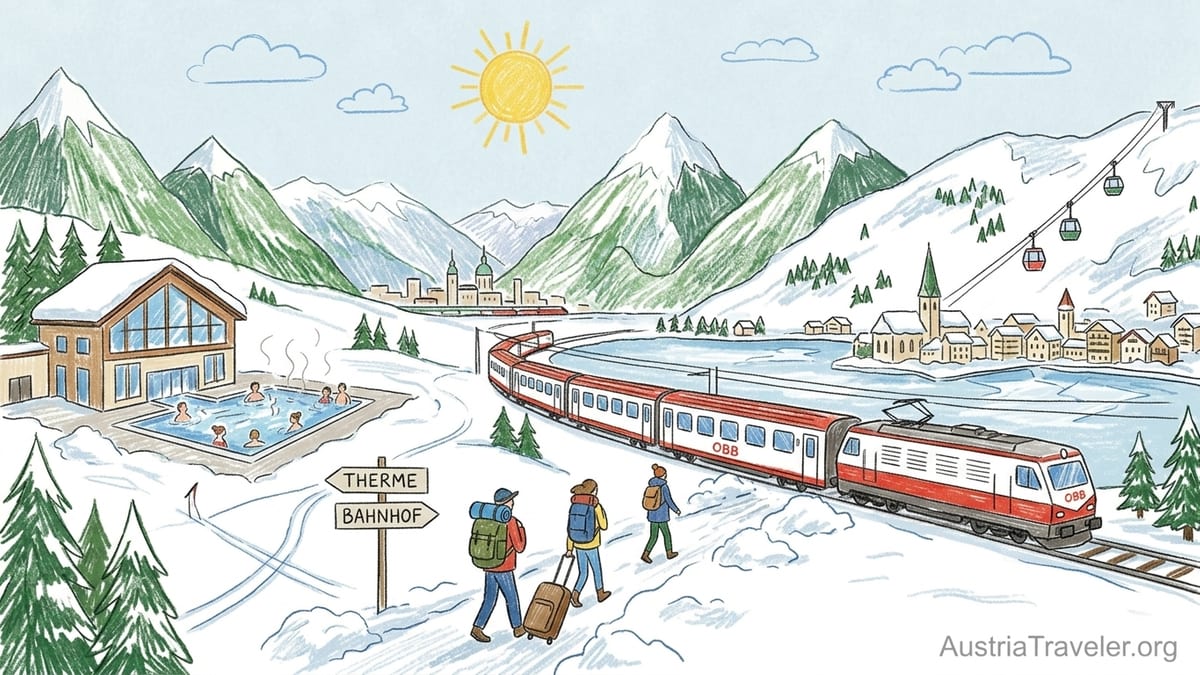
How Many Bases I Used, And What Actually Worked
For a ten day January circuit, I settled on three bases: four nights in a rail connected mountain town, three nights in a spa focused valley, and three nights in a mid sized city. I arrived and departed by train, and used a mix of regional trains and local buses between the bases instead of hiring a car. This was deliberate. Between snow, early sunsets, and Austria’s strict winter tyre rules, I did not want to rely on driving to change locations.
The first base was a town very similar in feel to Zell am See, a lakeside resort in SalzburgerLand with its own station and ski area on the Schmittenhöhe mountain. Trains from Vienna take roughly four hours and the walk from the station to central guesthouses is typically under ten minutes on cleared pavements, which matters when you are hauling luggage through snow. The second base was a spa valley comparable to the Gastein region, where towns such as Bad Hofgastein and Bad Gastein combine access to ski slopes with large thermal complexes, outdoor hot pools and serious wellness facilities. The final base was a city on a mainline route, with multiple trains per hour and dense street lighting, which made late dinners and pre dawn departures feel simple even in snow.
Moving every three to four nights felt about right. Packing, checking out, and navigating stations in bulky coats always took longer than in summer. Even with good rail connections, I tried to keep transfer days under three hours of actual travel and avoided connections after dark. In practice that meant only two true “travel days” on a ten night trip. I would not go beyond three bases in winter, even with ten days, unless I was prepared to sacrifice rest.
If you prefer to ski intensively or travel with children, I would tighten this further. In that scenario an ideal winter pattern for ten days would be two bases: one city or large town at the start for two or three nights, followed by a week in a single mountain or spa base where you can unpack properly, learn the local bus and lift system, and not worry about repacking wet kit every second day.
Understanding Austria’s Winter Conditions Before You Choose
In Austria, winter is not just pretty snow on mountains. Between 1 November and 15 April, cars must have winter equipment when roads are icy or snow covered, with winter tyres or snow chains required in those conditions by federal law. Driving without them can result in on the spot fines of around 35 euros, rising higher if you cause an accident. Even if you are not driving yourself, the rule hints at how seriously the country takes winter conditions and how quickly weather can change in alpine valleys.
For travellers this has two big consequences. First, if you plan to rent a car, you need to budget for winter tyre surcharges and possible snow chain rental, and assume that parking spaces can be buried after overnight snowfall. Second, even if you stay car free, forecasts can affect regional train punctuality and bus timetables in high valleys. Rail connected towns such as Schladming in Styria, Zell am See in SalzburgerLand, or Seefeld in Tirol tend to recover faster from storms because snow clearance around their stations and main streets is treated as a priority.
Daylight is the other major factor. In December, cities like Salzburg and Innsbruck see sunset around 4 p.m. By late afternoon mountain roads and pavements can refreeze, and navigating a partially cleared path from a rural guesthouse to the nearest bus stop feels quite different than in July. That short walking distance you shrugged at while planning can turn into a twenty minute shuffle when every step requires care and you are carrying ski boots.
These realities are not a reason to avoid winter travel in Austria. They are exactly why the choice between staying in a city center, a rail connected village, an alpine resort, or a spa town has such a big impact on your comfort. The right base keeps the beauty of the season while reducing the amount of time you spend wrestling suitcases over ice, scraping snow from a rental car, or waiting in the cold for infrequent buses.
City Centre Bases: Convenience, Culture, And Dry Boots
Staying in a city centre base during winter, such as Vienna, Salzburg, Graz or Linz, generally means excellent public transport, dense services, and well maintained streets. Even in heavy snowfall, municipal crews clear tram tracks and main pedestrian routes quickly. On my trip, the city section was the easiest part of each day. My hotel was less than five minutes from the station along a mostly level pavement, lit and gritted, so rolling a suitcase in the dark when I arrived on a late evening Railjet felt safe and simple.
City hotels also tend to be better equipped for winter travellers. Central heating is reliable, rooms usually have radiators where you can hang damp gloves, and many business style hotels provide small entry areas where coats and boots can be stored without soaking carpets. Breakfast buffets often start early, sometimes from 6.30 a.m., which made it realistic to catch a 7.30 or 8 a.m. train to the mountains while still eating properly.
Food and evening options are where cities shine. After dark, there is no need to worry about whether the only restaurant in the village closes at 8 p.m. You can walk to multiple restaurants, supermarkets, and Christmas markets in December without needing a car or bus. If you want to add a spontaneous evening concert, museum late opening, or just a wander through historic streets with snow falling, a city base allows that with little planning.
The limitation is winter landscape access. From a city you rely on day trips to reach snowfields or spa complexes. For example, from Salzburg you might travel to a lakeside town in the Salzkammergut or up to a place similar to Bad Ischl or Bad Hofgastein for the day, then return. It works, but you always have the clock in mind because the last return trains may be early. For very short trips of five to seven days, however, anchoring the entire stay in a single city and adding one or two mountain day trips can be easier than shuttling heavy bags between multiple snow covered towns.
Rail Connected Mountain Towns: The Sweet Spot For Most Travellers
My favourite base type in winter Austria is the rail connected mountain town. Places like Zell am See, Schladming, or Seefeld in Tirol combine train stations in or near the centre with a compact layout, enough year round residents to support shops and restaurants, and direct or short bus links to ski lifts and winter walking trails. Austria’s federal rail operator and regional networks run frequent services along these valleys, which makes late changes of plan less stressful than in isolated resorts.
In my first base, less than a five minute walk separated the station from my guesthouse, even with snow on the ground. The streets leading away from the station were cleared before 9 a.m., and grit was laid where sheets of ice formed. That may sound minor, but it meant I could arrive on a mid morning train, walk to the hotel without slipping, leave my luggage, and be on a gondola within an hour without ever needing a car. When I left, dragging a suitcase back to the station after light overnight snow was just as manageable.
Rail connected towns often have ski rooms and dedicated drying spaces, even in mid range hotels and pensions. These are heated basements where guests can lock skis and snowboards, hang wet jackets, and leave boots on warmers overnight. Being able to strip off wet outer layers at the entrance stopped melted snow pooling in my small room. It also meant departures were easier. On days I changed base, I could collect dry, warm boots and step out to the station without that soft, cold feeling of half dried footwear.
Access to food and services in these towns sits between a big city and an isolated resort. You may not have dozens of choices, but you will usually find a supermarket, bakery, and several restaurants within a short walk, many open until around 9 or 10 p.m. With shorter winter days I found this enough. After several hours outside in freezing temperatures, a hot meal in a low key Gasthof, then a five minute walk back along a lit main street, felt more rewarding than staying out late.
Classic Alpine Resorts: Scenic, Snow Sure, And Sometimes Inconvenient
Dedicated alpine resorts in Austria, especially high elevation ones, deliver the postcard winter most visitors picture: chairlifts running directly from the edge of the village, pistes funneling skiers back to hotel doors, and snow stacked on balconies. Areas in Tirol and Vorarlberg, and parts of the Ski Amadé network, have villages that are largely oriented around ski weeks, with ski in ski out hotels, equipment rental on every corner, and busy après ski bars.
The appeal is obvious. If you plan to spend nearly every day skiing or snowboarding, waking up beside the main lift is ideal. You can come back at lunchtime to warm up, you never queue for ski buses, and children have short distances to manage in heavy clothing. Some of the highest areas keep runs open well into April, and snowmaking keeps pistes consistent even in milder spells.
The trade off is flexibility and day to day convenience away from the slopes. In my experience, the higher and more ski focused the resort, the further everyday services can be from your front door. Pavements between chalets may be packed snow rather than salted tarmac, which looks romantic but is tiring to walk on repeatedly in heavy boots. Parking often sits in open air lots that require you to dig your car out after fresh snow before you can even think of leaving. Shops can keep limited hours outside peak Saturdays, and a surprising number of restaurants close early on shoulder dates in January once the main dinner seating is done.
Public transport also narrows in these environments. Some major Austrian resorts do sit on main rail lines, but many rely on a combination of regional trains to a valley station and feeder buses or hotel shuttles up to the resort itself. On my winter visit I deliberately avoided resorts that required a long winding bus connection after dark, preferring towns where the station sits close to accommodation. If you choose a high resort, try to arrive during daylight and aim for accommodation within a very short, well lit walk of wherever the bus or taxi will drop you.
Spa Towns And Valleys: Warm Water As Your Winter Base
Austria has a long tradition of spa towns, signposted with “Bad” before their name, that combine access to mountains with thermal water and wellness facilities. The Gastein valley is a good example, with Bad Gastein, Bad Hofgastein and Dorfgastein forming a chain of ski and spa towns that are linked by road, bus, and dedicated lift systems. Bad Gastein is known for its dramatic waterfall and the Felsentherme complex built into the rock, while Bad Hofgastein offers a large thermal spa with indoor and outdoor pools in warm mineral water that operates even in mid winter.
Staying in a spa base changed the rhythm of my trip. Instead of rushing from slope to bar, days were structured around a few hours outside and a long late afternoon or evening in hot water. Many spa hotels build dressing gown access directly from guest rooms to pool areas and saunas, so there is no need to walk outside in the cold in wet hair. Large spa complexes typically include locker rooms with heated floors, plenty of hooks for heavy winter coats, and ventilated cubbies where towels and swimwear can dry between sessions.
From a practical perspective, spa towns are also set up to manage winter logistics. Parking tends to be in structured garages with roof cover, which reduces the amount of snow you need to clear from vehicles. Bus stops are usually directly outside the spa entrances or within a short walk, so on a day with heavy snowfall you can abandon skiing altogether and ride a bus from your pension to the spa without standing at an exposed stop for long. In my case, a heavy snow day that would have been frustrating in a pure ski resort turned into one of the best of the trip lazily moving between hot pools as flakes fell into the steam outside.
The main drawback of spa towns as a base is cost and crowding on peak winter weekends and holidays. Day tickets for large thermal complexes can cost more than 30 euros per adult, and on Saturdays and between Christmas and New Year these facilities can fill with both tourists and locals. If you plan to make a spa town your main base on a five or seven day trip, it is worth staying in accommodation that either includes spa entry in the room rate or offers discounted multi day passes, so that you do not have to queue outside in the cold for individual day tickets.
Rural Villages And Scenic Isolation: When Quiet Becomes Complicated
Before my trip I was tempted by tiny rural villages and farm stays, the kind with a single Gasthof, a bus stop, and maybe a cross country track on the edge of the fields. In photographs these places look ideal for a quiet winter escape. In reality, doing this without a car and in deep winter requires more compromise than many visitors expect.
The main issue is frequency and reliability of transport. Buses through small valleys may run every one or two hours on winter weekdays and far less often on Sundays, especially outside school holiday periods. If forecasts turn icy, services can be disrupted while roads are cleared. Walking to the bus stop might involve an unlit roadside track or a steep lane that village crews only clear after main roads. Carrying a suitcase or ski bag here in the dark is uncomfortable and can be unsafe.
Rural guesthouses and farmhouse apartments also vary widely in how they handle winter gear. Some have excellent wood panelled drying rooms and tiled entry halls where you can leave snowy boots. Others are still set up around summer hikers and offer only a small wardrobe and radiator in a bedroom, which is not enough surface area to comfortably dry multiple layers after a day in heavy snow. When the single village restaurant closes early on a Monday or takes a holiday break, you may find yourself relying on self catering with limited local shops.
That said, there were moments of rural quiet that felt extraordinary. A morning walk along a frozen riverbank just after dawn, with no sound except snow shifting in the branches, is something you rarely find near busy resorts. For writers, remote workers, or couples who want solitude rather than facilities, a rural base can work if you keep transfers limited and stock up on groceries on the way in. I would pair such a stay with a city before or after, rather than trying to combine multiple remote valleys in a short itinerary.
How Many Bases For 5, 7, And 10 Day Winter Trips
After experimenting with different patterns, I came to some clear conclusions about how many bases winter travellers actually need in Austria. The numbers below assume you are arriving and departing the country by train or plane, are not trying to ski every single day, and want a balance of comfort and scenery without constant repacking.
For a five day trip, one base is usually enough. Pick either a major city with good winter day trip options into the mountains or a rail connected mountain town that has its own range of activities such as skiing, winter walking, and perhaps a small spa. With only four full days on the ground once you factor in arrival and departure, changing bases eats too much time. A pattern like three nights in a city and two in the mountains sounds appealing on paper, but in winter you risk losing a half day to each move after you count late check ins, early dark, and the simple act of drying your gear again.
With seven days you can justify two bases. A common pattern is to spend three nights in a city and four nights in either a rail connected mountain town, an alpine resort, or a spa valley. This gives you enough time to settle into each place, learn the local transport rhythm, and enjoy at least two completely free days in the mountains without any logistics in the back of your mind. When planning the switch, schedule the transfer for midday, which avoids morning rush hour on public transport and gives time for late afternoon light to arrive in your new base.
Ten days opens the possibility of a third base, but only if you are comfortable with a slightly busier itinerary. Three nights in a city, three in a spa town, and four in a rail connected mountain town works well. You can place the spa segment in the middle as a physical reset between travel and more intense snow activities. If you prefer to ski or snowboard on most days, consider limiting yourself to two bases even with ten days, using a single city night at the start or end near your arrival airport and spending the rest of the time in one mountain region.
In all cases, try to structure the trip with the most logistically demanding base in the middle rather than at the end. Finishing with an easy city base or a town close to a mainline station reduces the stress of catching early morning international trains or flights in winter conditions. Knowing that your final night is a short lit walk from a station instead of an hour down a snowy mountain road is a form of travel insurance that does not appear on your policy.
The Importance Of Micro Logistics: Walking Distances, Heating, And Breakfast
One of the strongest lessons from my Austrian winter trip was that micro logistics matter far more than in summer. When choosing between similar hotels or guesthouses, I now look first at winter specific details. Walking distance to the station becomes a critical filter. I aim for no more than ten minutes on foot with luggage, preferably on a route that stays on main streets. In snow, even a short uphill stretch to a pension can feel like a climb if pavements are uncleared and you are in bulky boots.
Inside accommodation, heating quality and storage are as important as the view from the balcony. Radiators that stay consistently warm, a separate hallway where you can hang coats, and hooks near the door for gloves and hats make a big difference over a week. Ski rooms with boot dryers are no longer a luxury. They prevent mildew, speed up drying, and mean you are not tempted to place wet gear against electric heaters in your room, which is unsafe.
Breakfast hours are another practical factor. Many alpine and spa hotels provide breakfast from around 7 or 7.30 a.m., but city business hotels sometimes start earlier. If you know you need to catch specific morning trains or meet ski school groups at 9 a.m., check that breakfast times align. Leaving for the station on an empty stomach because service only starts after you need to go is miserable in freezing air. Some travellers solve this by booking apartments and self catering, but then you must ensure supermarkets are within a very short walk and open on the days you arrive, since many close at midday on Sundays.
Finally, consider the reality of evenings after dark. I found that once temperatures dropped below freezing and the sun disappeared behind the mountains, my willingness to walk far for dinner or a drink decreased sharply. Properties within a block or two of a main street with multiple restaurant choices felt far more comfortable than those up pretty but unlit lanes. In a city this might mean a slightly higher nightly rate for a central hotel. In a mountain town it might mean choosing a place on the flat near the river instead of a cheaper guesthouse on a hillside.
The Takeaway
Choosing where to stay in Austria in winter is less about ticking off famous place names and more about matching your base type to how you want to spend cold, dark hours. City centres offer cultural density and effortless meals, but you trade immediate snow access for day trips. Rail connected mountain towns provide perhaps the best all round experience: easy arrivals, manageable walks to stations even in snow, dedicated drying rooms in hotels, and enough restaurants for comfortable evenings. Alpine resorts bring powder and chairlifts to your doorstep, but they can feel constrained once you step away from the slopes, especially if storms disrupt roads. Spa towns wrap each day in warm mineral water and relaxed schedules, at the cost of higher prices and potential weekend crowds. Rural villages deliver silence and starry skies, as long as you are prepared to accept limited transport and services.
For most travellers, a single well chosen base is enough for five days, two bases work best for a week, and two or at most three thoughtful bases make sense for a ten day itinerary. When in doubt, simplify. Place yourself within a short, cleared walk of a station or bus hub, choose accommodation that takes drying wet clothes seriously, and plan your travel segments in daylight where possible. If you do that, Austria’s winter becomes less of a logistical puzzle and more of what it should be: snow on church spires, steam rising from outdoor pools, and the contentment of returning to a warm, well chosen base at the end of each day.
FAQ
Q1. Is it better to rent a car or rely on trains and buses in an Austrian winter?
For most visitors, especially first timers, using trains and buses is simpler and safer in winter. Austria’s main alpine valleys have strong rail connections and feeder buses, while renting a car in winter requires dealing with winter tyres, possible snow chains, and clearing snow from the vehicle each morning. A car can be useful in very rural areas, but for typical city and mountain town combinations, public transport works well.
Q2. How close should my accommodation be to the station or bus stop?
In winter, aim for accommodation no more than a ten minute walk from a main station or central bus stop, ideally on level, well lit streets. What feels like an easy stroll in summer can become tiring and slippery when pavements are covered in snow or ice and you are carrying luggage. Shorter distances also make early departures and evening arrivals much more comfortable.
Q3. Are Austrian hotels well heated in winter, or do I need special gear?
Most Austrian hotels, pensions, and apartments are well insulated and heated, since winter tourism is a major part of the economy. You do not need special sleeping gear, but you should check that your chosen place has good heating, somewhere to hang wet coats, and ideally access to a drying room for boots and ski clothing. Bringing a few extra lightweight hangers and packing cubes can help you spread out damp items without cluttering the room.
Q4. How early do hotel breakfasts usually start, and will that work with ski school or train times?
In city business hotels, breakfast often starts around 6.30 a.m., while many alpine and spa hotels begin service between 7 and 7.30 a.m. This is usually enough time to eat before a 9 a.m. ski school start or a mid morning train, but if you have very early departures you should check times in advance. If breakfast starts too late, ask whether the hotel can prepare a simple take away breakfast so you are not travelling on an empty stomach.
Q5. Is staying in a high alpine resort worth it if I am not planning to ski every day?
High alpine resorts are best suited to travellers who want to ski or snowboard on most days, since the whole layout revolves around lift access and pistes. If you only plan to ski once or twice and prefer varied activities, a rail connected mountain town or spa base is often a better fit. These places still offer winter scenery and snow, but they also provide easier access to shops, non ski walks, and cultural day trips on days when you do not want to be on the slopes.
Q6. What makes a spa town different from a regular mountain town in winter?
Spa towns in Austria, usually with “Bad” in their name, are built around thermal water and wellness facilities as well as winter sports. They have large indoor and outdoor pool complexes, saunas, and treatment areas that operate regardless of weather, which means you have a reliable warm activity even during storms or thaws. Hotels often integrate direct access to these facilities and pay special attention to changing areas, storage for heavy coats, and relaxation spaces.
Q7. Are small rural villages a good idea for a short winter trip?
Rural villages can be very atmospheric in winter, but they are often better suited to longer, slower stays or repeat visitors who understand local transport. For short trips of five to seven days, limited bus timetables, early closing hours for shops and restaurants, and unlit walks to bus stops can make logistics feel stressful. If you love the idea of a rural base, consider pairing two or three nights in such a village with time in a more connected town or city.
Q8. How many bases should I plan for a seven day winter itinerary in Austria?
For seven days, two bases work best for most travellers. A common pattern is three nights in a city and four nights in a rail connected mountain town, alpine resort, or spa valley. This gives enough time to settle in, enjoy at least two full days of activities in each place, and avoid wasting time repacking and moving too often in winter conditions.
Q9. Will restaurants and shops stay open late in mountain areas during winter?
In rail connected mountain towns and larger resorts, supermarkets often open into the early evening and restaurants typically serve until around 9 or 10 p.m. However in smaller villages or very ski focused areas, some places may close earlier, especially outside peak holiday weeks. It is wise to arrive with basic snacks and to check local opening hours on your first day so you are not caught without options after dark.
Q10. What should I prioritise when choosing winter accommodation in Austria?
Prioritise location and winter specific facilities over decorative touches. A short, safe walk to public transport, strong and controllable heating, good storage for coats and boots, and access to a drying room are more important in January than a balcony view. Once those basics are covered, you can refine your choice based on whether you prefer a city buzz, direct ski access, spa facilities, or rural quiet.